WOODEN FURNITURE & HOME
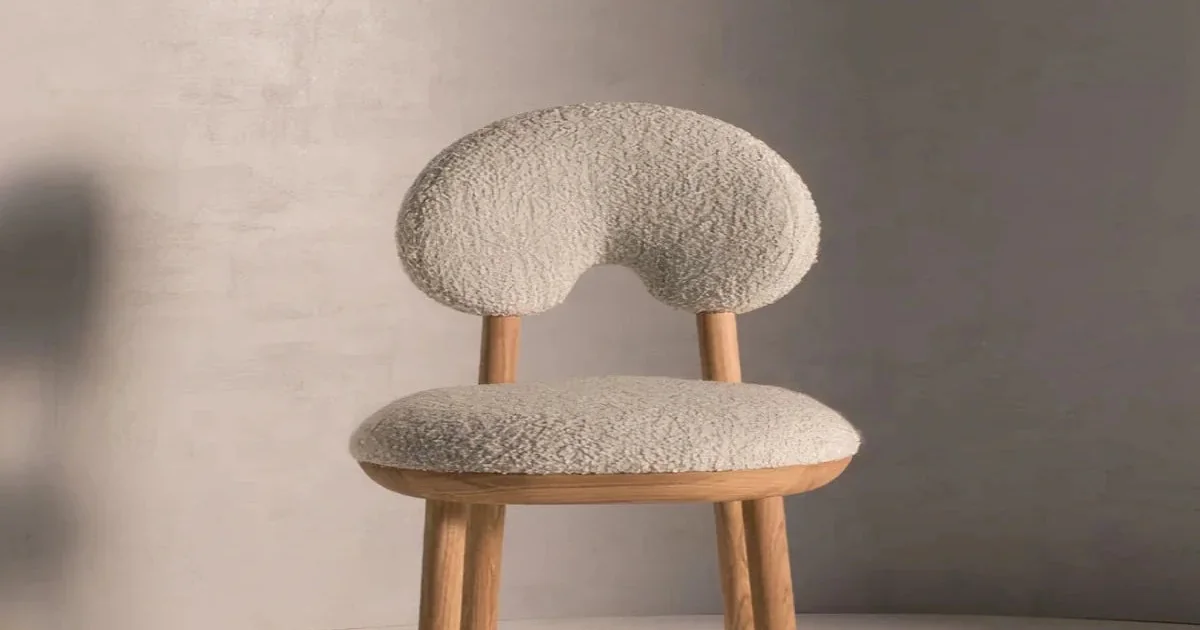
Wood dining chairs have to fit beneath the table as well as around it. Compare seat height with apron clearance before checking width, arms and the space used by a pulled-out chair. Once that pairing works, compare the seat and back in person where possible. A matching wood finish won’t rescue a chair that stops short of the table.
Match dining chair seat height to the space beneath your table
The useful height comparison is between the chair seat and the lowest obstruction above your legs. The tabletop’s upper surface doesn’t tell you where that obstruction sits. An apron—the frame running beneath the top—can extend below it, and a rail or extension mechanism may occupy more of the opening.
Measure from the floor to that lowest point at the place where the chair will sit. Keep the result beside the candidate’s seat height, rather than its overall back height. The gap between those levels helps you compare candidates; whether it feels roomy enough still needs a seated check with the actual table.
Don’t substitute a familiar-sounding “standard dining height” for the missing measurement. If the seller lists only the chair’s overall height, ask for the seat height. If the table has a deep apron, ask for a photograph or drawing of its underside as well as its external dimensions.
The wood-seat chair below sits beside a table with a visible edge and frame beneath it. The relationship is useful to notice, but the photograph supplies no reliable clearance measurement.
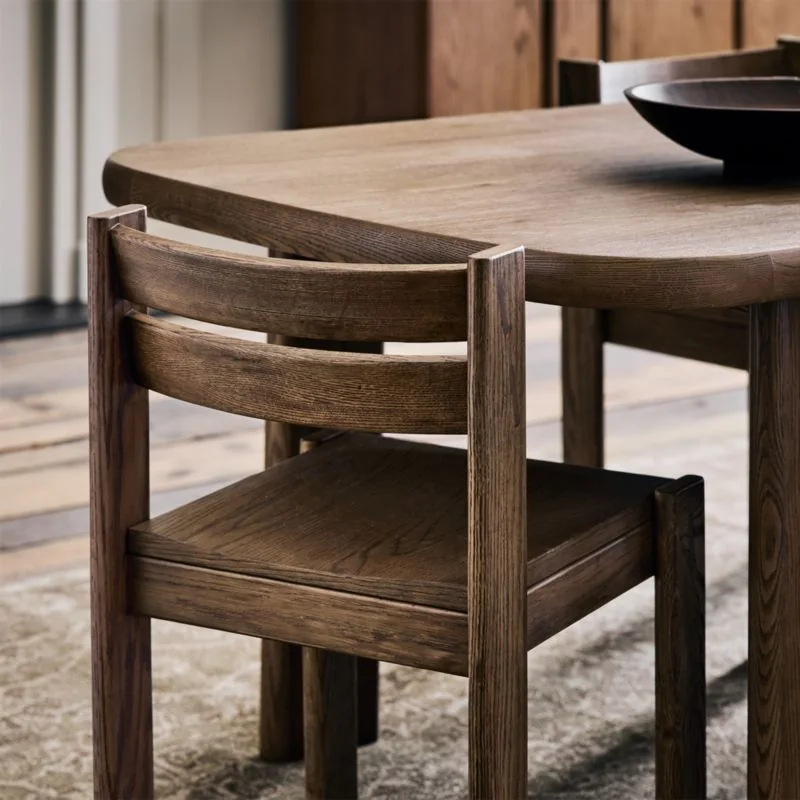
If the table is still undecided, the small-space dining table guide compares drop-leaf, fixed round and extendable formats. Settle that choice before treating a chair’s dimensions as a workable match.
Check dining chair width against the table legs
After checking the vertical gap, look at the opening the chair must enter. Tabletop length doesn’t tell you how much space remains between the legs, so a chair that fits along the edge on paper may still catch its frame on a table leg as you push it inward.
Compare the chair’s widest outer dimension with the clear opening at its intended position. Include arms and projecting legs; seat width alone describes only part of the chair. Where several chairs share a side, lay out their full widths together and allow for the people using them, rather than packing the outlines edge to edge.
A pedestal changes the obstruction rather than removing it. Look at where the pedestal and its feet meet the chair’s legs and the diner’s feet. At an end seat, check the underside again: a support that leaves the long sides clear may occupy that particular position.
Then try the chair pulled out and occupied. Someone needs to sit down, draw the chair toward the table and get up again, while the usual route past the table stays usable. The wood furniture planning guide connects those movements with doors, nearby furniture and the delivery route.
Decide whether dining chair armrests can tuck under the apron
Armrests add another height to the fit check, even when the seat itself clears the table. Compare the highest part of the arms with the lowest part of the underside they must pass beneath. Use measurements taken from the floor for both, and check the arm width against the table legs too.
An arm that hits the apron can leave the entire chair farther out than expected. Decide whether that parked position works in the room before ordering. A chair doesn’t have to disappear completely under the table, but its remaining projection needs a place in the plan.
For a trial, bring the chair into your normal eating position and notice whether the arms stop it too soon. Rest your forearms, reach toward a place setting and stand up again. Armrests that feel pleasant when sitting back can still interfere with the position you want for a meal.
An armless chair removes that particular obstruction, though its seat, back or legs can still limit how far it moves inward. For a reading corner instead of a dining position, the separate wood accent chair guide looks at book-holding, exposed arms and reaching a side table.
Compare wood, woven and upholstered dining chair seats
Once the chair fits the table, the seat surface becomes a personal choice to investigate. A wood seat, woven seat and upholstered seat describe different constructions, not a comfort ranking. Shape, depth and your sitting position still matter alongside the surface material.
A bare wood seat leaves its contour visible. During a trial, notice where the front edge meets your legs and whether sitting back puts you at a useful distance from the table. A loose cushion changes the setup, so include the cushion you intend to use when judging the fit.
The black chair below has a woven seat inside an exposed frame. The open back and slender legs make its outline easy to see against the banquette; they don’t establish how the seat will feel through dinner.
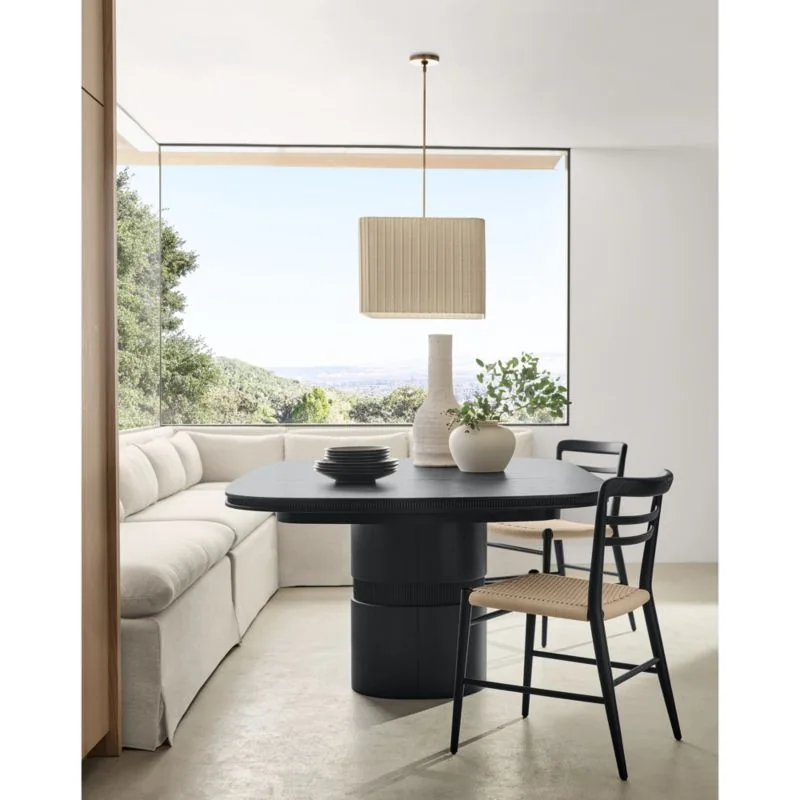
For a woven seat, ask what the strands are made from and how that exact material should be cleaned. For upholstery, check the selected fabric’s care instructions and whether covers or seat pads are replaceable. Don’t assume a removable-looking pad has a washable cover.
I’d keep the choice tied to the meal: the sitting position, the feel of the front edge and the cleaning task you’re willing to take on. A surface that suits occasional guests may still be a poor match for your everyday use.
Try the dining chair back while reaching the table
The seat comparison isn’t complete until you try the back in the position you’ll use for eating. Sit back with your feet supported, then move toward a place setting. Notice whether the back remains useful or whether you have to perch at the front of the seat to reach the table.
Look at the usable seat depth and the back’s shape together. A deep seat and a reclined back might suit the way someone likes to sit, but the relevant question here is how that combination works at your table. Overall chair height alone won’t answer it.
The upholstered chair below shows a padded seat and back above an exposed wood frame. Its rear view helps separate those parts; it can’t establish the cushion’s firmness or the strength of the joints.
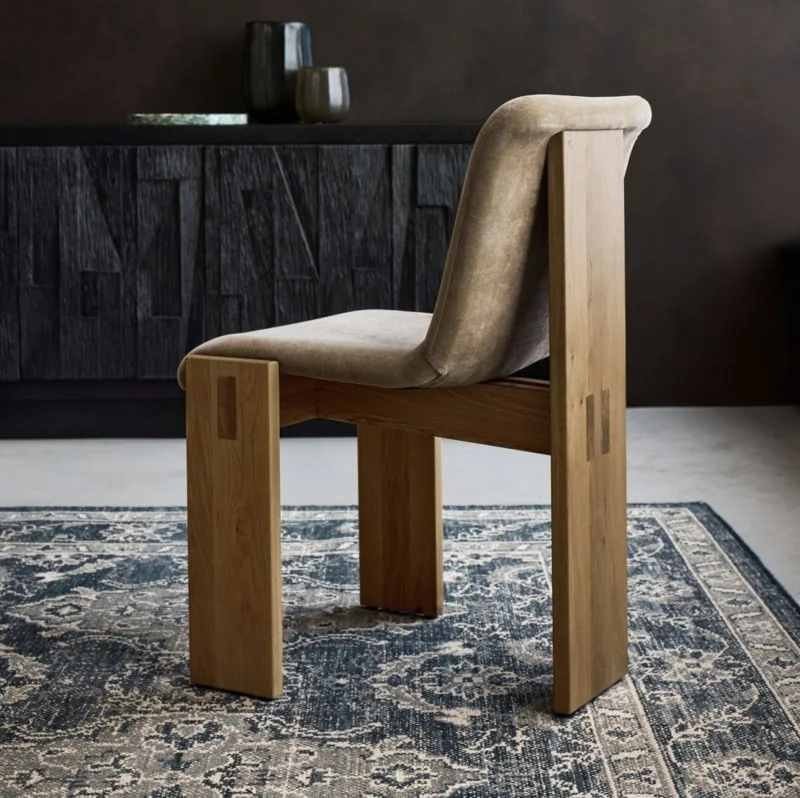
If you can’t try the chair, ask for the missing seat and back measurements and read the return terms before ordering a full set. A room photograph can help with appearance, while a dimension drawing answers a different set of questions.
Read the dining chair’s construction before matching wood tones
With the sitting position settled, read which parts actually contain wood. A product name can describe the appearance without describing every component. Crate & Barrel’s Hearth chair listing, for example, names oak, oak veneer and engineered wood together. Calling the entire pictured chair solid oak would lose that distinction.
Ask for clarification where the frame, seat or back material is unspecified. Keep the selected version’s construction details and care guidance with its dimensions. A visible grain pattern doesn’t establish the material beneath it, and a photograph of a joint doesn’t verify its load capacity.
Then compare the chair finish beside the table, floor and nearby cabinets. I’d choose either a convincing repeat or a clear contrast, rather than ordering a near-match from screen colors alone. Finish samples, where available, give you something to view together in the room’s light.
Before buying, return to the pairing that started the search: a usable seat-to-apron gap, a frame that clears the table legs, armrests that permit your eating position and a back you want to sit against. Keep those checks beside the finish choice as you explore other furniture decisions at Wood Center.