WOODEN FURNITURE & HOME

Wood accent chairs need to fit both the person sitting down and the space around the seat. Start with the sitting position you want, then check the chair’s full width and depth, the feel of its exposed arms, and its wood finish beside your existing furniture. A slim-looking frame can still occupy a surprisingly deep corner.
Choose a wood accent chair for the way you’ll sit
Decide whether the chair will be a daily reading seat, a place for conversation beside the sofa, or an occasional bedroom seat. Picture the actual activity: holding an open book, turning toward another person, or putting on shoes. Those uses give you something more useful to assess than a style name alone.
For a reading chair, try sitting with your back supported while holding a book where you’d normally read it. Notice whether you can rest your forearms comfortably and where your feet land. If you prefer a footstool, include it in the trial rather than assuming it will solve a seat that already feels wrong.
For conversation, try facing the sofa from the chair’s proposed position, then check whether an angle that lets people talk comfortably pushes the back of the frame into a doorway or walking route. Include the whole chair.
The chair below has an upholstered seat and back inside an exposed frame. Its open sides let you see the floor through the chair, but the arms and rear legs still define its outer boundary.
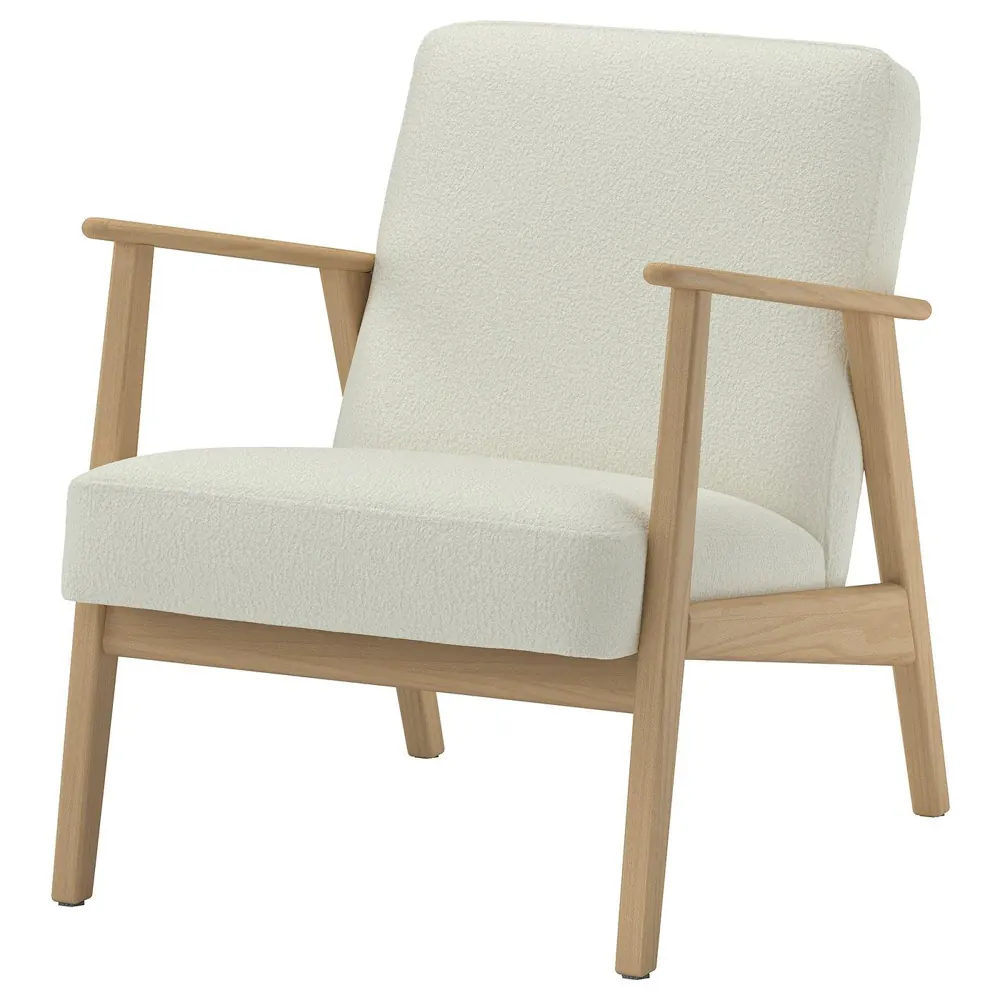
I’d treat a showroom sit as a chance to notice awkward details, rather than a quick verdict based on softness. Sit back, reach for a nearby surface, and stand up again. A cushion that feels inviting at first may still leave you wanting a different seat depth or back position.
Carry that sitting trial into the room plan: Furniture & Layout starts with daily activities and the route around each piece.
Measure the wood chair’s footprint separately from its seat
Once the sitting position looks promising, separate the dimensions that describe your body space from those that describe the furniture’s floor space. Seat width doesn’t tell you whether the arms fit between a sofa and a cabinet; seat depth doesn’t describe how far the back projects behind you.
| Measurement | What to check |
|---|---|
| Overall width | The widest part of the frame, including projecting arms |
| Overall depth | The full chair from front to back, including its lean |
| Seat width and depth | The usable sitting area inside the frame |
| Seat height | The listed seat level, followed by a sitting trial where possible |
| Overall height | The back’s position against a window, shelf or nearby furniture |
The EKENÄSET reference drawing below shows these measurements on separate parts of the chair. Use it to understand what each label measures. Its printed dimensions aren’t a universal chair recommendation, and the selected version’s current specifications take priority over this reference illustration.
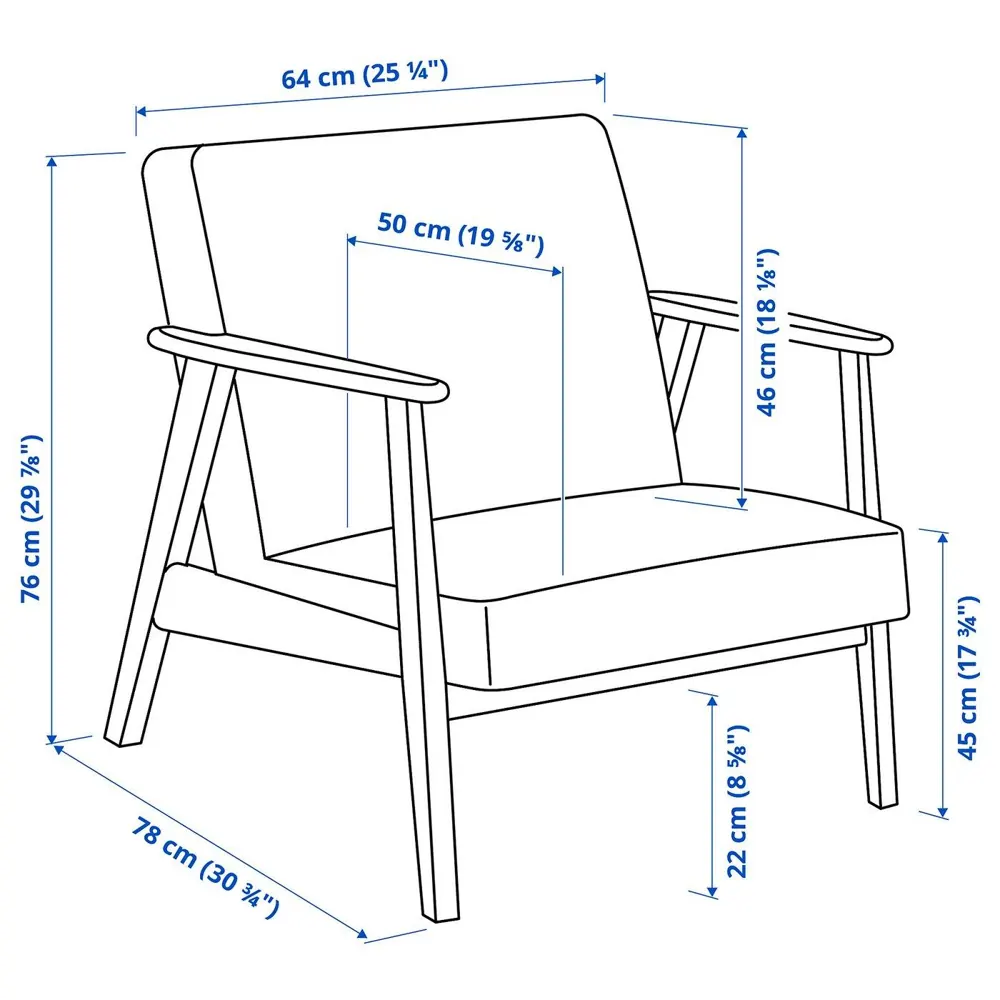
Mark the proposed chair’s full footprint with removable paper or floor-safe tape, using its current overall measurements. Include the footstool and side table if you want them. Then walk past the arrangement, open nearby doors and drawers, and leave room to approach the seat and get up.
Try the same outline at the intended angle. A chair turned toward the sofa may push a rear corner into the route you thought was clear. Check the delivery route separately, including door openings and turns; ask the seller about packaging and assembly if the fit is uncertain.
Sharing the corner with a screen adds another footprint to allow for; compare the standing arrangements in wood room dividers for small spaces.
Check where the wood armrests meet your hands and elbows
With the floor space settled, return to the surfaces you’ll actually touch. On an exposed-frame chair, the upholstery may cushion your back while your elbows rest directly on wood. That difference deserves a sitting trial of its own.
In the detail below, a rounded wood arm runs beside textured upholstery. You can see the arm’s profile and its relationship to the back cushion; the photograph can’t establish how comfortable that surface will feel to you.
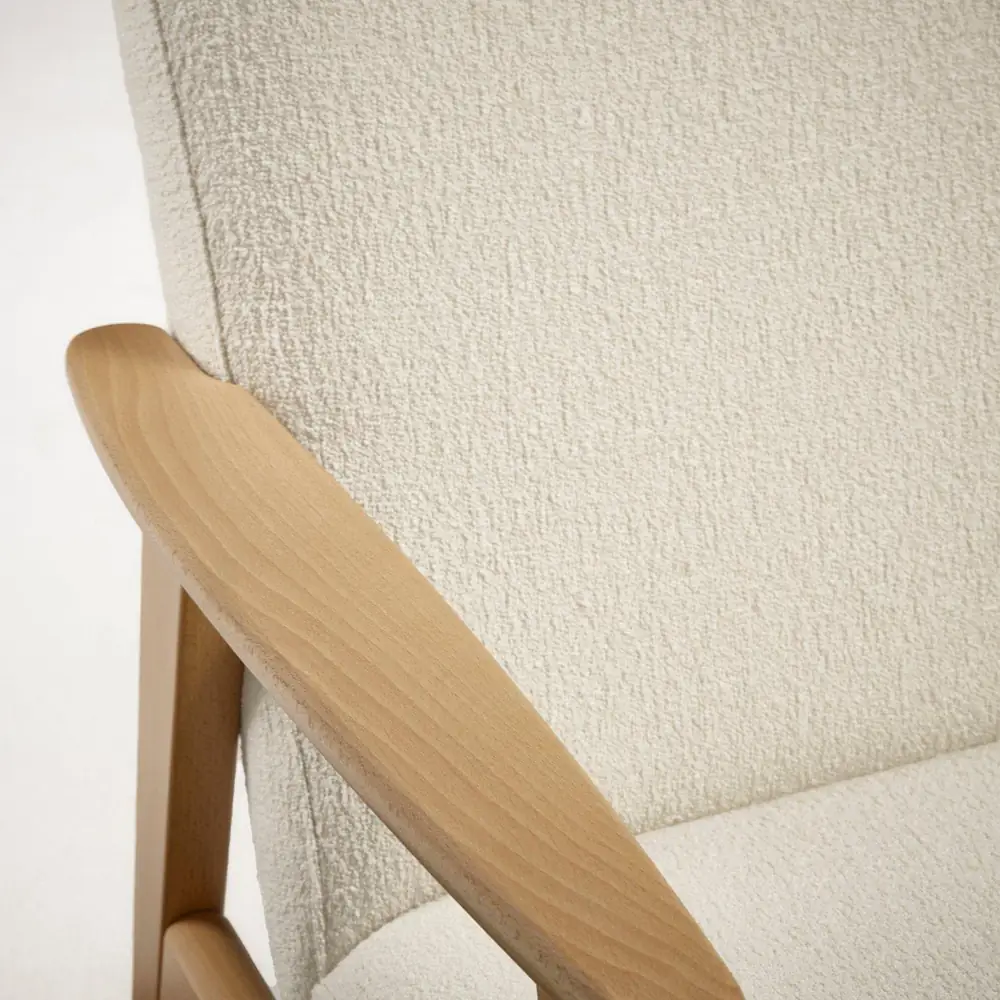
Rest your arms where they naturally fall, then try the movement you expect to repeat. Can you hold a book without perching on the front edge? Can you reach a drink without twisting around the arm? If the wood edge bothers you during the trial, compare another arm shape instead of buying a throw to cover the problem.
Choose the neighboring table from that seated position. The modern wooden side table guide considers the lamp, open book, drink and table base together. A table that looks well proportioned beside the chair can still be awkward to reach over its arm.
Read the chair’s materials before matching its wood color
After checking the armrests, read what they’re made from. A finish name and a species description answer different questions. For example, the EKENÄSET oak-effect product listing specifies solid beech with tinted lacquer for the armrest frame and front rail. The words “oak effect” don’t mean those parts are solid oak.
If the product description leaves a visible rail or arm unnamed, ask the seller what that part is made from before ordering. Keep that answer with the finish and care instructions. Don’t infer the construction or a durability guarantee from a close-up of grain.
Then compare the frame with the wood already near its intended position. I’d look at the floor, sofa legs and nearby table together, keeping the amount of exposed wood in view. A narrow arm and a broad cabinet front can share a color while contributing very different amounts of it to the room.
The guide to mixing wood tones separates light-dark contrast from undertone. Use that comparison before trying to match every brown: the chair may work by repeating an existing finish or by making a clear contrast.
Check upholstery care before ordering the accent chair
Once the frame and finish work, check the fabric version you’ll receive. Look for care instructions for both the upholstery and the exposed wood. A removable-looking cushion doesn’t establish that its cover comes off, and a removable cover doesn’t automatically mean it’s machine washable.
Ask about replacement cushions or covers if keeping the chair for a long time matters to you. Check the return terms too, especially when you can’t sit in the chair before ordering. Keep a copy of the selected version’s dimensions and material description with the order details.
For the frame, follow its own finish instructions; the wood furniture cleaning guide explains why a cleaning method needs to suit the coating. Treat the upholstery as a separate care task.
Before ordering, come back to the real seat: a supported reading position, reachable table, agreeable armrests and a route that stays usable. If those checks reveal a problem, change the chair or its position before settling on the fabric color. Explore Wood Center for the next furniture decision once the seat has a workable place.