WOODEN FURNITURE & HOME
Wood spice racks can move seasoning jars off a crowded counter, but the jars need room to come out as well as go in. Choose a wall-mounted rack when you have an accessible patch of wall; choose a cabinet-door rack when the closed cabinet has room for its full projection. Then compare the shelf openings with your actual jars, including their lids and the lift needed to clear a retaining rail.
Wall-mounted or cabinet-door spice rack?
A wall-mounted rack keeps the jars visible without opening a cabinet. The tall, narrow example below spreads its shelves up the wall, leaving a small footprint across it. That arrangement suits a narrow wall section only if you can comfortably reach the rows you plan to use each day.
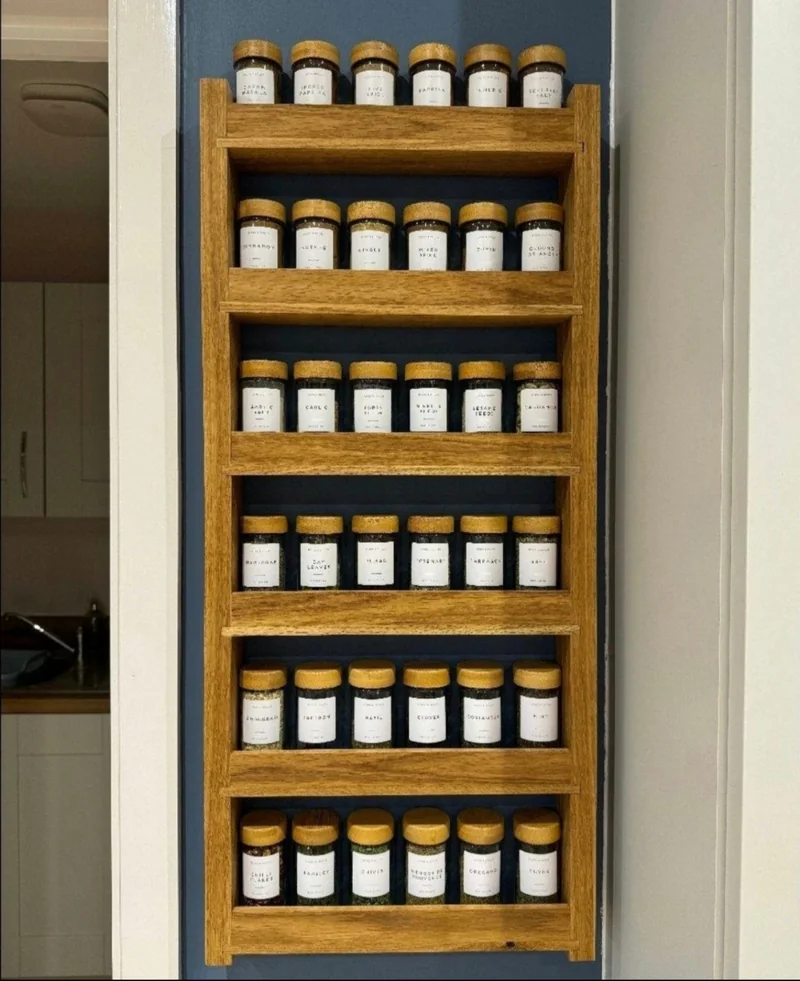
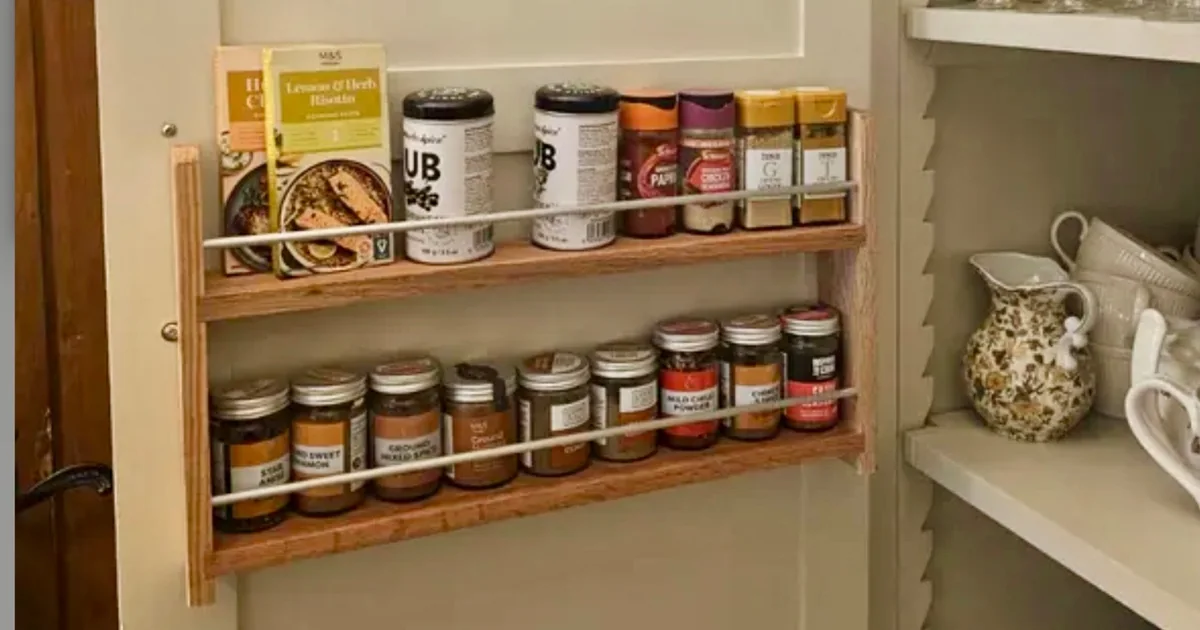
A cabinet-door rack puts the same kind of shallow storage behind a door. Its location can suit a kitchen where you prefer to keep packaging out of sight, but the rack occupies space inside the cabinet. The useful comparison is the space available with the door closed, rather than the empty rectangle on the open door.
| Location | What makes it a good fit | What can rule it out |
|---|---|---|
| Wall | An accessible wall area where the jars can stay on display | Upper shelves you cannot reach comfortably, or a rack that projects into a doorway |
| Cabinet door | A door approved for the rack, with clear space behind it | Cabinet shelves, contents, hinges, or a center divider occupying the rack’s path |
Pick the location before comparing shelf counts. Extra rows don’t help much if the top jars are awkward to retrieve or the door cannot close. For the rest of the room, our small-space storage guide puts access, door movement, and the objects being stored ahead of the furniture’s appearance.
Usable spice-rack depth starts behind the rail
Once the location is settled, compare the jar’s widest part with the shelf’s usable depth. A rounded jar may be wider around its middle than at its base, and a lid may project beyond both. Overall rack depth includes parts that the jar cannot occupy, such as a back rail or the front retaining rail.
The empty rack below makes that distinction easier to see: wooden shelves sit between side panels, with metal rails across the openings. A jar has to fit in the space available between those obstructions. A listing that gives only outside depth leaves that fit unanswered.
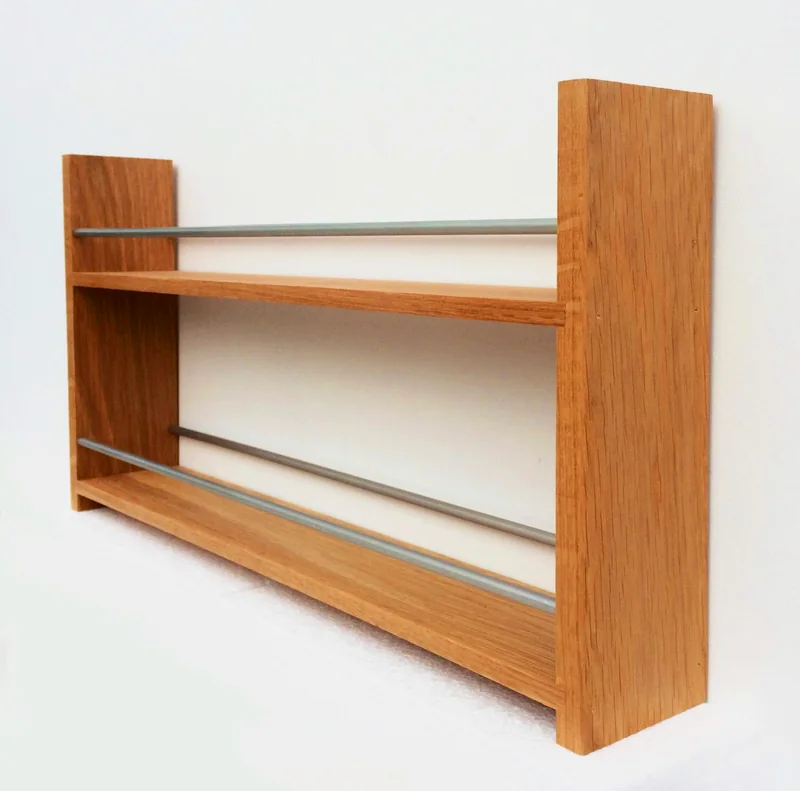
Ask for the internal shelf depth of the exact version you are considering, including any optional back rail. SilverAppleWood, for example, distinguishes overall depth from internal depth and offers a back-rail option. That is a useful distinction to look for in a specification; the dimensions of that model do not describe every similar-looking rack.
Width needs the same care. The space between the side panels determines how many of your jars can stand side by side. A capacity photo filled with matching small jars won’t tell you whether your mix of wide spice tubs, round bottles, and square jars will fit, so I’d compare the row with the jars I intend to keep before using the advertised jar count as the deciding feature.
Jar height must include the way out
A jar that fits beneath the shelf above may still be hard to remove from behind a retaining rail. With a fixed rail across the front, the jar needs a route over it. Depending on the opening, that can mean lifting the jar before bringing it forward, or having enough space to tilt it out.
Compare the shelf opening with the full jar height, including the lid, and check how the jar is meant to be retrieved. If you can see a sample, try the tallest jar you plan to store in that opening. For an online purchase, ask about access for your jar size when the listing gives only the rack’s overall height.
An open top removes the shelf immediately above the top row, but the surrounding space still matters. On a wall, a cabinet or another shelf may be above the rack. On a cabinet door, the cabinet interior can limit the height available when the door closes. Tall bottles belong in the plan from the start, rather than being squeezed into a rack chosen for short jars.
Rail position also affects what you can see and grip. Check where the rail crosses your labels and whether your fingers can reach the jar body or lid. Matching jars in a product photo make the rows look tidy; your everyday containers are the more useful fit test.
A cabinet-door spice rack needs space through the swing
Jar clearance is only part of a cabinet-door rack’s fit: the loaded rack also moves as the door opens and closes. A clear area behind the closed door does not show every possible collision along that movement. Hinges, a center divider, shelf edges, and items already stored inside all need consideration.
Compare the rack’s outside width, height, and full projection with the cabinet interior. Include any bottle or packet that extends beyond the rack. Check those positions through the door’s movement before committing to that location; if the fit depends on moving a cabinet shelf, confirm that the shelf can actually be repositioned.
Keep a distinction between a clearance check and permission to mount the rack. Follow the specific rack instructions and the cabinet or door manufacturer’s requirements for mounting and loading. Door suitability and fixing details cannot be established from a photograph of a similar installation.
Wood details to check after the jars fit
After checking the openings and door space, look closely at the shelf edges, side panels, and finish. The close view below shows where a shelf meets a vertical side panel beneath a rail. Such a detail photo helps you inspect the visible construction, but it does not supply a load rating.
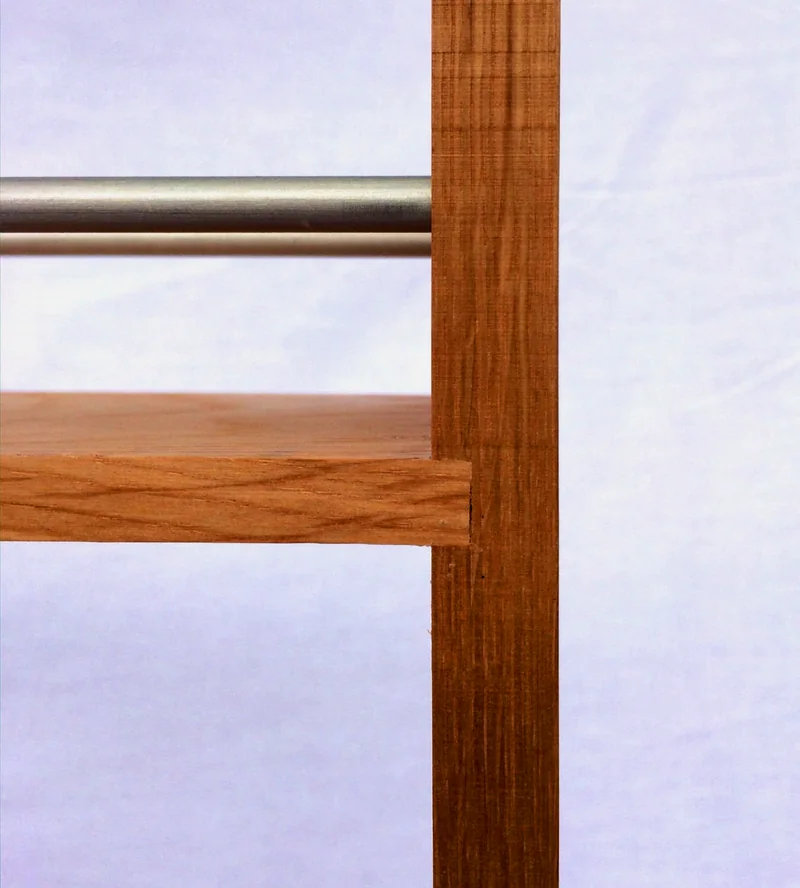
For a kitchen rack, I’d also want clear care instructions for its finish and access to wipe the shelf around the jars. A deep shelf packed behind the front row may gain storage while making that routine less convenient. Leave the rack with a layout you can maintain, including space to grip and replace the containers you use most.
Choose between the final candidates with the actual jar collection beside you: widest container, tallest lidded jar, usable shelf opening, and room for the loaded rack in its intended location. Those checks give a shallow wooden rack a job it can perform every day, rather than a row of jars that looks right only in the listing photo.