WOODEN FURNITURE & HOME
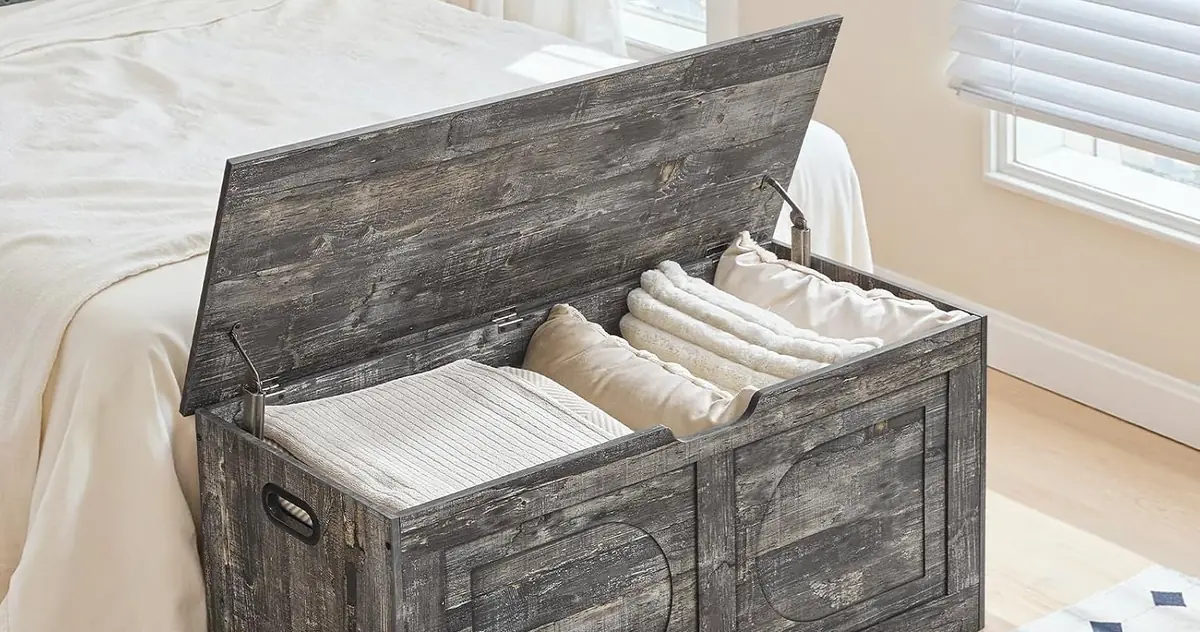
Wood blanket storage chests work best when the bedding fits inside and the lid can open where the chest will live. Compare usable interior dimensions with your folded blankets, then check the open lid against the bed, wall and walking route. A generous-looking box can still leave the winter comforter stranded outside—or make a nightly throw awkward to retrieve.
Match the blanket chest interior to the bedding you keep
Start with the bedding that actually needs a home: the evening throw, spare sheets, guest quilt or bulky comforter. Fold it as you expect to store it, then compare the resulting bundles with the chest’s internal width, depth and usable height. A listing’s outside measurements describe the furniture footprint; they don’t tell you how much space remains inside the walls.
Ask whether the stated interior dimensions account for a removable tray, a raised bottom and hardware projecting into the compartment. The narrowest opening matters too. A bundle might fit inside but still be awkward to lower through a smaller opening under the rim.
An empty-chest photograph is useful here because the rim and lid hardware are easier to see without bedding covering them.
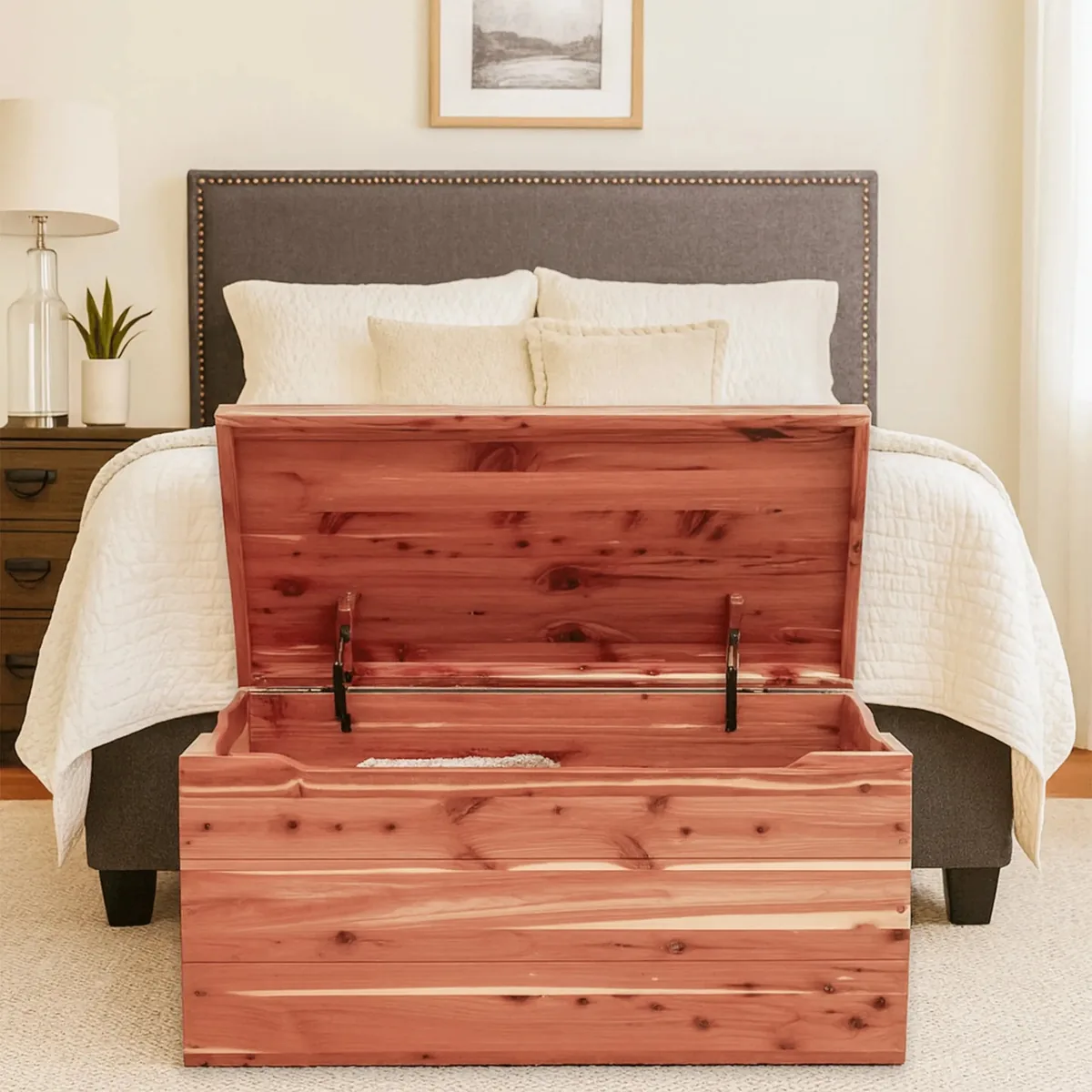
Treat a claim such as “holds several blankets” as a prompt for more detail. Thin throws and a lofty comforter occupy different shapes, and a staged photograph doesn’t establish how your bedding will fit. Request usable dimensions for the exact model, rather than estimating capacity from its name or its position beside a bed.
The broader small-space storage guide explains how to compare stored objects with the space inside furniture. For a blanket chest, keep that comparison focused on the bedding you expect to retrieve together.
Leave room for the blanket chest lid as well as the closed box
Once the bedding fits, check the chest in its intended position with the lid fully open. At the foot of a bed, the lid may approach the footboard or overhanging bedding; beside a wall, its rear edge may need clearance that the listing’s overall depth doesn’t include.
The closed footprint isn’t enough.
The chest below has a full-width top opening, with textiles visible inside and a quilt draped over the front. Access comes from above, so the area over the box is part of its working space.
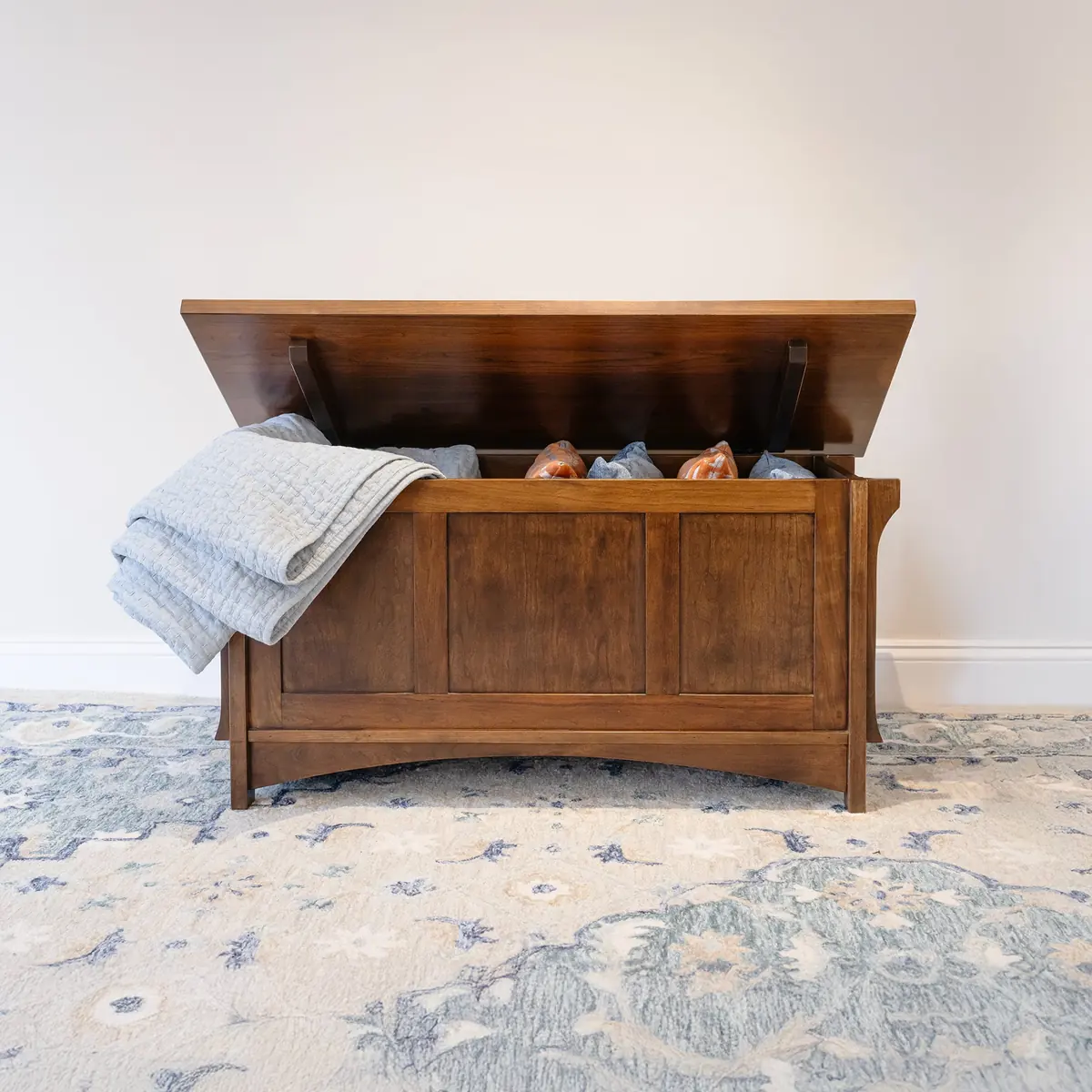
Ask the seller for the open height and any required clearance behind the hinge. Compare those figures with the actual bed and nearby furniture, including projecting handles and trim. Leave somewhere to stand while lifting out a bulky bundle; reaching from a cramped gap can make a suitable storage volume unpleasant to use.
The wood bed frame guide covers outside frame dimensions and the route past the footboard. Use those edges when placing a chest, since the mattress size alone leaves out parts of the bed that can take up the remaining floor space.
Think about what stays on the lid, too. A tray of books or a folded bedspread has to go somewhere whenever the chest opens. If you’re moving those objects every night, you may prefer to keep only seasonal bedding inside the chest.
Arrange blanket stacks around how often you reach for them
With space to open the lid, decide which bedding should be visible first. A chest used every evening has a different job from a box holding a guest quilt until the next visit. Keep the frequently used bundle accessible without unpacking the rest of the compartment.
Where the dimensions allow, separate stacks across the width instead of burying the daily throw beneath all the spare bedding. The open chest below shows a patterned quilt alongside a light blue blanket, making the separate groups visible from above.
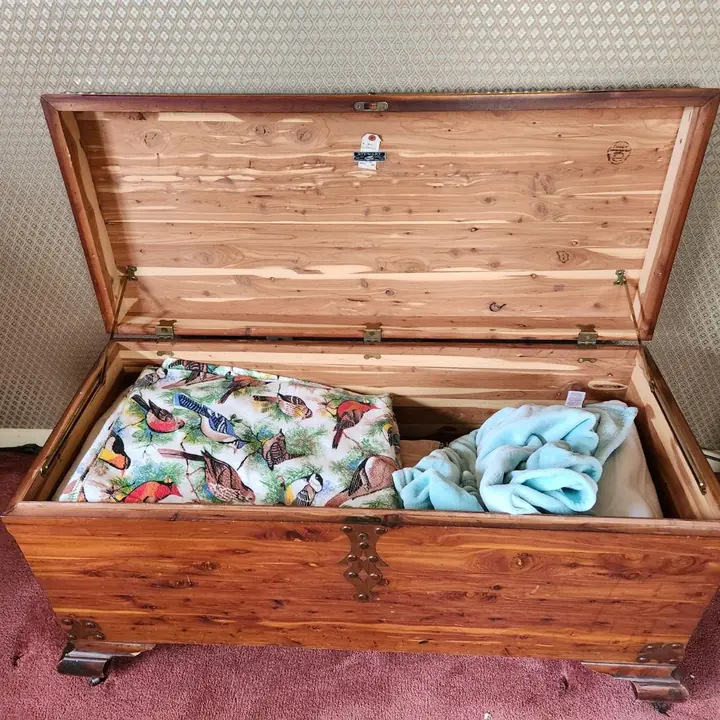
Keep the everyday throw within reach.
If the chest is deep enough that the lower layer disappears, keep that layer for bedding used less often. A removable tray may help separate small linens, but confirm what’s left beneath it before counting the whole interior height as available blanket space.
| Bedding routine | What to check in the chest |
|---|---|
| A throw taken out every evening | Access without clearing a decorated lid or lifting other bundles |
| Spare sheets and pillowcases | A visible, separate group that stays together when other bedding comes out |
| A bulky guest quilt | Internal opening and compartment dimensions compared with the folded quilt |
| Seasonal bedding stored below other items | A practical place to put the upper stack during retrieval |
Ask what the blanket chest lid hardware actually does
Daily access also depends on the lid mechanism. A product description may mention soft closing, gas struts or lid supports, but those words alone don’t establish how the complete chest behaves. Ask what holds the lid open, how it closes and what the manufacturer requires for assembly, adjustment and maintenance.
Keep closing speed and support while open as separate questions. Don’t infer child safety from a soft-close label, a photograph of an open lid or the presence of metal supports. For a used chest, identify the maker and model and check recall information before bringing it into service.
The U.S. Consumer Product Safety Commission warns that automatically latching storage chests can trap children, and that failing lid supports can create head or neck entrapment hazards. Its storage and toy chest warning explains the risks and directs owners to corrective action. Follow the guidance for the identified chest; a new finish or replacement handle doesn’t resolve a hazardous latch.
Compare the complete blanket chest before ordering
The hardware check should sit beside the storage and room measurements when you’re comparing finalists. A wood species or finish name won’t fill gaps in those specifications. Ask what the sides and bottom are made from, and how to care for the finished surfaces inside and out.
Before ordering, the product information should answer these questions:
- What are the usable interior dimensions and the size of the opening?
- Does a tray or projecting hardware take up part of that space?
- How high is the open lid, and what clearance is required behind it?
- What does the manufacturer say about the lid supports, closing action and intended use?
- Can the regularly used bedding come out without moving other furniture?
Keep any unresolved answer on the shortlist rather than filling it in from a styled image. Wood Center’s home page offers other furniture and storage guides if the chest takes more room than the bedding it would replace.
For a final comparison, picture the ordinary evening: opening the lid, lifting the throw out, then putting it away. Choose the chest whose dimensions and access support that routine, with the product details in writing before it arrives.