WOODEN FURNITURE & HOME
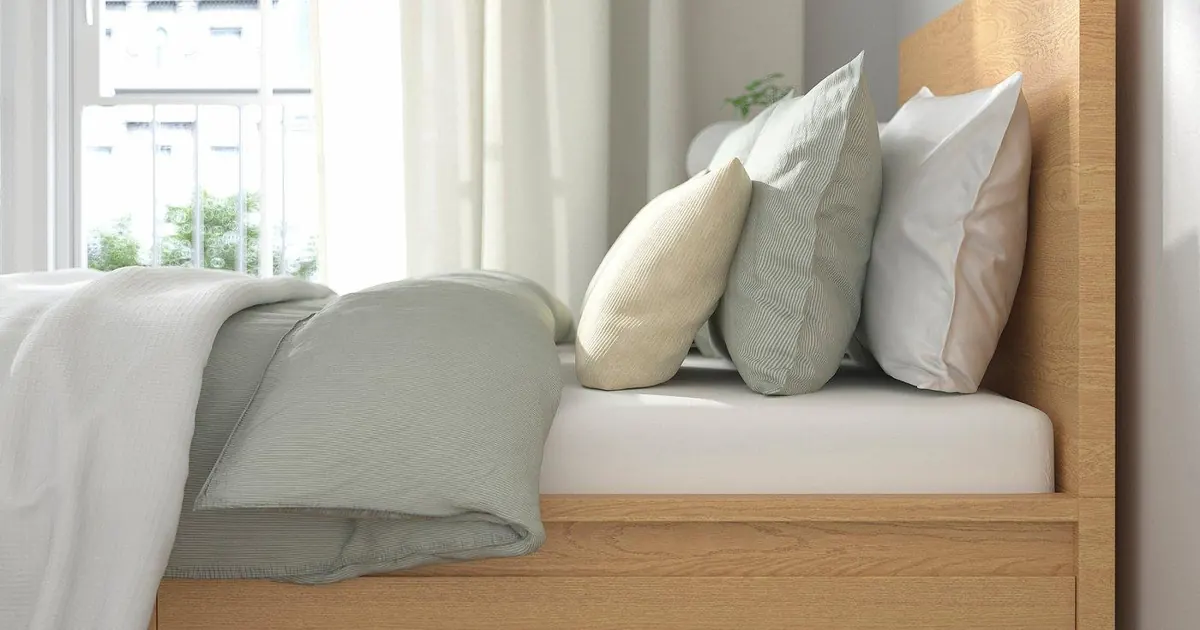
Under-bed wood storage works when the container clears the bed’s lowest obstruction and can come far enough into the room to reach its contents. A wood-fronted drawer can hide spare bedding neatly, but a bedside cabinet or rug edge may block the part you actually need to open. Check that moving space before choosing a finish.
Check the bed opening before the storage drawer
Start with the route into the space beneath your bed. Look along the floor for center legs, crosspieces and other parts that divide it into smaller openings. The height beneath the visible side rail may differ from the height farther inside, where the back of a box needs to pass.
Measure from the finished floor surface to the lowest obstruction along that route. Include the rug if the drawer will sit on it. Then check the clear width between legs and the available depth before the box reaches a center support. Record those separately; the mattress size doesn’t describe these openings.
When comparing a product, ask for its complete assembled dimensions, including wheels and projecting fronts. Also ask whether the maker specifies clearance beyond those dimensions. There’s no single gap that can settle the fit of every bed and drawer combination.
Choosing a bed at the same time? Check mattress support and the frame’s outside dimensions in the wood bed frame guide. For storage beneath an existing frame, keep the measurements focused on the openings the container must pass through.
Separate matching bed drawers from independent wood boxes
With the opening measured, find out what kind of container the listing describes. A drawer sold for a named bed frame may depend on that frame’s layout, even when it rolls on its own wheels. A separate low box needs its own fit check too; a similar wood finish doesn’t establish compatibility.
For example, IKEA specifies its MALM oak-veneer underbed storage boxes for the high MALM bed frame in Queen and King sizes. That statement applies to the named product and bed versions. It doesn’t establish a fit beneath every queen or king bed.
The product photograph shows two separate open-topped boxes, each with a broad wood-grain front and a lighter interior. Those fronts can conceal the stored objects when the boxes sit beneath the matching bed, while the boxes themselves still need room to move.
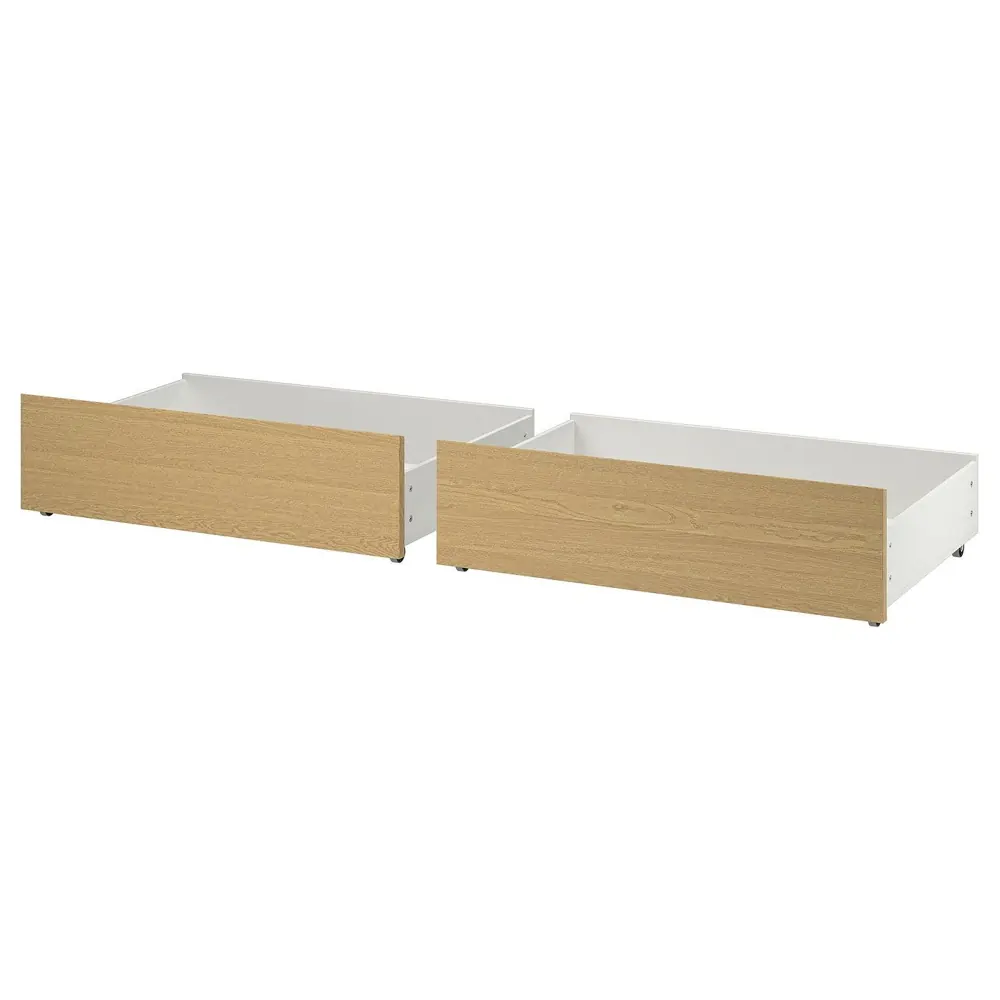
Check usable interior dimensions as well. For this particular MALM version, IKEA lists an overall height of 11 3/8 inches and an inside drawer height of 5 7/8 inches. The outside height answers a fit question; the inside height answers a bedding question. Neither figure is a general recommendation for another box.
I would settle compatibility before comparing colors. The wider small-space storage guide also starts with the objects being stored and the space needed to retrieve them, which is useful when deciding whether the bed should take on this job at all.
Give the under-bed drawer a complete pullout path
Compatibility beneath the bed leaves another question: can the drawer open in your bedroom? Check the space from its closed front toward the opposite wall or furniture, including the bedside cabinet’s feet, projecting handles and any door that needs to swing through the same area.
Ask how far the drawer must come out for access to its rear compartment. Compare that distance with the room, then allow a place for your hands and body while taking out a bulky quilt. A drawer that opens just enough to reveal the front stack may leave the seasonal bedding at the back out of reach.
The open drawer below holds bedding and projects into the space beside the bed. A small caster is visible beneath its front corner, and the floor route includes a rug.
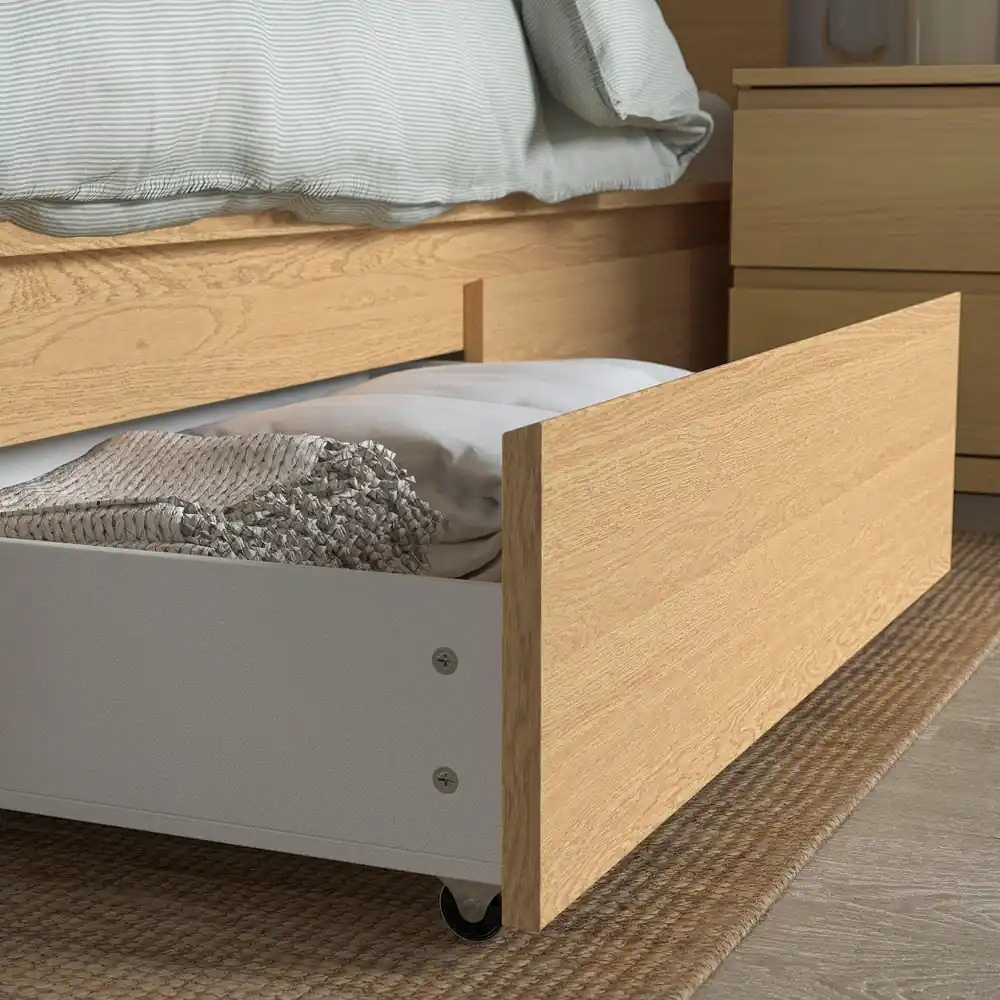
IKEA describes castors on the base of these boxes. That feature explains how this model moves; the photograph doesn’t prove how easily a loaded drawer will cross your carpet. Ask about the intended floor surface and, where possible, try the assembled drawer on a comparable surface before committing.
For a room where the bedside route is blocked, compare another storage position. A wood blanket chest gives access from above, with its own lid clearance to check. Moving the bedding to a chest only helps if that opening works better in the available room.
Decide how bedding will be protected from dust
A clear pullout path also makes the storage easier to inspect and clean. Before filling a drawer, look at its top and back as well as the decorative front. The boxes pictured here have open tops; don’t treat a closed front beneath a bed as evidence of a sealed compartment.
For bedding you want covered, consider a separate washable storage bag inside the drawer. Check the bag’s filled shape against the usable interior and make sure it can come out without snagging. Keep the bag below any part of the bed that passes over the drawer.
Put away clean, fully dry textiles and keep anything damp out of the compartment. If the floor or bed area is already damp, address that condition before using it for bedding storage. A wooden front doesn’t resolve moisture around the contents.
Leave a practical way to remove the boxes and reach the floor behind them. Before wiping the finished fronts, use the finish checks in the wood furniture cleaning guide, alongside the drawer maker’s care instructions.
Choose the wood finish after fit and access are settled
Once the drawer can move and the contents have suitable protection, the visible front becomes a useful design choice. Compare it with the bed in the room’s light. Matching the front closely can make the storage less noticeable; a darker front creates a more distinct band beneath pale bedding.
The darker pair below has the same broad-fronted, open-box appearance as the lighter example. The photograph helps compare the visible finish, while dimensions and bed compatibility still need written product information.
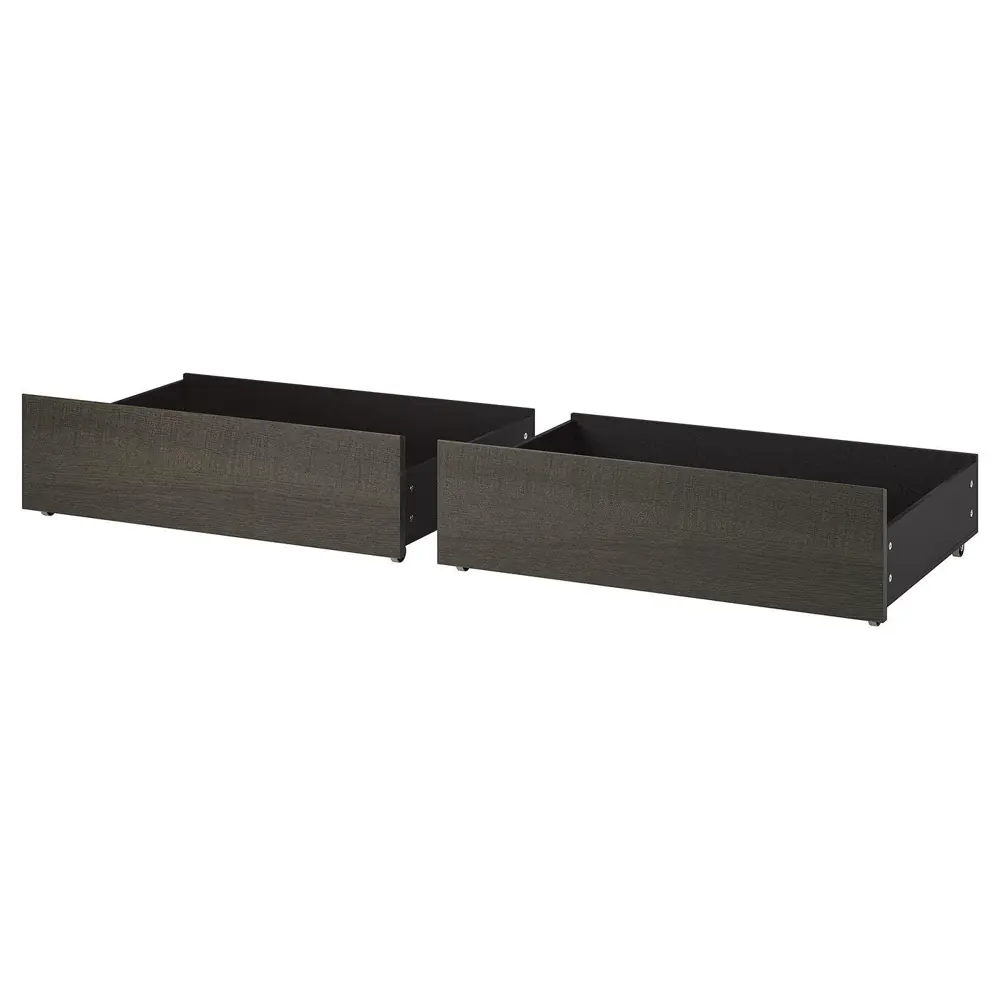
Read the material description for the whole box. IKEA lists oak veneer among the materials in this MALM version’s front, with particleboard in the sides, back and bottom. Calling the whole drawer a solid oak box would hide a meaningful construction difference.
Before ordering, keep the exact bed version, assembled drawer dimensions, usable interior and opening route together on your shortlist. Add any unanswered question about the floor surface or care instructions. Wood Center’s home page has further furniture and storage guides if the under-bed space cannot provide the access your bedding needs.