WOODEN FURNITURE & HOME
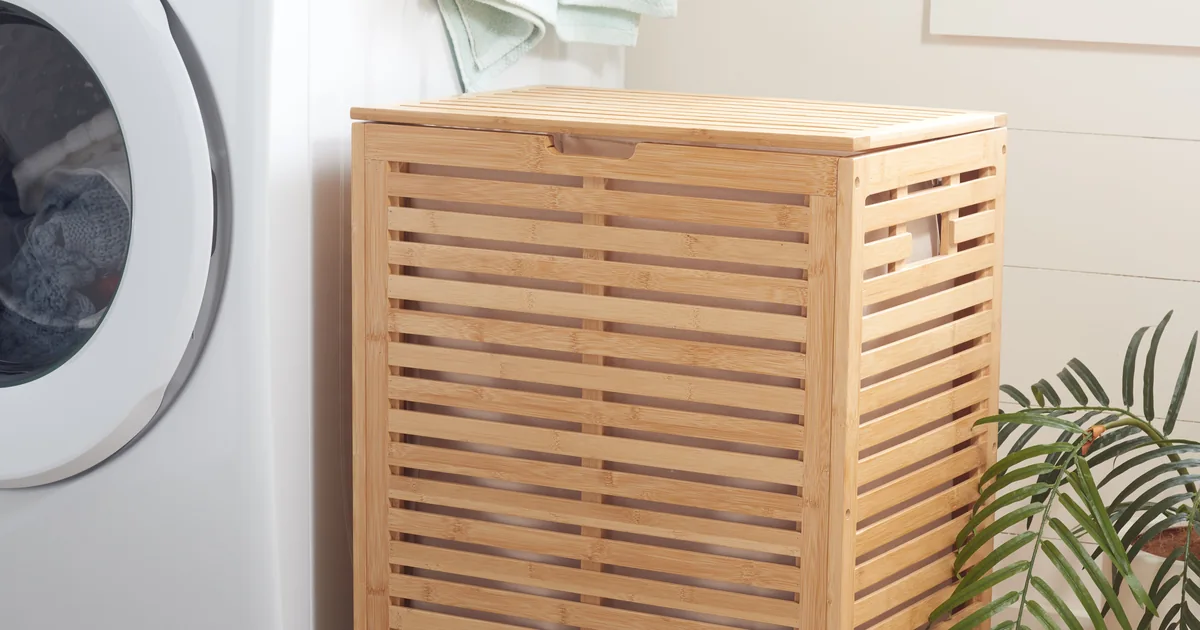
Wood laundry hampers work well as furniture-like storage for dirty clothes when the lid opens freely and the liner comes out without a struggle. Choose the place first, then the basket: a slim body won’t help if a shelf blocks its lid or a full bag can’t clear the opening. Capacity matters, but so does getting the laundry out.
Fit the hamper with its lid open
A hamper needs room for both its closed footprint and its open lid. Measure the intended spot at floor level, including the baseboard, then check the space above and behind the basket against the maker’s open-lid dimensions. If those dimensions aren’t listed, ask for them before ordering for an under-counter gap.
Next, consider where you’ll stand to use it. A basket tucked between a washer and a cabinet may fit neatly, yet leave no place to bend down and lift out the laundry. The washer door, room door, and nearby drawers should still open while the hamper is in position.
| Planned location | What to check before buying |
|---|---|
| Under a shelf or counter | The lid’s opening height and the path for lifting the bag |
| Beside a front-loading washer | Door swing and standing room for unloading |
| Inside a closet | Door clearance, hanging clothes, and access to the liner |
| Bedroom corner | A clear approach to the lid and a practical route to the washer |
Don’t choose the narrowest model automatically. A slightly wider hamper in an accessible corner may be easier to empty than a tall, tight-fitting basket beneath a shelf. For the surrounding room, the small-space storage guide covers shelf placement, vertical storage, and keeping access clear.
Make the removable liner the deciding feature
Once the basket fits, the liner determines how you’ll move the laundry. A removable bag lets the wood shell stay in place, which is useful when the washer is elsewhere. Check whether the bag has carrying handles, how it attaches at the rim, and whether replacement liners are available.
The photo below shows hands lifting a fabric liner clear of the basket. Oceanstar describes the interior bag in its TRH1330 hamper as removable for carrying laundry between rooms. That’s a specific product feature; a white bag visible in another listing doesn’t establish that it detaches in the same way.
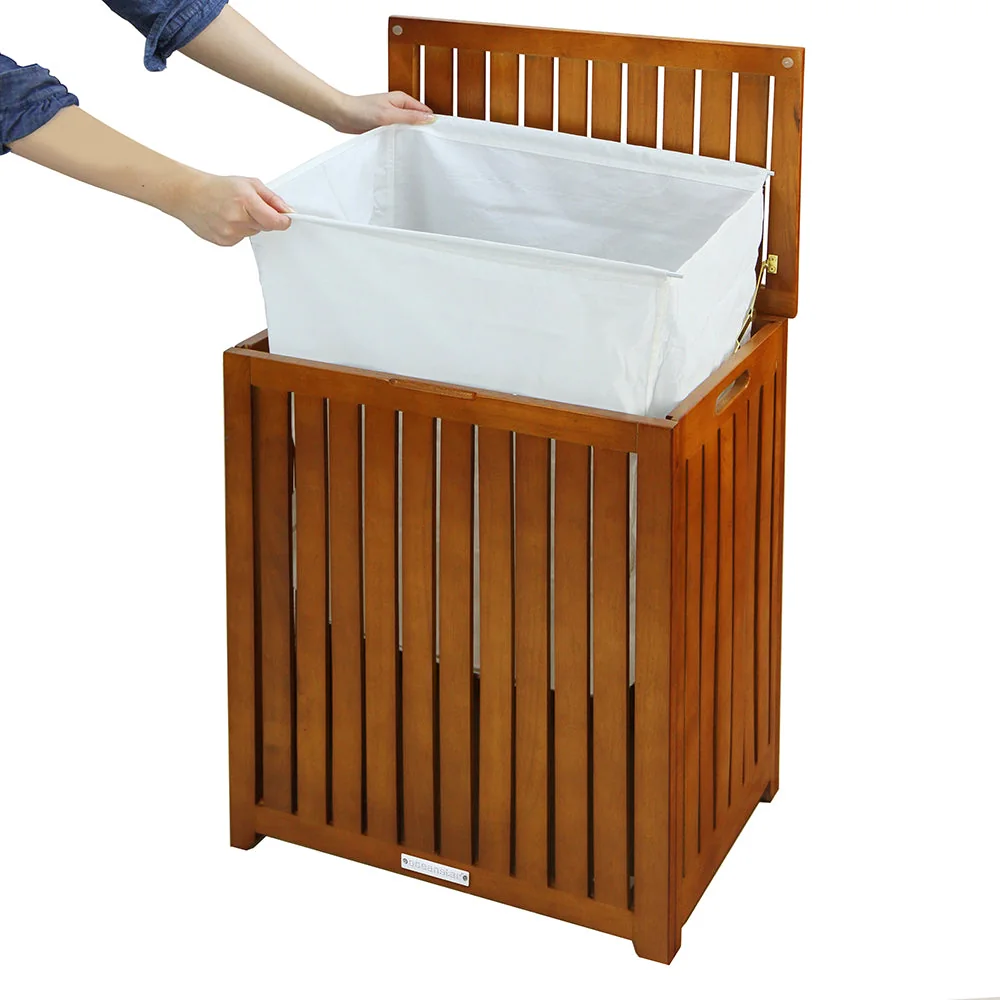
A liner also needs a usable opening. Look for photos of the bag being removed, rather than only an empty basket with the lid up. A rigid rim, narrow mouth, or awkward fastening is worth investigating if you expect to carry bulky towels. You shouldn’t have to tip the whole hamper to free the bag.
Before treating the liner as washable, read its care instructions. Removable and machine-washable describe different features, and a laundry bag isn’t automatically suitable for washing with the clothes it holds. Check the label for both washing and drying directions.
Check how the hamper lid and liner meet
Even a removable liner can be awkward if the lid sits in the way. In the open hamper below, the hinges, top frame, and bag opening are visible together. That view is more useful for judging access than a closed front view, though it can’t tell you how the hinge feels in use.
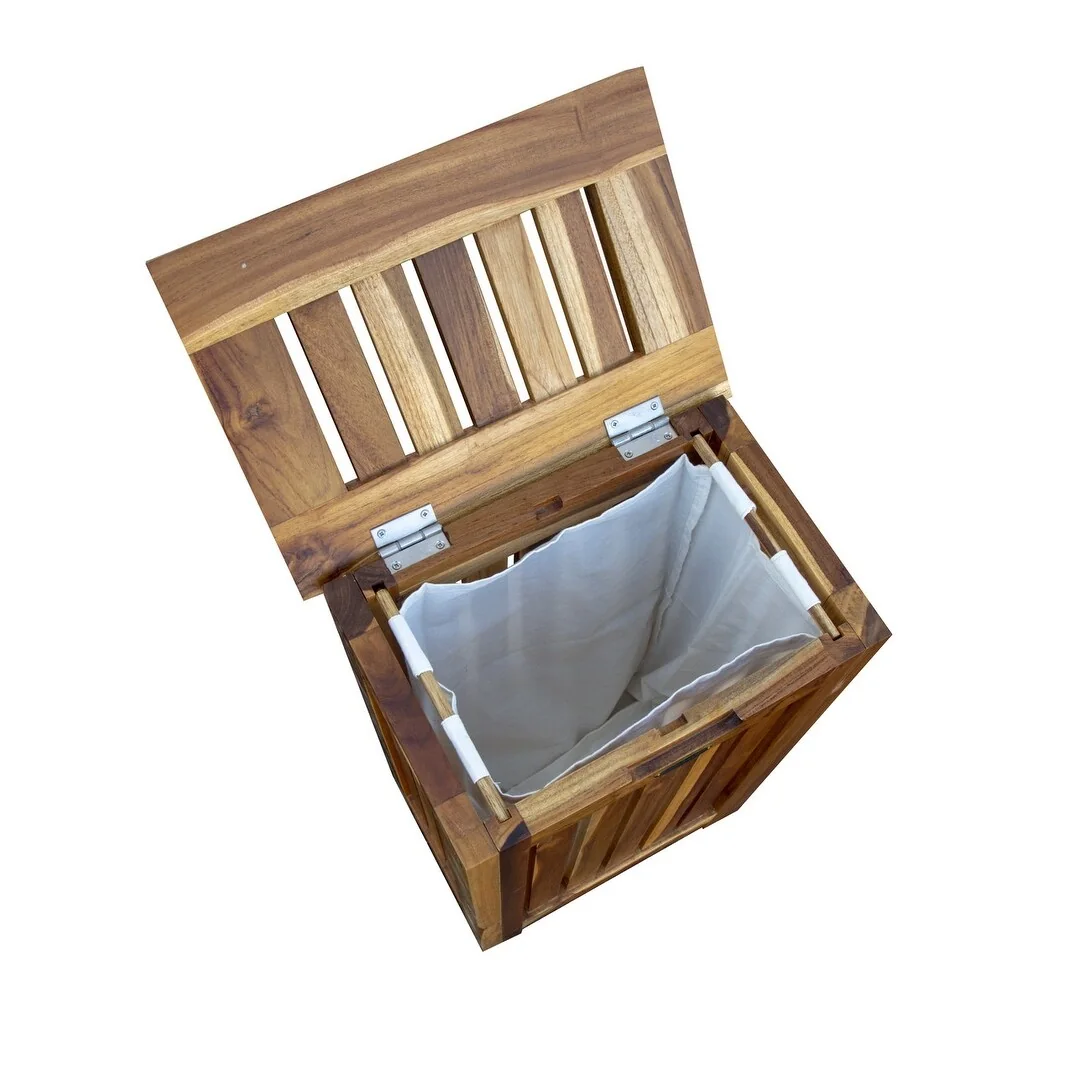
For a hinged lid, check how far it opens and whether the maker says it stays open during unloading. For a loose lid, decide where you’ll set it while lifting the bag. Neither arrangement is automatically better; the useful choice depends on whether you have overhead clearance or a nearby surface.
Keep the lid accessible between wash days, too. If the top becomes a parking place for toiletries or folded clothes, adding a shirt turns into a clearing-up task. A hamper beside a separate shelf is easier to use than one expected to serve as both basket and shelf.
Match hamper capacity to the way you sort
After checking access, choose capacity around the laundry you actually collect. A large shared bag suits a household that sorts at the washer. Separate containers may suit someone who wants lights, darks, or towels apart from the start. Color alone doesn’t settle every load; fabric type, soil, and care labels still matter.
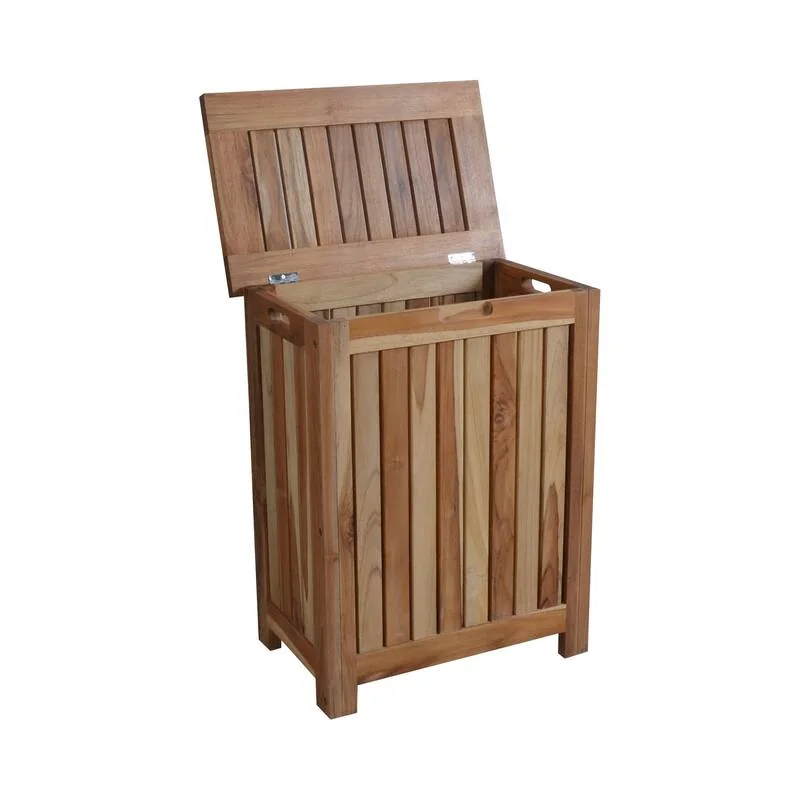
The pictured hampers have a single visible bag, so they illustrate collection rather than built-in sorting. If you’re considering a divided model, check the capacity and removal method of each compartment. The total capacity won’t tell you whether the section used for towels is large enough for your routine.
You can also keep a single wood hamper in the bedroom and sort elsewhere on laundry day. That saves the floor space a wider sorter would occupy, but you’ll need somewhere to separate the clothes before washing. Choose that location deliberately so the sorting pile doesn’t block the route to the machine.
Don’t equate a basketful with a washer load. Hamper dimensions describe storage, while the washer’s instructions govern loading. For a practical buying comparison, note what fills your current basket and how often you empty it; avoid relying on an unexplained claim such as “holds a week’s laundry.”
Treat slats as a construction detail, not an odor guarantee
Capacity is only part of temporary storage; the condition of the clothes matters as well. Slatted sides show gaps in the outer shell, but a fitted liner sits inside them. Check the whole arrangement, including the bag and base, rather than assuming that visible gaps guarantee enough airflow for damp laundry.
Allow sweaty or damp clothes to dry before putting them in the hamper. University of Kentucky Cooperative Extension gives that advice in its laundry guide. Give those items a drying place outside the basket; a lidded hamper shouldn’t have to double as a drying rack.
For a bathroom location, check the maker’s placement and care instructions before assuming the basket suits the spot. Keep it out of direct splash and standing water. A raised base may make the floor easier to reach, but neither feet nor slats establish that a particular finish is suitable for repeated wetting.
Read the material and care details before ordering
Once the shape and daily routine work, confirm what the hamper is made from. Product listings may distinguish solid wood, wood-based panels, bamboo, and a wood-look finish, and the title may be less precise than the materials section. If those descriptions conflict, ask the seller to clarify rather than identifying the material from a photograph.
Choose a finish you can maintain using the manufacturer’s directions. Don’t assume that a treatment recommended for one wood hamper belongs on another finish. The same applies to the bag: keep its care label and check that you can remove and refit it without dismantling the basket.
Before ordering, picture the ordinary task from start to finish: dropping in clothes, opening the lid, lifting the full liner, and carrying it to the washer. A hamper that makes that route straightforward has earned its floor space. The wood tone can then be the final choice.