WOODEN FURNITURE & HOME
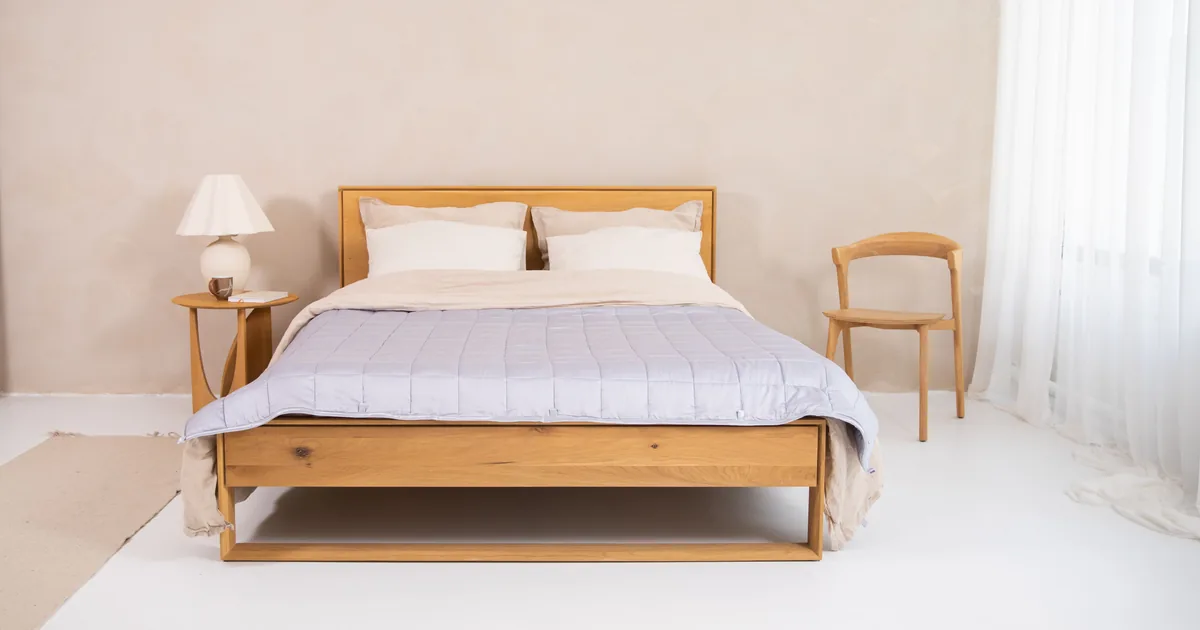
A wood headboard can give the bed its pattern, its outline, or a frame around fabric. For a bedroom with patterned bedding, I’d favor a plain wood panel; for a fabric-led scheme, a wood-framed upholstered center; for a more decorative backdrop, repeated arched panels. The examples below show how those choices work with the pillows, wall color, and bedside furniture already in view.
Plain wood headboards let the grain carry the pattern
A flat headboard doesn’t have to look blank. In the close view below, flowing dark grain stretches across a rectangular panel, while a narrow border contains it. The white wall and bedding leave that pattern easy to see. There’s no need for a carved outline when the surface already has this much movement.
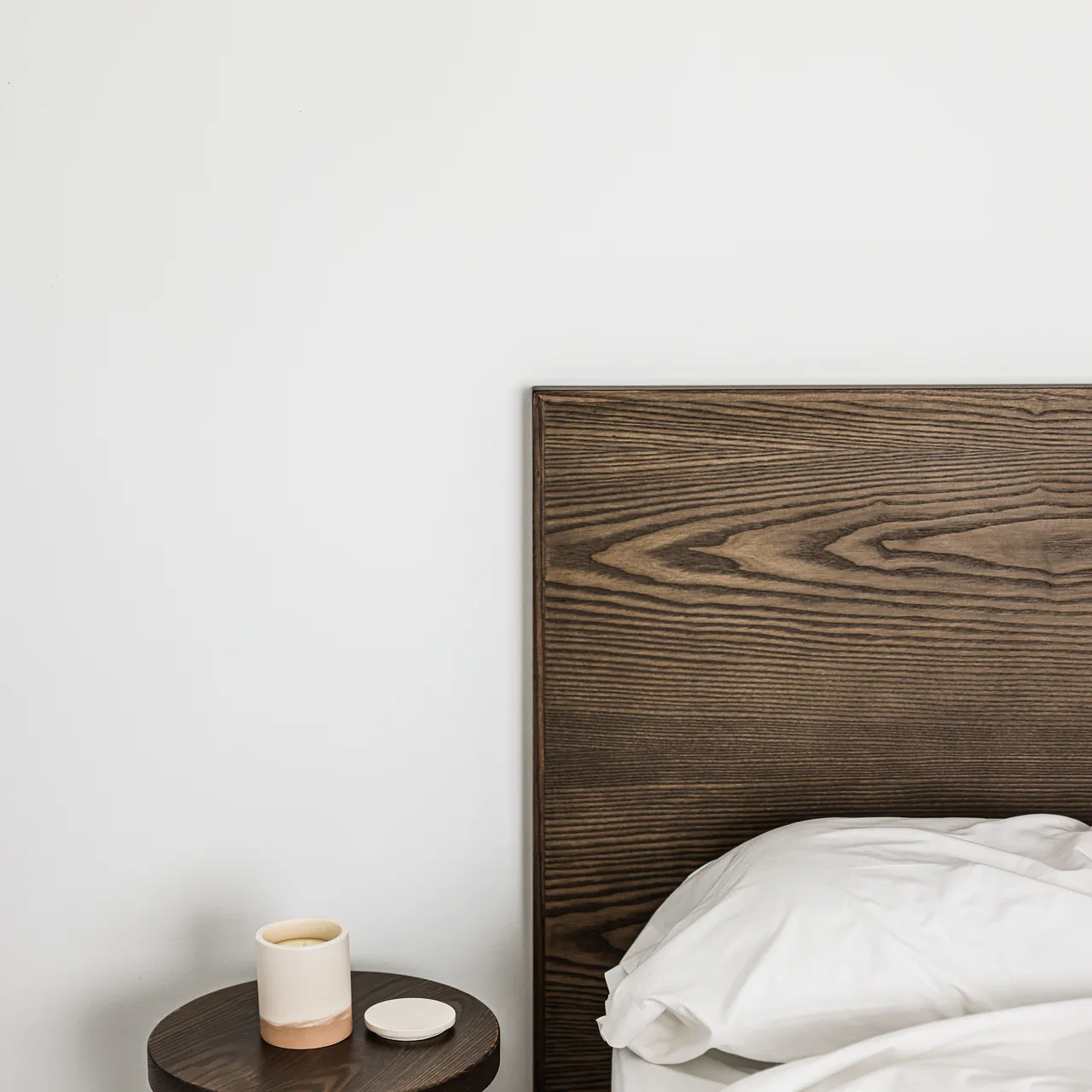
I’d use this approach when the bedroom needs a focal point but already has enough small objects: a reading lamp, books, a clock, or art on an adjoining wall. The headboard can stay simple in shape while still giving the bed a distinct backdrop. A wood surface with quieter grain would make a more subdued version of the same idea.
For bedding, my starting point would be a solid duvet with texture rather than a large printed motif. Rumpled linen, a stitched coverlet, or a plain cotton quilt would leave the wood visible as the main pattern. A striped pillow could still belong here; I’d keep its colors close to the bedding so the stripe doesn’t become a second strong focal point.
The round bedside table in the example repeats the dark wood beside the panel without copying its rectangular shape. That combination is useful when a matching bedroom suite feels too repetitive. The broader guide to decorating with wood explores how repeated tones and contrasting textures can connect separate pieces around a room.
Wood-framed upholstered headboards bring fabric into the center
Where the plain panel puts grain in the foreground, a wood-framed upholstered headboard makes room for fabric. Here, a pale tufted center sits inside a broad golden-brown frame. The wood continues down beside the bed, giving the bedside area a shared outline, while the colored center connects visually with the bedding and curtains.
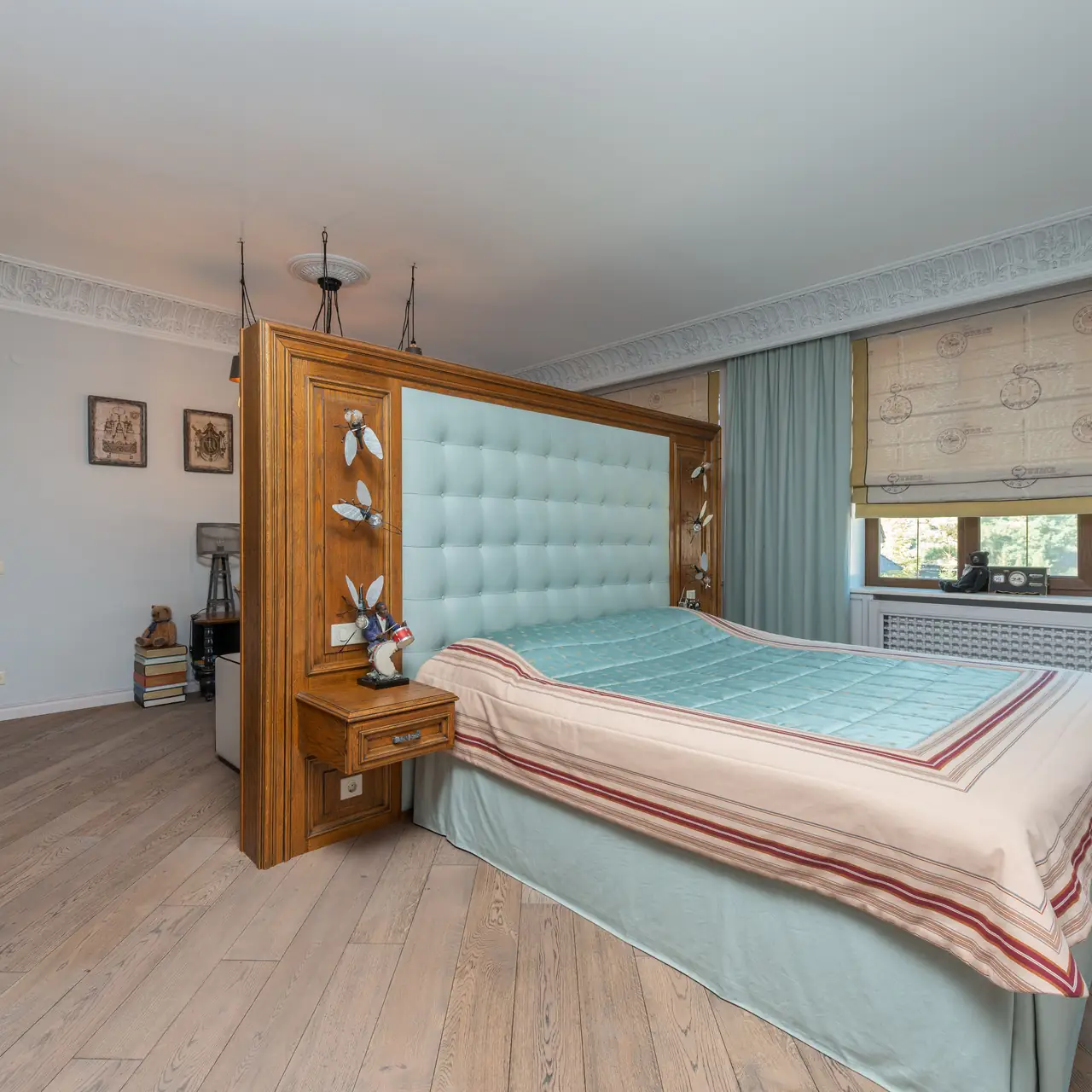
I like the color relationship more than the idea of copying every detail. A pale blue-green center could sit alongside cream bedding, or a neutral center could leave room for a colored quilt. You don’t have to repeat the fabric exactly across the curtains, pillows, and bedspread. A related shade in an adjoining textile can be enough to make the center feel connected.
The amount of exposed wood changes the result. A narrow border would leave fabric in charge; the broad frame in this room makes wood a substantial part of the composition. For a bedroom with painted nightstands, I’d consider letting the headboard supply the wood tone rather than introducing another large wooden piece just to match it.
Tufting also adds a pattern of its own. Beside a strongly patterned quilt, I’d lean toward a plainer fabric center, whereas this tufted version gives relatively quiet bedding some detail. The photograph is a reference for appearance; it doesn’t establish padding thickness or how the headboard feels to lean against.
Arched wood panels add curves behind simple bedding
Fabric isn’t the only way to break up a broad wood surface. In this darker bedroom, repeated arched outlines divide the headboard into decorative panels. The curved details sit inside a larger rectangular composition, so the backdrop has a different character from a headboard whose entire top edge forms an arch.
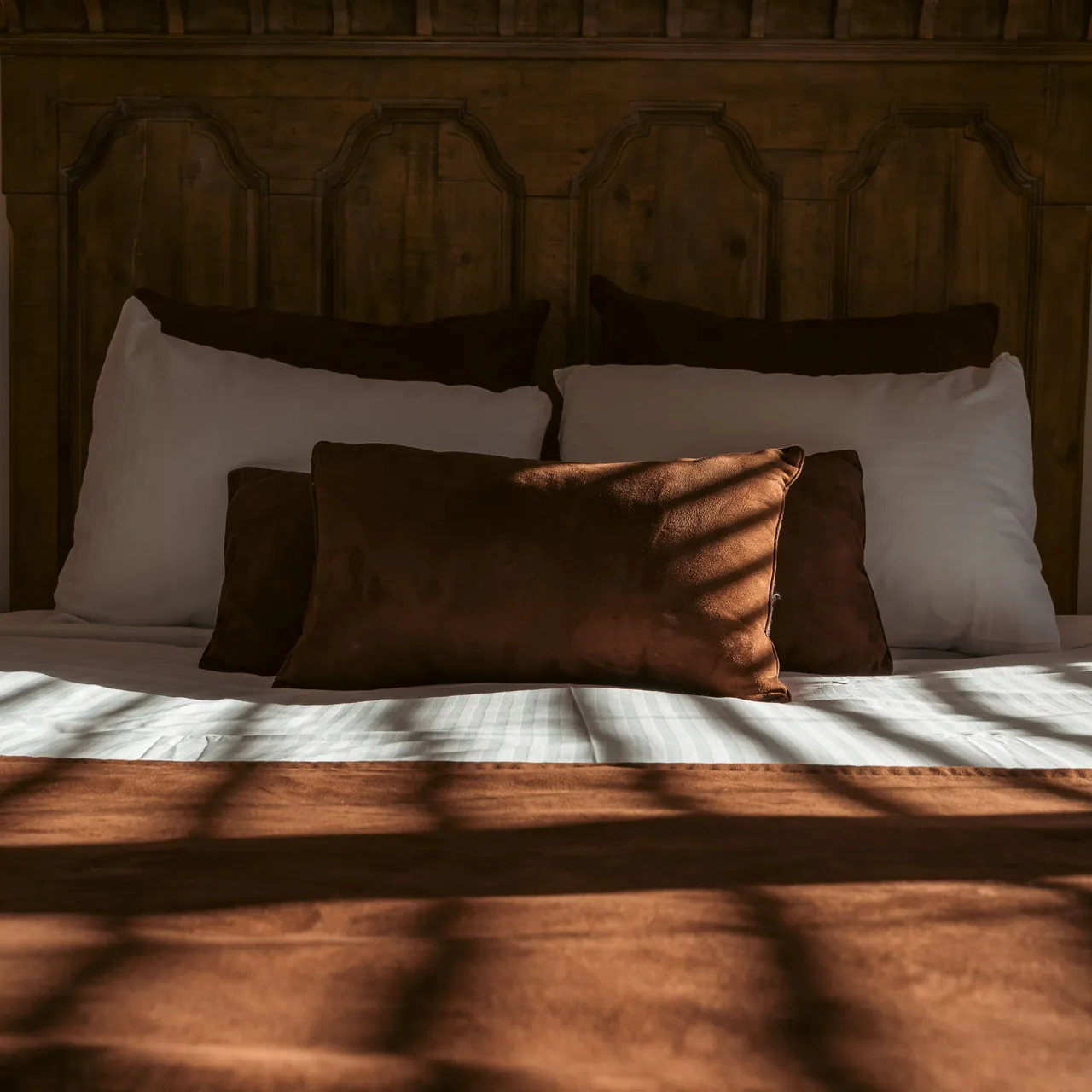
I’d borrow the contrast between the pale pillows and dark wood before adding more decoration. The pillows make a light band across the bed, while the brown accent cushions and bedspread echo the wood’s depth of color. A busy print in the same position would make the arched details less prominent in the overall view.
For a lighter interpretation, cream bedding and a muted wall would give the panel outlines more contrast. For a darker room, bedding close to the wood’s color would keep the palette compact, with lighter pillows or sheets providing a break. Neither pairing needs a claim about the wood species: the visible tone and pattern are the useful design information here.
An existing decorative headboard can also set the limit on nearby wall art. My preference would be a quiet wall immediately above these panels, with art elsewhere in the bedroom. That leaves room to see the curves instead of stacking another detailed shape directly over them.
Let the existing bed decide which headboard detail stays visible
The appealing detail needs to sit where you can actually see it with the bed made. A flowing grain pattern may remain legible behind a loose stack of pillows, while a fabric center or an arched panel can disappear into a tall cushion arrangement. The useful comparison is with your everyday bedding, including the pillows you keep on the bed during the day.
I wouldn’t choose a taller design solely because it looks dramatic in an otherwise empty room. A window, wall trim, or picture already above the bed may be part of the composition you want to keep. Conversely, a broad blank wall can give a more decorative headboard room to stand on its own.
If the project includes replacing the bed itself, the wood bed frame guide covers mattress support, outside dimensions, and assembled bed height. Those checks belong alongside the visual choice before ordering.
For the decorating decision, the final question is specific: should the eye land on the wood grain, the fabric inside the frame, or the curved panel details? I’d let that answer guide the bedding and keep the competing patterns quieter.