WOODEN FURNITURE & HOME
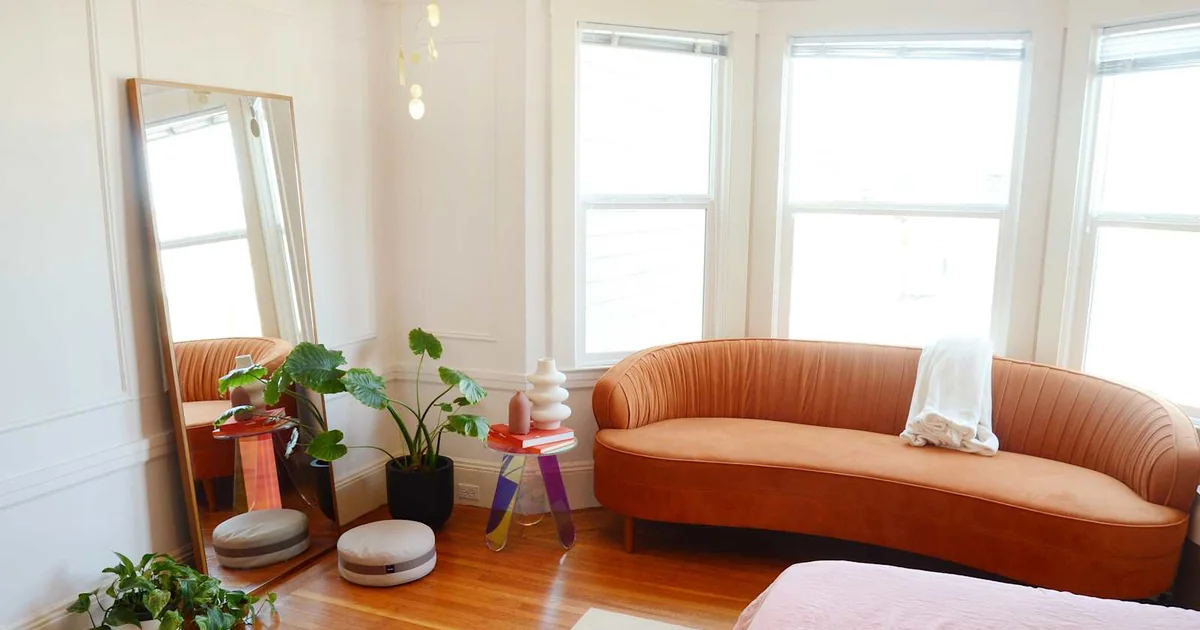
A wood-framed mirror brings a wood border and a changing view into the same space. Choose the glass area for what you need to see, then compare the frame’s width and color against the wall and nearby furniture so the border works with the pieces you plan to keep. A broad, weathered border can be the feature; a slim pale frame can leave more attention on the glass. Where the mirror faces matters as much as where it fits.
Compare the wood border with the visible glass
Frame width changes the balance between timber and reflection. A broad frame gives grain, knots and worn edges more room to show. A narrow frame draws a cleaner outline around the glass. Neither needs to match the scale of every other wooden object nearby, but the border should look deliberate from across the room.
The rustic mirror below has wide, unevenly colored boards around a tall opening. The wood is a large part of what you notice, even beside a plain wall and pale curtains. For a similarly quiet corner, I’d compare this kind of substantial border before adding more small decorations around the mirror.
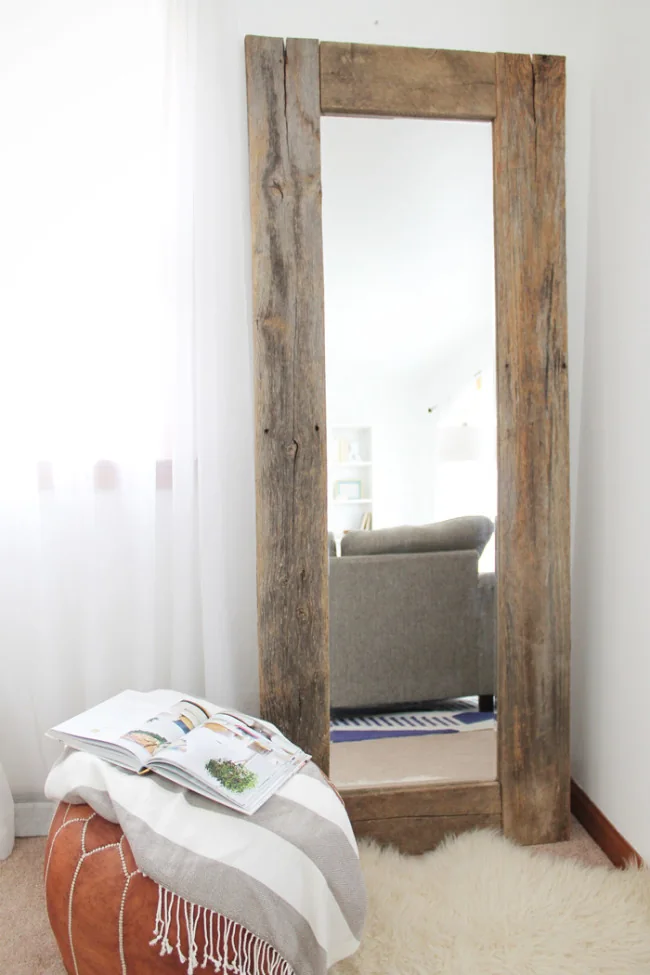
Check what the listed size includes. Does it refer to the complete frame or the visible glass? A mirror can fill a wall nicely yet leave less glass than you expected. For a dressing mirror, judge the view from where you’ll actually stand rather than from the product photo alone.
Don’t crowd the frame’s edges. If the frame lands close to a door casing, headboard or cabinet edge, compare those outlines together. Our wood decorating guide explains ways to repeat a wood tone while keeping other materials in the room.
Choose a wood tone beside the wall and furniture
Compare the finishes side by side. Pale wood against a light wall creates a gentler outline; a dark border on the same wall creates more contrast. The finish matters as much as the species name, so use the actual product finish or a sample beside the room’s largest wood surfaces.
The slim oak frame below sits alongside a pale dresser and woven headboard. Its simple edge leaves the different woven and wood textures visible without introducing another busy pattern. A similar finish could suit a room where the bed or cabinet already has a strong outline.
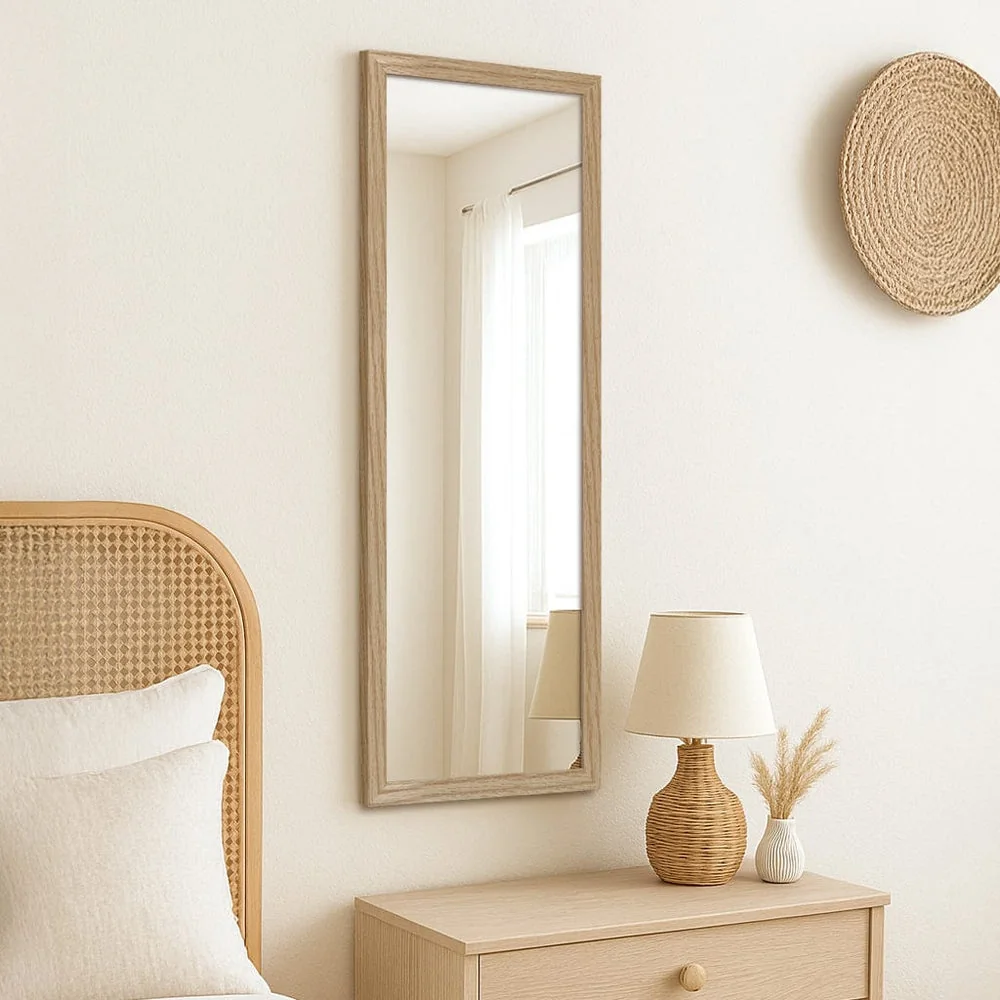
The woods don’t need to match. You might repeat a warm brown in the mirror and bedside table, or use a pale frame to contrast with a dark dresser, especially when the dresser’s shape already stands out against the wall. Compare the pieces in the same room lighting before deciding from separate screen images. The mixing wood tones guide starts with the floor or large cabinet you’re keeping.
Let the mirror shape answer the wall space
Wood color establishes a connection, while the outer shape determines how the mirror occupies the wall. A tall rectangle creates a long vertical outline. A wide rectangle carries that outline across a dresser or console. A round or arched frame introduces a curve among straight furniture edges; that’s a visual option, rather than a requirement for a particular room style.
Look beyond the empty patch. A slim vertical mirror beside a headboard can leave a strip of wall visible on either side. Above a broad cabinet, a wider mirror may make more sense if the aim is to extend its outline across the furniture. Compare the outer frame with the furniture edges and nearby door trim together.
A mirror beside artwork also has a different job from the art itself. The picture stays fixed, while the mirror picks up whatever is opposite it. If the surrounding prints need their own borders, our wooden picture frame guide covers frame profiles and mats in relation to the image. Here, keep the changing reflected view in the comparison.
Check the reflection from where the mirror will be used
Check what’s inside the glass. Look toward the proposed spot from the doorway, the bed or the place where you’ll get dressed. Consider what will appear inside the glass from those spots: a curtain, a bedside table, a busy shelf or the open doorway.
The full-length mirror below reflects part of the bed and the light-colored room. Its plain wood border sits next to another wooden piece, while the bedding and rug introduce softer surfaces. Don’t choose from the frame alone. Compare the reflected room with the furniture around the border.
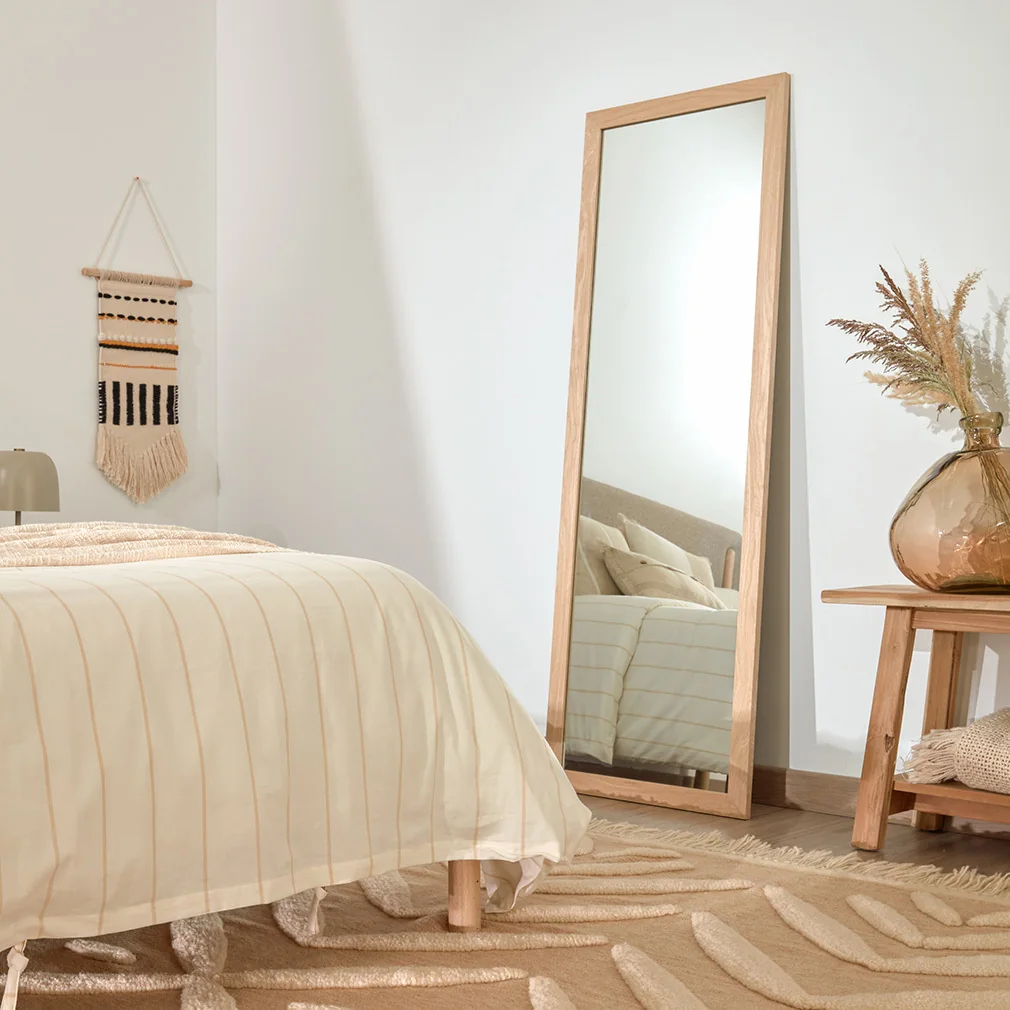
A window in the reflection may be appealing, but compare that view with the lamps on as well. A bright bulb or a crowded surface can become more noticeable when it appears in the glass. Moving the proposed position along the wall may change the view enough that a different frame isn’t needed.
Give a hallway mirror a clear role beside storage
The reflected view matters in an entryway too, where hooks, bags and coats can compete with the mirror. Decide whether the mirror is mainly for a quick check on the way out or a larger view before dressing. That purpose helps you judge the glass area and position without choosing a size solely to fill a gap.
If a shelf will sit nearby, compare the shelf and mirror as separate objects with separate outlines. Leave the mirror’s useful view clear of the items you expect to keep there. Our entryway shelf with hooks guide addresses the storage side of that arrangement.
The photos show design possibilities rather than a mounting method. A leaning pose in a room photograph doesn’t establish how the mirror is secured.
Choose the frame that improves the whole view
After comparing the position, return to the border. A textured, broad frame suits a corner where the wood itself should stand out. A slim frame suits a composition where the reflection and nearby furniture deserve more attention. Keep whichever version gives you the glass area you need and a view you want to see each day.
For more wood furniture and decorating topics, browse Wood Center.