WOODEN FURNITURE & HOME
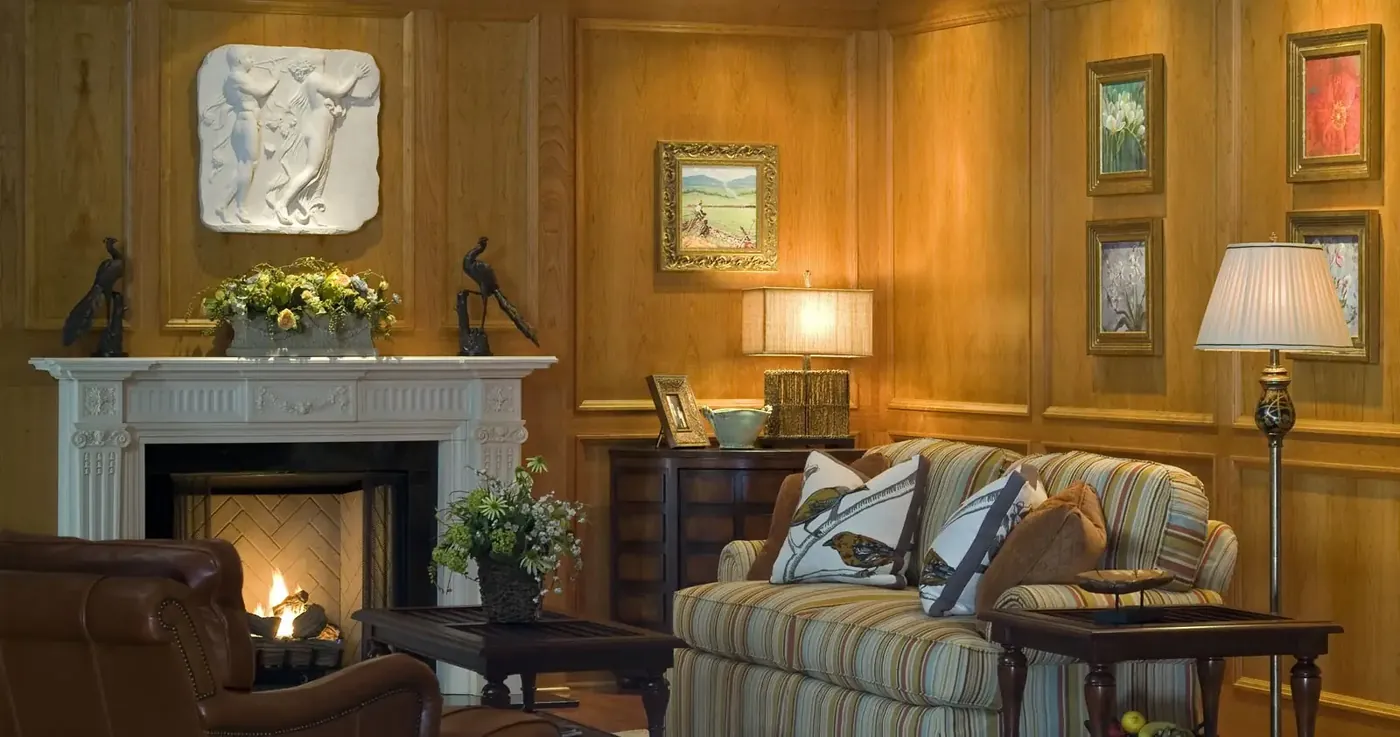
Wood wall paneling ideas become easier to choose when you compare the pattern with the furniture in front of it. Broad framed rectangles give a living room a formal backdrop, narrow vertical slats add texture behind a bed, and pale horizontal planks offer a quieter setting for a sofa. Start with the wall you’ll actually see, then decide how much of its pattern should remain visible.
Choose a panel pattern that works around your furniture
A sofa back or headboard will hide part of the paneling, so compare each pattern with that obstruction in mind. Large rectangles need enough exposed wall to show their outline; a close-set slat pattern can remain legible in the narrower area beside a headboard.
| Paneling direction | Visual character | Furniture relationship to consider |
|---|---|---|
| Framed rectangles | Broad shapes and defined borders | Keep a useful amount of each frame visible above seating |
| Vertical slats | Repeated lines with dark gaps | Let a plain headboard interrupt the pattern |
| Horizontal planks | Long seams with visible grain | Compare the plank lines with the sofa back and table |
These are decorating starting points, rather than rules about a room’s dimensions. The examples below show how the wall pattern and the furniture share the same view.
Use dark framed panels for an architectural living room backdrop
Of these patterns, framed paneling gives the furniture the strongest surrounding outline. In the dark living room below, rectangular moldings continue around a matching door, while the pale sofa stays clearly visible against the wall.
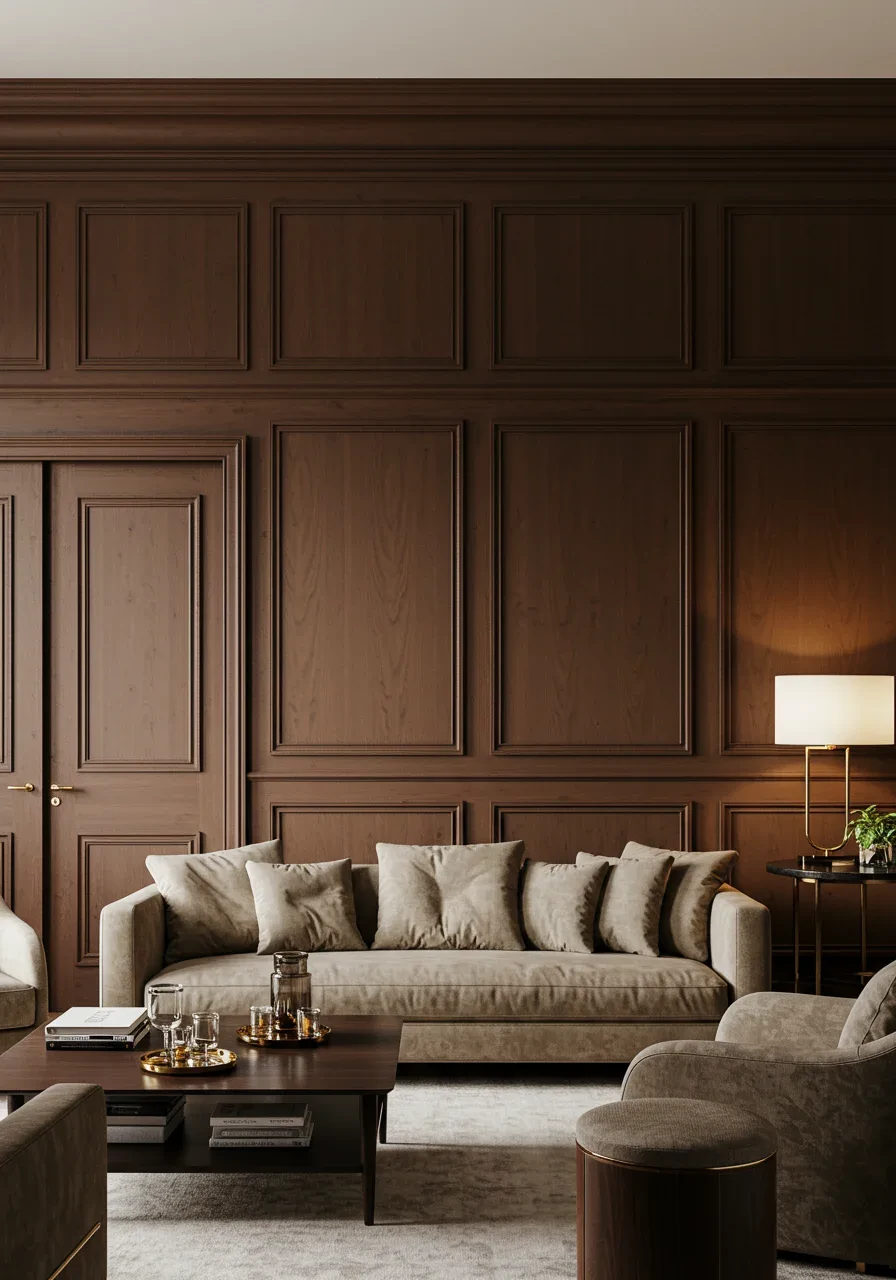
The door matters as much as the sofa here: its matching detail makes the wall feel continuous, even where an opening interrupts it. For a similar decorating direction, look at the doors and trim that will share your paneled wall before choosing the panel layout.
Keep the furniture outline simple if you want those rectangles to lead. A broad upholstered sofa leaves a calmer shape in front of the moldings than a collection of tall display pieces would.
Dark paneling doesn’t require dark furniture throughout the room. Compare a pale sofa, rug or curtain with the wall before adding another large brown surface; the guide to mixing wood tones explains how to judge that wider finish relationship.
Put vertical wood slats behind a plain upholstered headboard
Where framed panels create large compartments, vertical slats spread their detail across a wall in narrow repeats. The bedroom example pairs those lines with a broad, light upholstered headboard, leaving the slat pattern visible above and beside the bed.
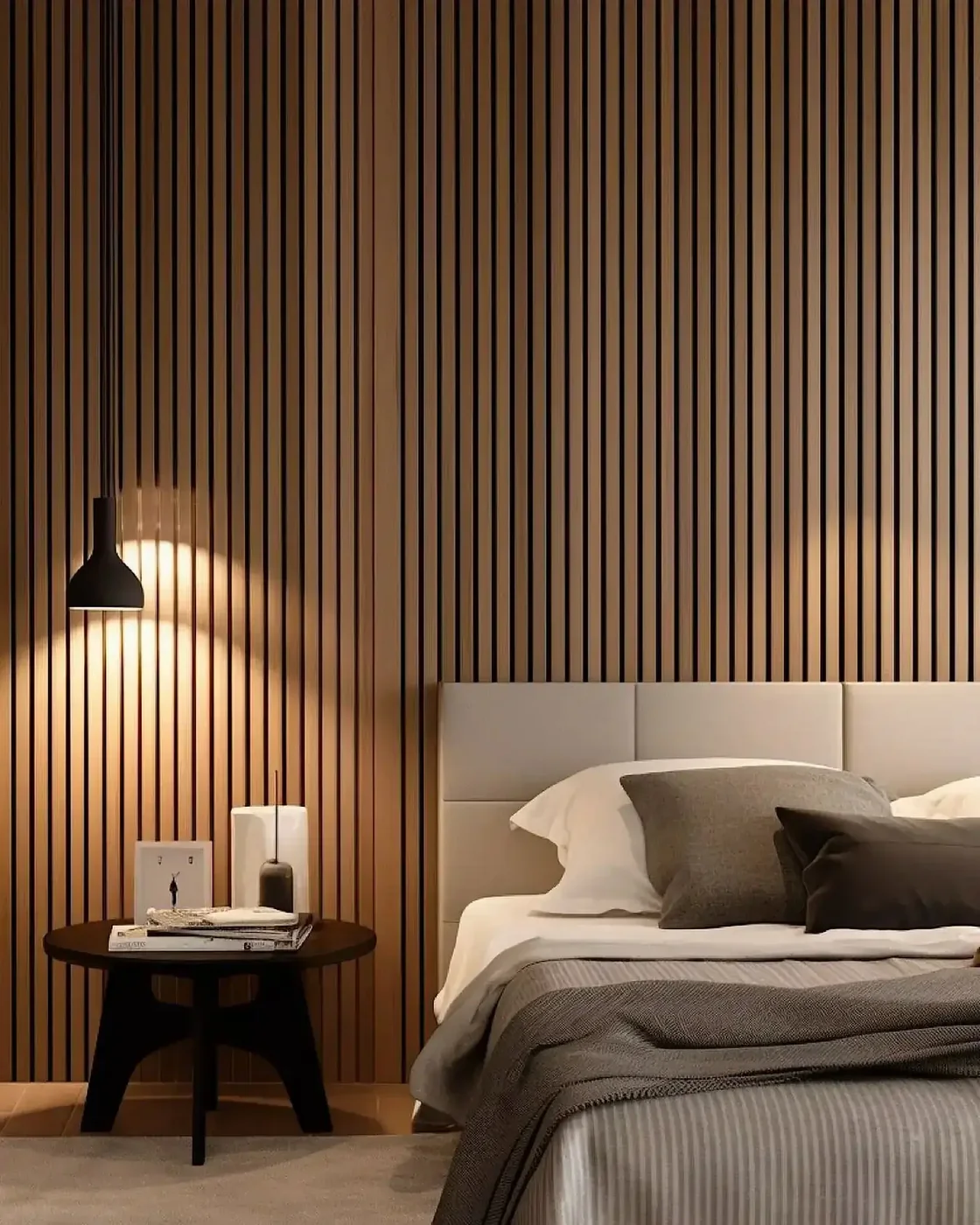
The black pendant and dark bedside table pick up the dark gaps without adding another striped surface. That gives the eye somewhere to pause among the repeated lines.
If your bedding already has a strong pattern, compare it with the slats before choosing an equally busy headboard. Plain fabric is a useful option when you want the wall to supply most of the bedroom’s texture.
Don’t assume a narrow strip centered behind the mattress will look like a full bed wall. Include the bedside tables and lamps in the composition, then decide whether the paneling should surround them or stop visibly within that wider arrangement.
Let pale horizontal planks sit quietly behind a sofa
For a seating area that needs less contrast than the slatted bedroom, consider pale horizontal boards with a plain sofa. In this example, the long seams run behind light upholstery, and the darker coffee table provides a distinct shape in front.
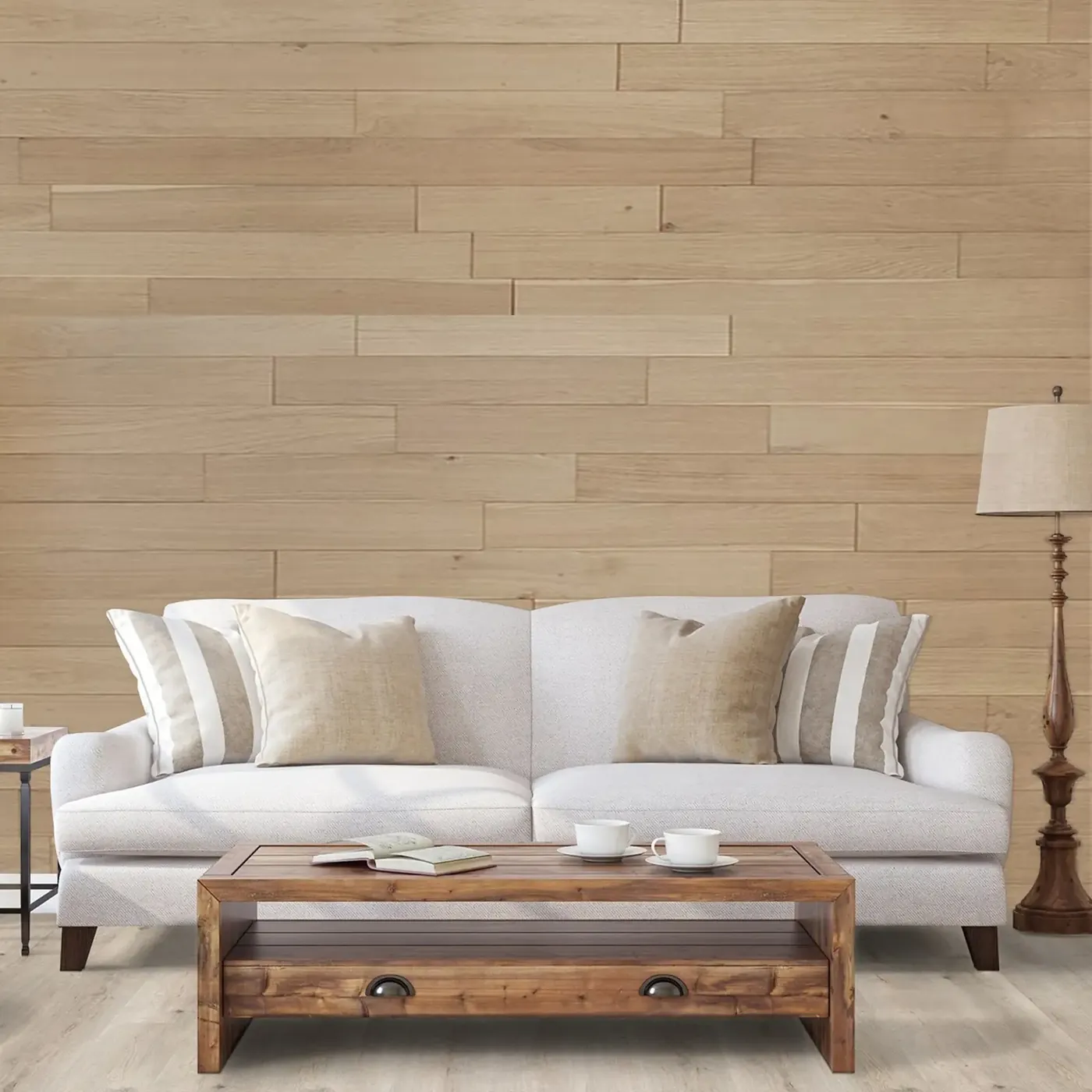
The wall still has pattern: board joints and grain remain visible across its surface. A pale finish doesn’t make those details disappear, so compare the whole wall with the sofa fabric and any patterned rug you plan to keep.
Art can change that balance. A large picture interrupts the plank lines, while several small frames add more edges; if you’re considering a ledge, the picture frame shelf guide covers keeping the displayed images readable as they overlap.
Leave some of the board pattern exposed if that’s what attracted you to the wall. Filling the space above the sofa with frames may leave little reason to choose a textured backdrop there.
Give a paneled accent wall a deliberate stopping point
Once you’ve chosen a pattern, its boundary becomes part of the design. A wall ending at a room corner gives the paneling a clear edge; a smaller area behind furniture needs an edge that looks intentional within the surrounding bare wall.
Consider the view through the doorway as well as the view from the sofa. A panel area that looks centered behind a chair may look oddly cut off when the door, adjoining wall and ceiling are visible together.
Full-wall coverage leaves room for furniture to move within the pattern. A smaller accent area ties the decoration more closely to a particular bed, sofa or console, which matters if you like changing the layout.
If you only want a contained wood feature above furniture, compare a finished scrap wood wall-art panel before committing to a wider wall treatment. An artwork’s outer border provides its own stopping point.
Give furniture and small wood accents a quieter role
With the wall’s edges settled, judge how much additional texture the room needs. A richly framed wall may already provide the detail you wanted; a slat wall may need little beside the bed and its usual lighting.
Don’t buy matching wood objects solely to repeat the paneling. A smooth bowl, plain lamp shade or soft curtain can give a different surface beside the wall, while the wood decor ideas guide helps with smaller displays on tables and cabinets.
Keep material questions separate from the photograph’s appeal. A room image doesn’t establish the panel’s wood species, backing, finish or suitability for your intended location; check the actual product description and installation guidance before ordering.
Save the room view you like with a note about the useful detail: visible frame outlines, a plain headboard against slats, or pale boards behind a sofa. That makes the next choice more specific than simply looking for a beautiful wood wall. Browse Wood Center when the furniture arrangement needs attention alongside the wall.