WOODEN FURNITURE & HOME

Wood ceiling ideas start with a choice about how much attention the ceiling should draw. Warm wood-look planks make the overhead surface a feature; pale gray planks can sit within white beams; white beadboard adds fine lines while keeping the color quiet. Choose the room’s color balance first, then decide how much grain and groove detail belongs above it.
Give warm ceiling planks a quieter room below
A honey-colored ceiling suits a room where you want the overhead surface to contribute warmth and visible grain. In the living room below, the warm planks occupy a broad, uninterrupted area above white walls. The dark sofa gives the ceiling a contrasting shape below, while the window trim carries a related brown into the wall.
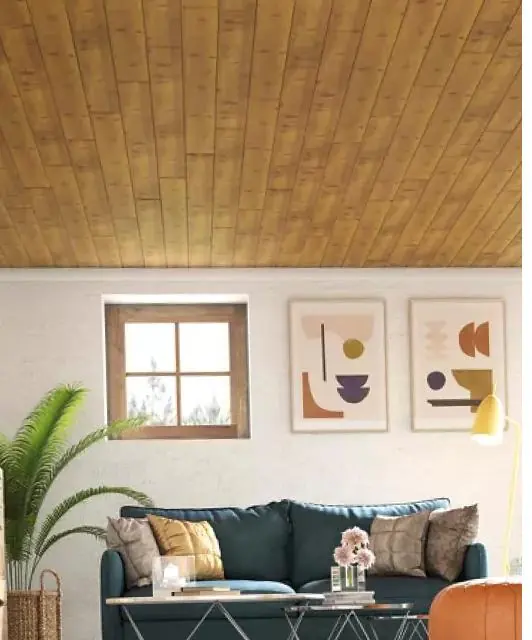
The useful detail is the amount of plain wall between those surfaces. A warm ceiling doesn’t require a matching brown sofa, orange curtains and more timber on every wall. I’d keep the larger fabrics relatively quiet before adding another strong grain pattern. A simple curtain or plain rug gives the ceiling room to remain the main texture.
If a dark floor is staying, compare it with the proposed ceiling finish before choosing the furniture around them. A paler warm ceiling may give the room the wood color you want without repeating the floor’s depth overhead. The guide to mixing wood tones explains how to separate undertone from light-dark contrast when those finishes seem close but don’t quite agree.
Keep white beams visible within a gray wood-look ceiling
Where warm planks create a continuous field, gray planks between white beams give the ceiling distinct compartments. The bright living room below has pale gray grain inside a white beam grid. White walls and large windows remain prominent, so the ceiling pattern shares the view with plenty of plain, light surfaces.

For a room that already has exposed beam lines, I would compare the plank color against those lines before choosing a new floor or sofa finish. A gray sample that seems neutral alone may look noticeably cool beside cream trim. Include the actual trim color in the comparison rather than assuming every white will create the same result.
Look at the ceiling from the doorway as well as from the main seat. The grid, plank seams and light fixture all contribute lines to the overhead view. If the ceiling is already busy, a plain pendant shape and quieter curtains are worth considering before adding more pattern below. The broader decorating with wood guide places these choices alongside the room’s floors, furniture and textiles.
Choose white planks when wood color feels too heavy overhead
A white plank ceiling keeps the linear detail while taking a large brown surface out of the palette. That makes it a useful option to compare when the room already has a wood floor, tall wooden cabinets or a dark paneled wall. The ceiling can contribute texture without needing to repeat their color.
The white product photograph below shows visible wood-grain texture across broad plank faces. Look at that surface separately from the fine, repeated grooves of beadboard: two white ceiling products can give quite different amounts of pattern.

In a room with little daylight, I’d compare a white finish before committing to a darker wood tone overhead. Keep the judgment about appearance: a pale ceiling may feel less enclosing, but color doesn’t establish the finished ceiling height. Product thickness and the mounting arrangement need their own checks.
An existing feature wall also changes the choice. A strongly patterned wall and a strongly grained ceiling will both ask for attention in the same view. The wood wall paneling ideas guide shows framed, slatted and horizontal wall patterns; use it to judge how much detail the wall is already contributing before choosing the ceiling texture.
Use white beadboard for a finer ceiling rhythm
Beadboard gives white a more closely repeated pattern than the broader plank faces above. In the close-up below, narrow grooves run through the white surface. Those repeated recesses are the detail to compare with your cabinet fronts, wall trim and other lines in the room.
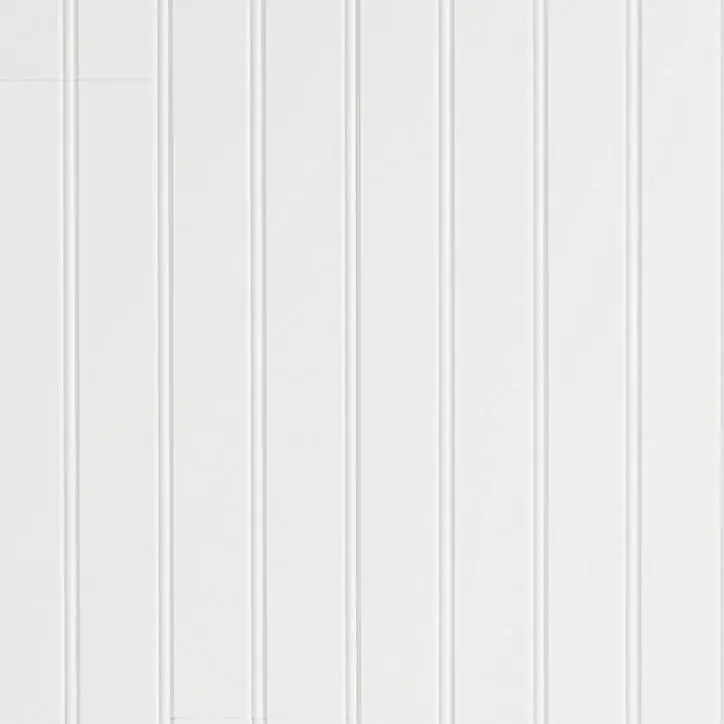
For a kitchen with simple cabinet fronts, I like beadboard as a way to put the finer detail overhead. With heavily detailed doors, patterned tile and open shelves full of objects, I’d also consider a broader white plank face. The choice is about which surface should supply the repeated lines, rather than whether the whole room belongs to a particular style.
View a sample from across the room, too. A groove that looks deep in a close-up may appear much quieter at ceiling distance. Compare it in the room’s daylight and under the lamps normally used in the evening; a product photograph can’t settle how much of that texture you will notice at home.
Separate the ceiling finish from the material underneath
After choosing the look, check what the actual product is made from. Armstrong’s WOODHAVEN tongue-and-groove ceiling planks are medium-density fiberboard (MDF), with finishes that reproduce wood grain. The same manufacturer’s COUNTRY CLASSIC planks are mineral fiber. A wood appearance or a tongue-and-groove edge does not establish that a plank is solid wood.
Keep the product name attached to your saved sample or photograph. Check its intended ceiling use, room conditions and current installation instructions before ordering. A room image helps with color and pattern; it doesn’t establish moisture suitability, fastening requirements or how much finished height a particular installation will occupy.
For the final decorating choice, put the ceiling sample beside the finishes that will stay: flooring, trim and the largest cabinet. Then decide whether the ceiling needs warmth, a pale background or finer grooves. Leave smaller accessories until afterward; the wood decor ideas guide covers that smaller scale. Wood Center brings those decorating decisions together with furniture and room layout guides.