WOODEN FURNITURE & HOME
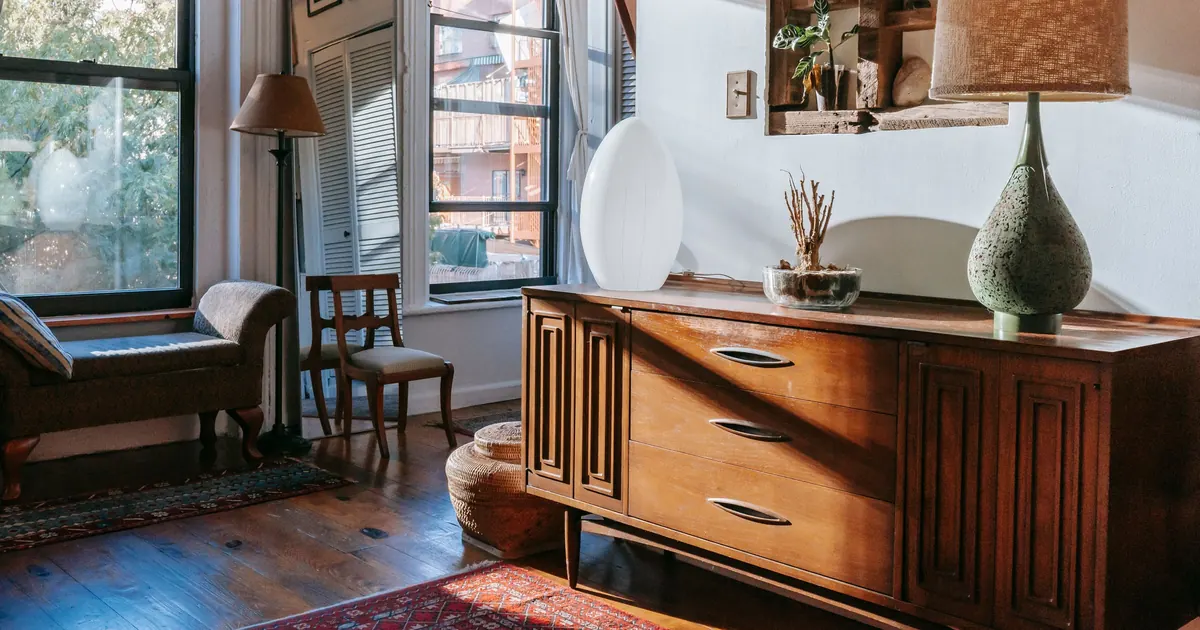
Protect wood furniture from sunlight by keeping direct window light off the surface and closing curtains or blinds when the sun reaches it. Start with the light falling on the furniture before buying a polish or changing the finish. UV window film can be part of the plan, but visible light matters too, so a UV claim alone doesn’t promise unchanged color.
Find where sunlight actually hits the wood
A bright room doesn’t expose every surface in the same way. Look for the sunlit patch on the tabletop, drawer fronts, chair seat, or cabinet side, rather than judging the room from the doorway. Check again later in the day: the patch you miss while leaving for work may reach the furniture while you’re out.
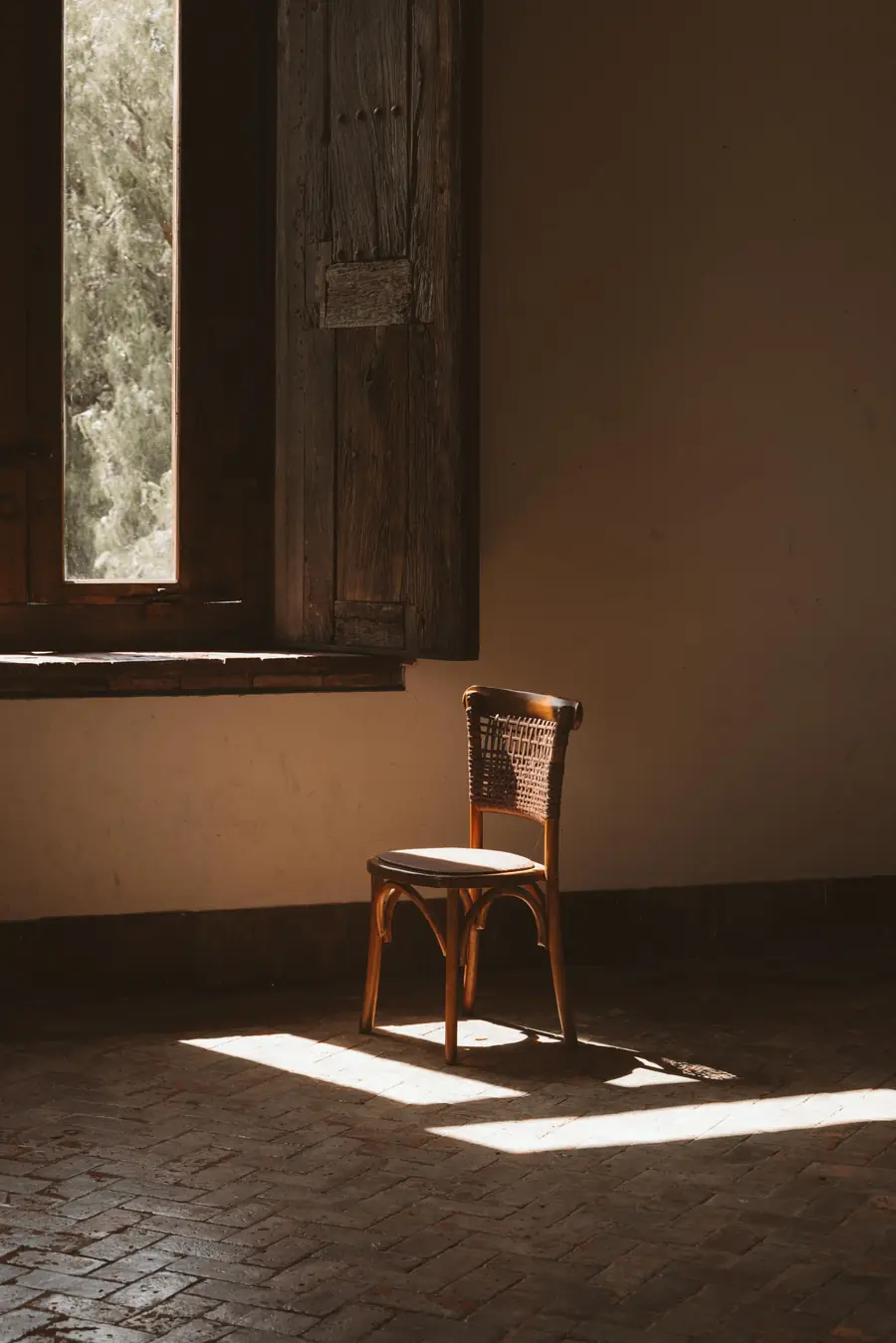
Move a light-sensitive piece away from direct window light where the layout allows. The National Park Service’s guidance on interior wood finishes recommends this approach for sensitive furnishings. A sunny window doesn’t need a wooden table directly in front of it; an adjacent wall may offer a more useful place to try.
There’s no universal safe distance from a window. Choose a position by the light reaching the wood, and check the new spot before treating the move as finished. For related upkeep once the layout is settled, visit the furniture care and makeovers guide.
Use curtains or blinds during direct sun
When moving the furniture isn’t practical, control the light at the window. Close curtains or lower shades during the period when sunlight falls on the wood. Blinds give another way to interrupt that light while keeping part of the window open to the view.
The Canadian Conservation Institute’s light guidance includes blinds, solar screens, partially closed curtains, and shutters among ways to reduce fading risk. That guidance concerns collections; the useful household principle is to reduce exposure without assuming a particular curtain delivers a measured level of furniture protection.
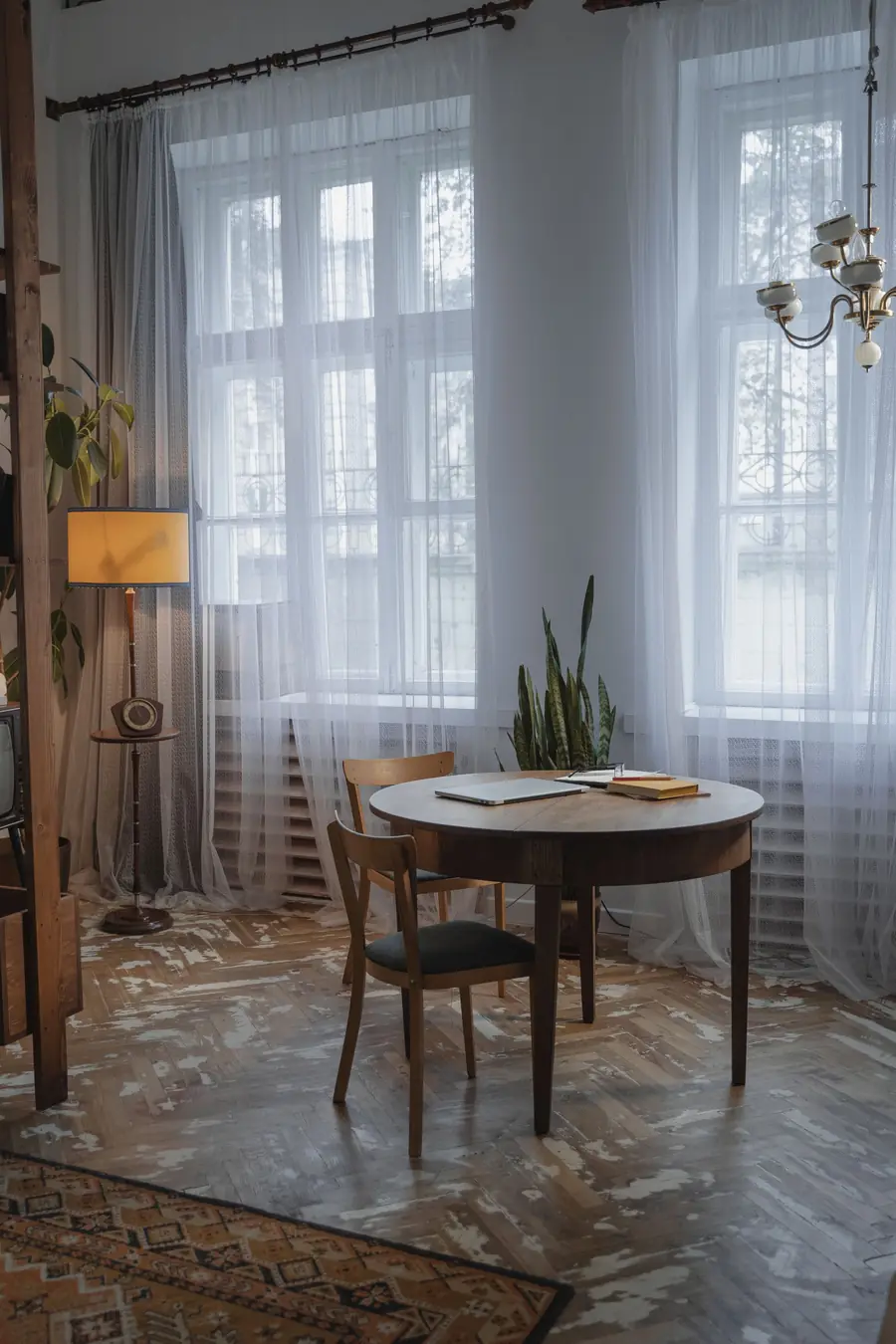
Don’t judge a curtain only by how soft the room looks. Stand beside the furniture with the curtain closed and look at the surface you’re trying to shade. If a beam still falls across it, adjust the covering or try a less exposed position. You don’t need to keep the whole room dark all day to act on the hours of direct sun.
Keep a window-side desk out of the beam
A desk beneath several windows needs a separate look at the worktop and the vertical wood below it. In the example below, the desk runs beneath the windows, while a bright patch reaches the neighboring wall. The photograph shows a layout to inspect, rather than proof that the desk is protected through the day.
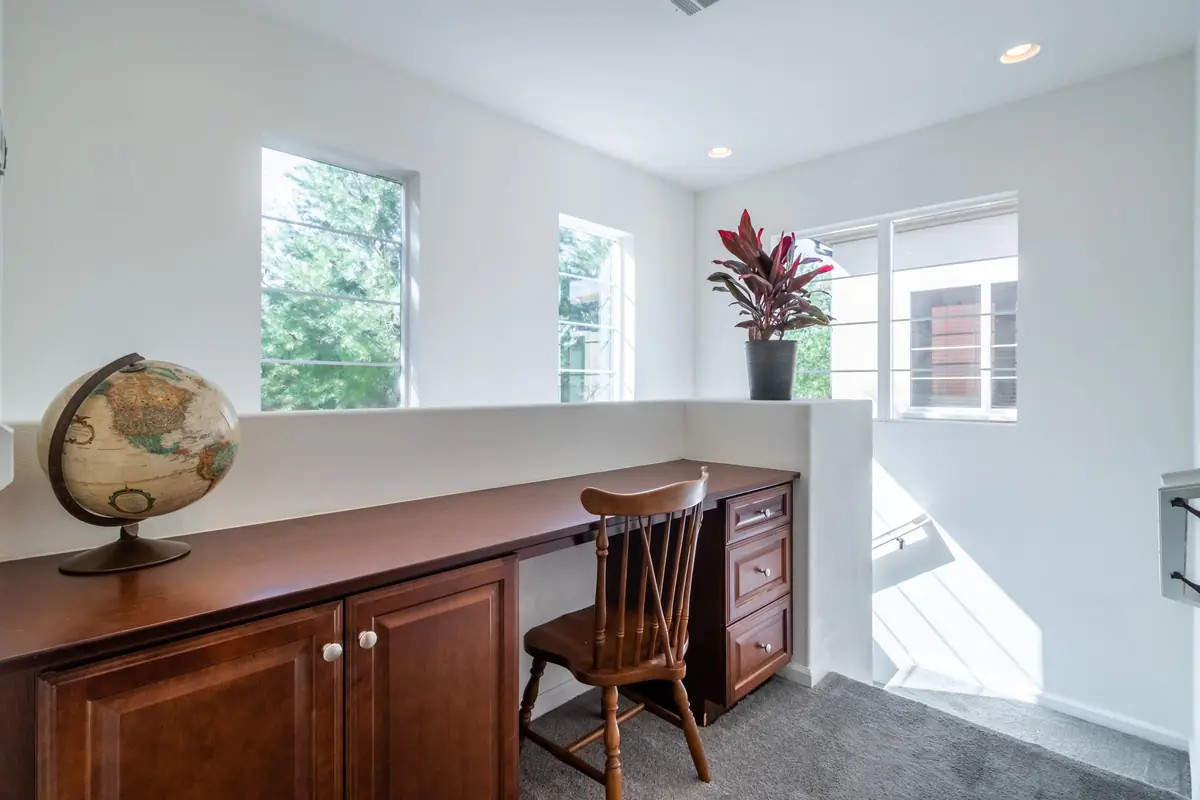
If the desk must stay there, make the window covering the part of the setup you change. Check whether lowering a shade blocks the light on the wood while leaving enough light to work.
Understand what UV window film can cover
UV filtering and visible-light control address different parts of sunlight. The National Park Service found that certain historic wood stains suffered damage from visible light even with UV filtering. Those results don’t establish a fading timetable for your furniture, but they explain why a clear UV filter isn’t a complete answer.
When comparing films, check both the UV information and how much visible light the product allows through. Ask the window or film supplier to confirm suitability for your particular glass before installation. Film selection and fitting belong to the window system as well as the furniture-care decision.
Keep using shade where direct light remains a problem after film is fitted. A UV label doesn’t tell you whether the tabletop will remain in a bright beam.
Deal with uneven color before reaching for polish
Existing color differences need a different decision from preventing more exposure. The Canadian Conservation Institute notes that faded colors don’t truly recover through light control. Closing the curtains helps manage future exposure; it doesn’t restore a lost stain color.
Don’t use deliberate extra sun as a way to match a pale patch to the rest of a piece. The outcome depends on the wood, stain, finish, and exposure, and this guide can’t predict which area will change next. Start by shading the piece, then identify the finish before choosing any repair treatment.
If you’re considering refinishing, staining wood is a separate process from controlling the sunlight that reaches it. A new color still needs a sensible place in the room. For an antique or a piece with a fragile finish, get a furniture conservator’s assessment before changing the surface.