WOODEN FURNITURE & HOME
A chunky wood console table can suit a narrow entryway when its depth leaves a comfortable walking route and its heavy outline has room against the wall. Choose the footprint first, then compare the thickness of the top and legs. A dramatic front view is only useful if the table also fits the way people enter, turn and carry things through the room.
Check console depth before choosing a long tabletop
The tightest point beside a console matters more than the widest part of the entryway. Measure from the proposed front edge to whatever sits opposite: a wall, stair rail, radiator or another piece of furniture. Include anything that projects beyond the table’s legs.
For the room around that footprint, the wood furniture and layout guide connects placement with construction and delivery checks.
Use removable paper or tape to mark the full footprint on the floor. Allow for the baseboard if it keeps the back legs away from the wall. Then walk through with the bag, laundry basket or groceries normally carried along that route. Try the turn into the next room as well as the straight passage.
Floor tape cannot show a projecting corner at hip height. A cardboard box placed inside the outline gives a better sense of that obstruction. Keep the trial clear of doors and remove it afterward.
Compare shorter and shallower tables separately. Reducing length can free the doorway end while leaving the same obstruction along the walking route. Reducing depth changes that route directly. If the table only fits when everyone walks sideways, keep looking for a shallower model or leave that wall open.
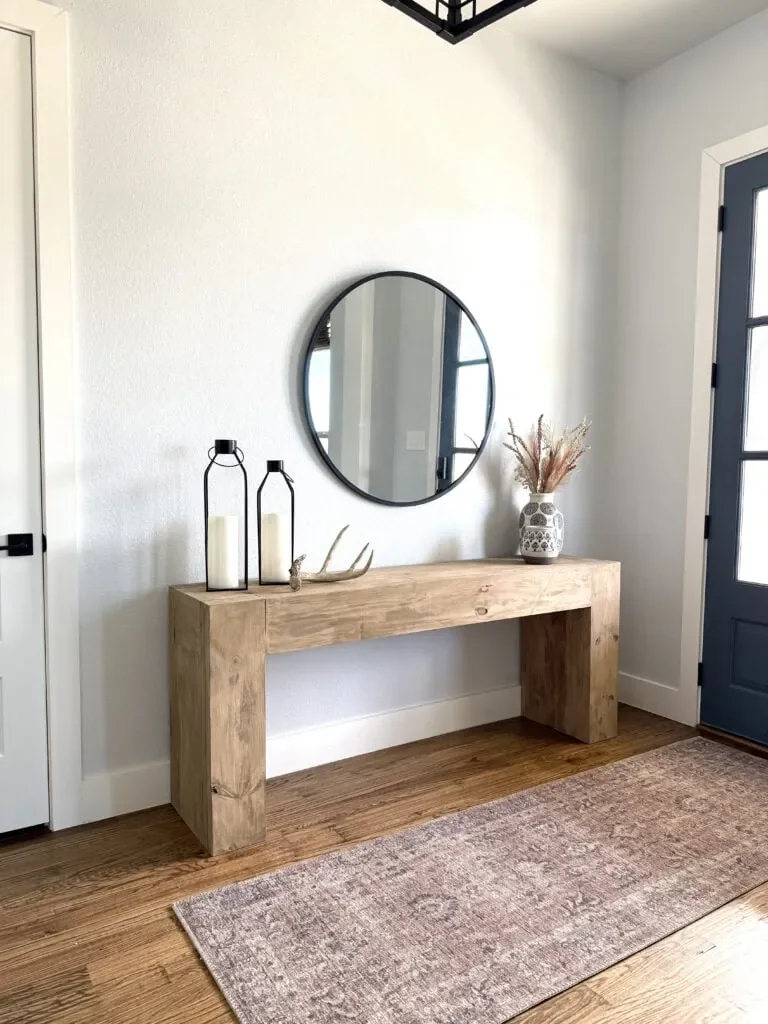
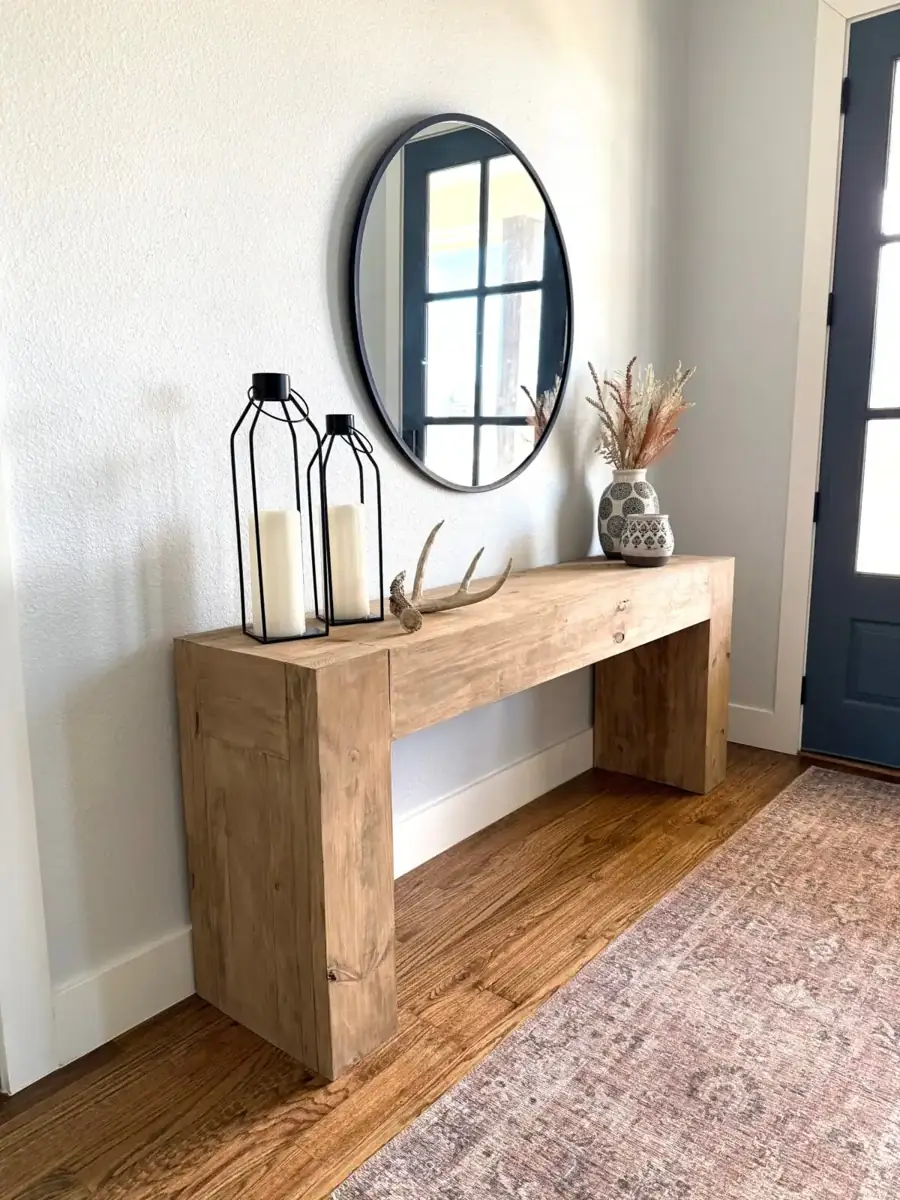
The photographed console below has broad end panels, but the center stays open. Notice how the rug and the space in front remain visible; the photograph illustrates the layout rather than establishing a suitable clearance for another home.
Balance thick console legs with the wall around them
Once the depth works, compare the console’s outline with the usable wall section. Measure between door casings, corners and other fixed interruptions. A table that nearly fills that section can make the entrance feel crowded even when its footprint technically fits.
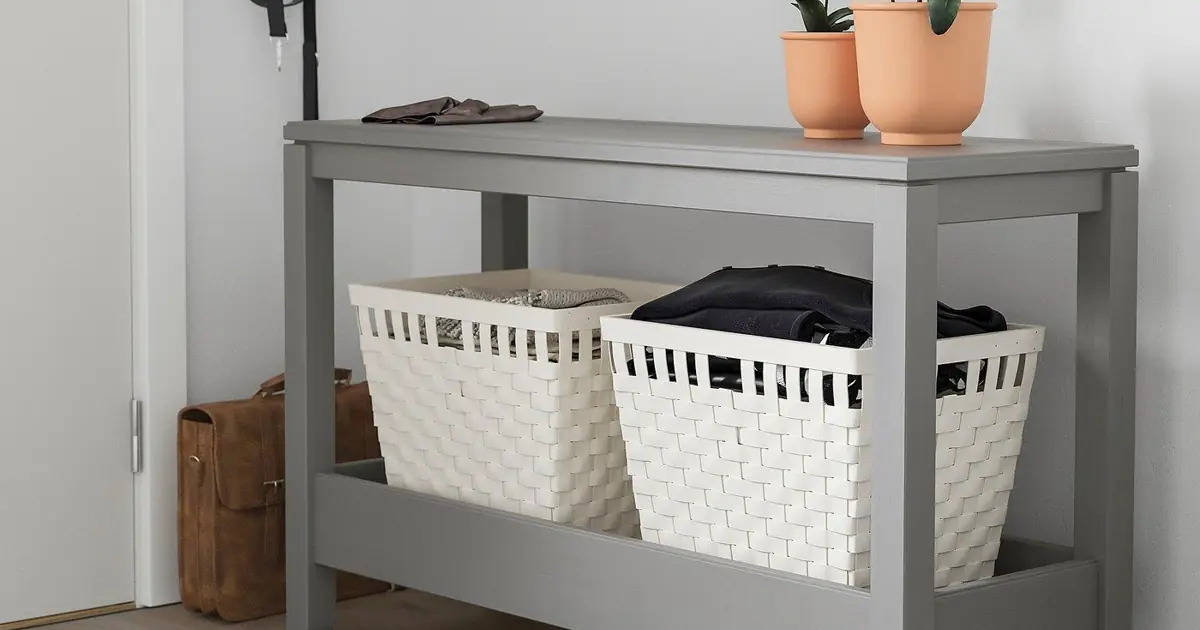
Look at the empty space under the top. Broad slab legs and a thick front edge already create a strong rectangle. An open center lets the wall and flooring continue through the composition. Adding a deep lower shelf, baskets and stacked objects fills that opening and makes the same furniture appear more solid.
For a narrow room, start by considering a chunky top over an uncluttered base. If the broad legs are the feature you like most, avoid automatically adding more furniture beneath them. Put the practical essentials on the tabletop and see whether anything else is necessary.
Check side photographs before ordering. If shelves are more useful than a heavy outline, compare a console with accessible lower storage and check the space needed to remove its baskets. A console can look substantial from the front yet have a modest depth, while another has broad panels extending much farther into the room. Front thickness, overall depth and actual material thickness are separate details.
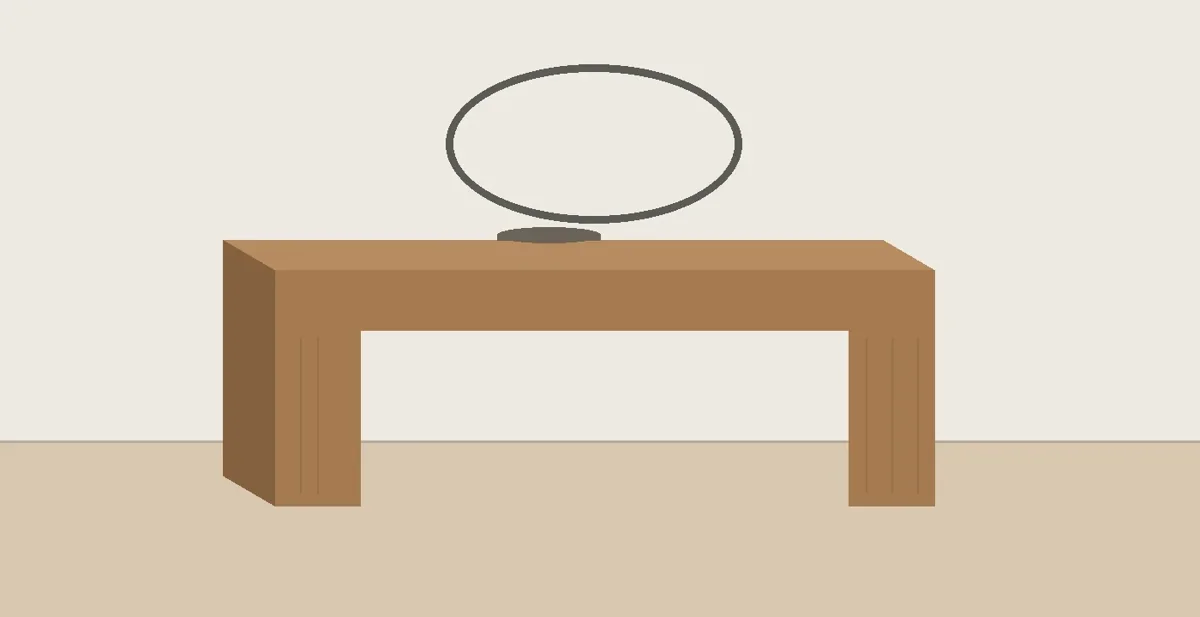
The close view below shows the front band meeting the broad end panels. That continuous outline supplies much of the table’s visual weight, leaving little need for bulky accessories.
Compare wood construction beyond the chunky appearance
The same thick outline can come from different construction methods. A photograph alone cannot establish whether a console uses solid timber throughout, veneer over a core, or a hollow built-up section. Read the material description for the top and base individually.
Ask the seller what an unclear term means. “Wood finish” describes appearance without necessarily identifying the material underneath. “Solid wood legs” says something about the legs, but leaves the top unanswered. A substantial-looking edge is not evidence of a solid slab. The same distinction matters when assessing a reclaimed wood furniture description: an aged appearance does not establish the material history.
Construction also affects what to ask about care. Check the manufacturer’s cleaning guidance, assembly instructions and any installation requirements. Confirm the finished weight if moving the console upstairs or through a tight turn will be difficult. Use the stated weight rather than guessing from the size of the legs.
Look for close photographs of corners and the tabletop edge. Those are useful places to judge whether the texture and finish suit the room. They cannot replace a specification, but they can reveal an edge profile that is hard to see in a styled room photograph.
Keep a narrow entryway console useful without crowding it
A console that fits the room still needs enough surface for its daily job. For keys and light hanging items, an entryway wall shelf and hooks may offer a different use of the same wall. Decide whether that job is holding keys, supporting a lamp or displaying one large object. Arrange those items within the proposed depth before choosing the table.
Check the base of a lamp and the widest part of its shade. A narrow base does not guarantee that the shade stays within the tabletop footprint. Plan the cord’s route to the outlet so it does not cross the entrance or require the table to sit farther forward than expected.
Give keys and mail a defined landing place, with bare surface beside it. Tall arrangements near a door should stay clear of the handle and door swing. A mirror or artwork above the table can add height without consuming more tabletop, but choose its position after the table location is settled.
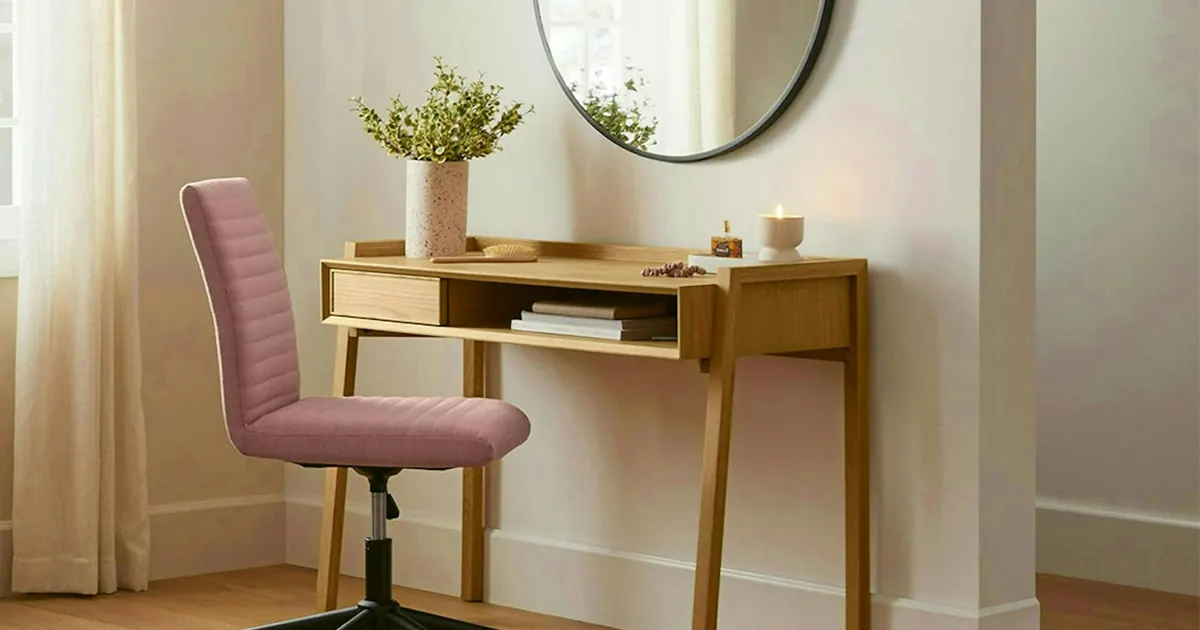
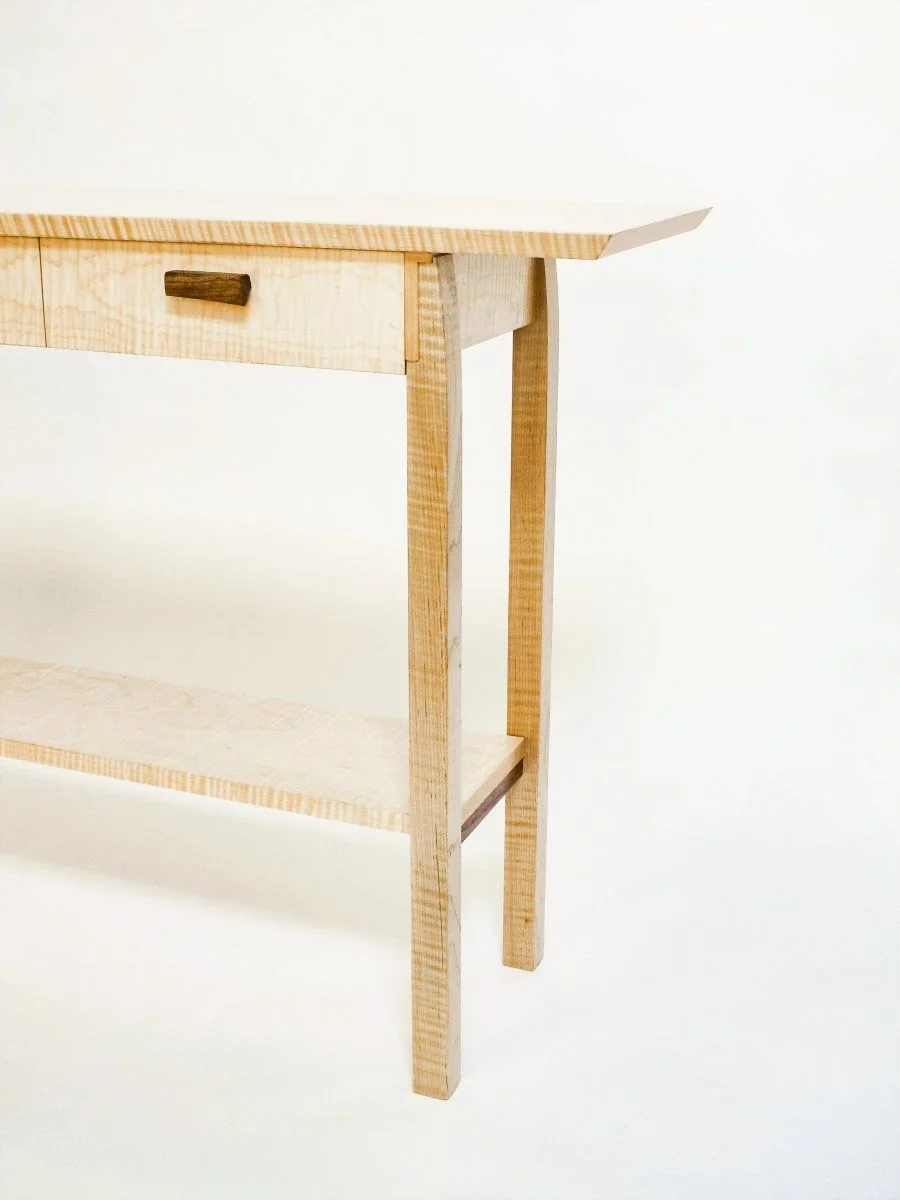
If drawers are essential, check them open. The lighter console below offers a useful comparison: its thinner legs and drawer front have a different visual balance from broad slab ends. A chunky shape is a style choice; everyday access still decides whether it belongs in the entryway.
Make the final console check from the doorway
Stand where the console will first be seen. Check whether its end crowds the door casing, whether the top cuts across a nearby window, and whether the wood tone works alongside the floor. A small finish sample is more useful for judging color than a screen image alone.
Repeat the walking test with the planned accessories in place. Open the door fully, reach for the light switch and follow the route to the next room. Check the delivery path separately, including any turn the assembled table must make.
Keep the final decision focused: a clear entrance, a useful surface and enough open wall to enjoy the thick wood outline. Use these wood decor arrangements when choosing the small accessories that remain on top.