WOODEN FURNITURE & HOME
A reclaimed wood nightstand earns its place beside the bed when its top is easy to reach, its drawers open freely and its storage fits what you use at night. Start with the finished mattress height and the space beside the bed. Then compare the wood’s appearance and the seller’s material description: a weathered finish alone cannot establish that the timber was reclaimed.
Match the nightstand to the mattress you sleep on
Measure from the floor to the top of the mattress, including any topper that stays on the bed. Bed frame height is a different measurement, and a thick mattress can change the relationship considerably. Room & Board’s bed and nightstand pairing guide suggests choosing a nightstand at the same height or slightly above the mattress top.
Use that as a starting point for your shortlist. A tabletop far below the mattress can leave a glass out of easy reach; a tall cabinet can put its edge in the way of your arm. Check the reach from your usual sleeping and sitting positions before choosing between otherwise similar pieces.
A listing’s overall height should include the legs and top. For used furniture, ask the seller to measure the assembled cabinet on the floor rather than quoting an old catalog. Include any rug under the cabinet when you compare it with a bed standing on bare flooring. For other furniture in the same room, the wood furniture guide covers the broader layout.
The bedside arrangement below shows why the mattress matters more than the headboard: the cabinet top sits beside the sleeping surface, while the headboard rises much farther above it.
Leave room for drawers, bedding and the route around the bed
Once the height works, check the cabinet’s footprint and the space it needs while open. Width alone misses several common conflicts: a projecting bed rail, a thick hanging comforter, an outlet behind the cabinet or a drawer that meets another piece of furniture.
Mark the proposed corners on the floor with removable tape. Include the top overhang and handles, which may project beyond the cabinet body. Walk past the outline, sit on the bed and check whether your feet still have room where they naturally land.
Ask for the drawer’s projection when fully open. Compare that distance with the space in front of the nightstand, allowing room to stand and use the drawer. Where the bed has storage drawers, check both pieces in their open positions; a nightstand that fits neatly against the bed may block the bed’s own storage.
A door-front cabinet needs a different check. Confirm the hinge side and follow the door’s swing through the space beside the mattress. Moving the cabinet away from the bed may solve one collision while narrowing the walkway, so assess the whole corner together. Include nearby storage in that test; the bedroom closet access guide checks doors and containers in use.
Choose storage around the bedside items, not the drawer count
A cabinet that opens comfortably still needs useful interiors. Gather the items that belong beside the bed: glasses, a book, a charging cable, tissues and anything else used regularly. Separate what needs to stay on top from what can be put away.
| Storage layout | Useful when | Check before buying |
|---|---|---|
| Several drawers | Small belongings need separate homes | Interior dimensions and access to the lowest drawer |
| Drawer plus open shelf | A current book needs quick access | Shelf opening, book fit and cable route |
| Door-front cabinet | Taller items need enclosed storage | Clear opening and door swing |
| Open bedside table | Very little needs hiding | Whether the exposed storage will stay manageable |
A deep drawer is not automatically better for small objects. Glasses and charging leads can disappear beneath stacked belongings, while a shallow drawer may make them easier to find. Measure the items you want to store against the drawer’s usable interior, rather than its decorative front.
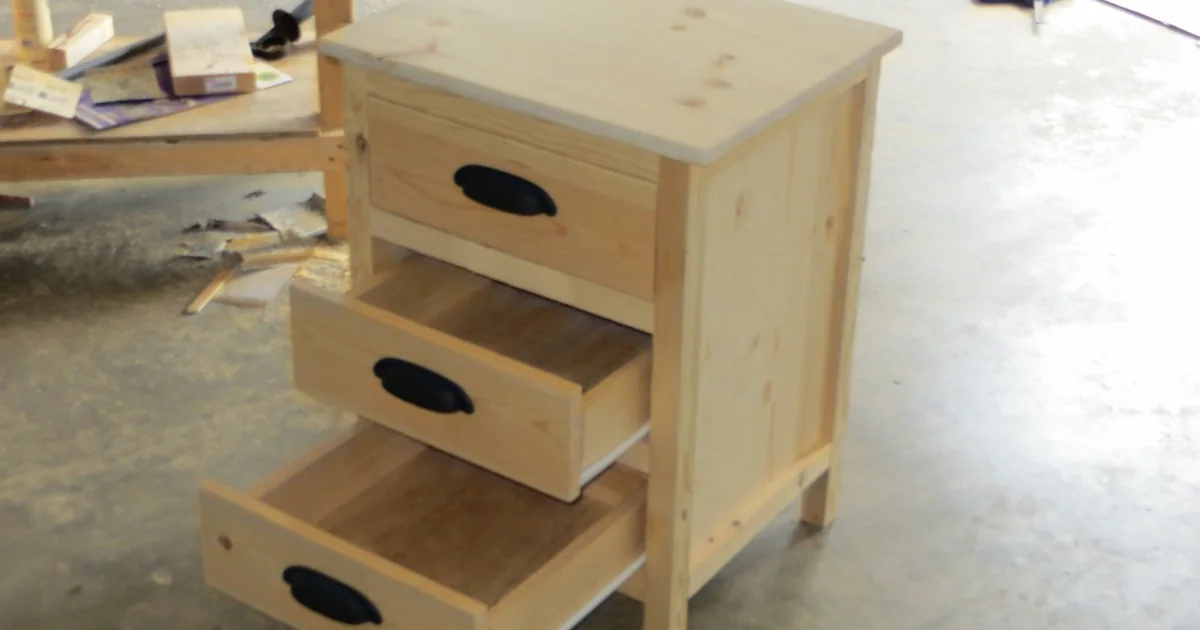
The simple shelf-and-drawer arrangement below illustrates another option: visible reading material above enclosed storage.
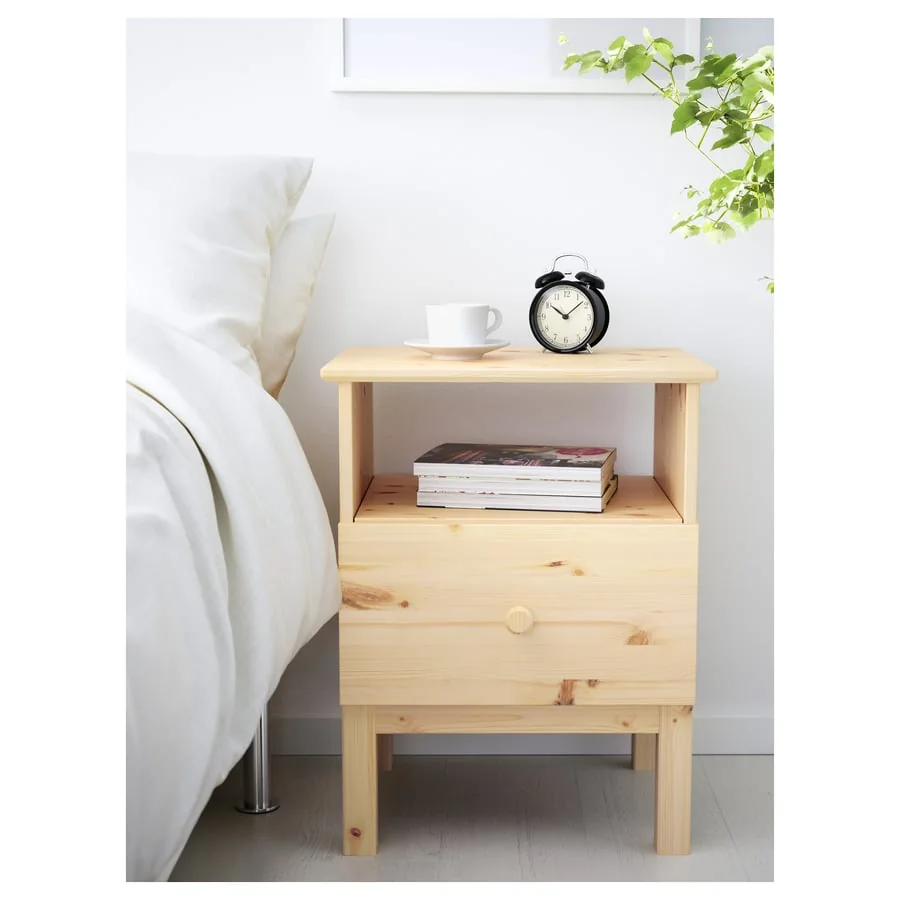
Check the top separately. Sketch the footprint of the lamp base, phone and coaster on paper at the proposed size. If a lamp uses nearly the entire surface, choose a wider top or reconsider the lighting before adding a crowded bedside tray. For a bedside reading chair, compare the separate reading-table surface planning checks for a lamp, open book and cup.
Verify what “reclaimed wood” means in the listing
With the practical layout settled, read the material description closely. Reclaimed timber and a reclaimed-look finish describe different things. Knots, dark stain, dents and saw marks can contribute to an aged appearance, but a photograph cannot establish the wood’s previous use.
Ask which parts contain reclaimed timber. A cabinet may combine a reclaimed top with newer wood, veneer or engineered panels elsewhere. That combination may suit the room perfectly; the useful question is whether the construction matches the description and your expectations.
For a secondhand nightstand, request photographs of the top, sides, back and drawer interiors, plus a short video of each drawer opening and closing. Look for a cabinet that sits steadily, handles that feel secure and drawers that move without catching. Inspect exposed edges for rough areas where hands or bedding will pass.
Read the finish-care instructions before buying. An uneven-looking surface may be intentional, but you still need to know how to wipe up a spill and which cleaners the seller permits. Choose a coaster for a bedside drink and avoid assuming that an aged appearance means the top tolerates moisture. Keep decoration secondary to those daily objects when choosing small bedside wood accessories.
Let the wood texture set the bedroom’s balance
After fit and construction, judge the nightstand in the room’s existing palette. A brown cabinet with visible grain can connect with a wood bed frame without matching every board. Compare the overall undertone in daylight, especially where a warm cabinet will stand against cool gray flooring.
An upholstered bed gives a strongly textured cabinet some visual breathing room. Plain bedding also leaves the drawer fronts and hardware easier to read. If the headboard, floor and dresser already have busy grain, a quieter bedside finish may make the corner feel less crowded.
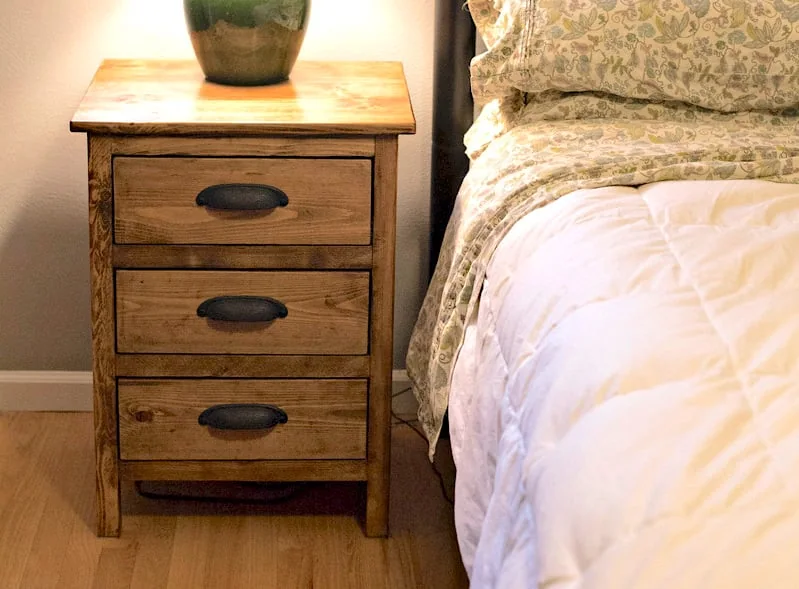
The wood cabinet below pairs dark handles with a dark wall, while light bedding separates its warm color from the bed. That repeated hardware color helps connect the pieces without requiring an identical furniture set.
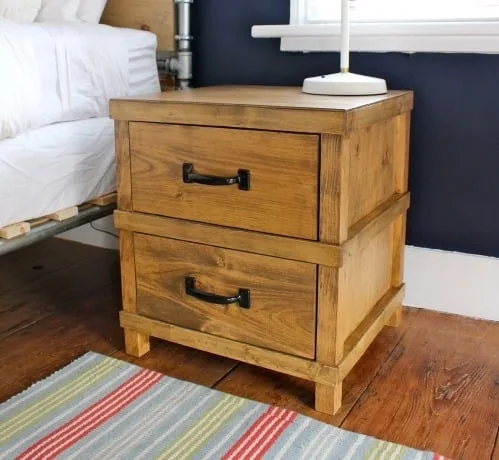
Two nightstands can differ in width or storage when each sleeper needs something different. Keep their tabletop heights compatible with the mattress, then repeat one visible feature, such as hardware color or wood tone. If pictures join the arrangement, choose wood frames above the bed around the image as well as the furniture.
Before ordering, keep the mattress height, cabinet footprint, open-drawer space and interior measurements together in one note. A convincing finish is easier to enjoy when the cabinet also works on an ordinary night.