WOODEN FURNITURE & HOME
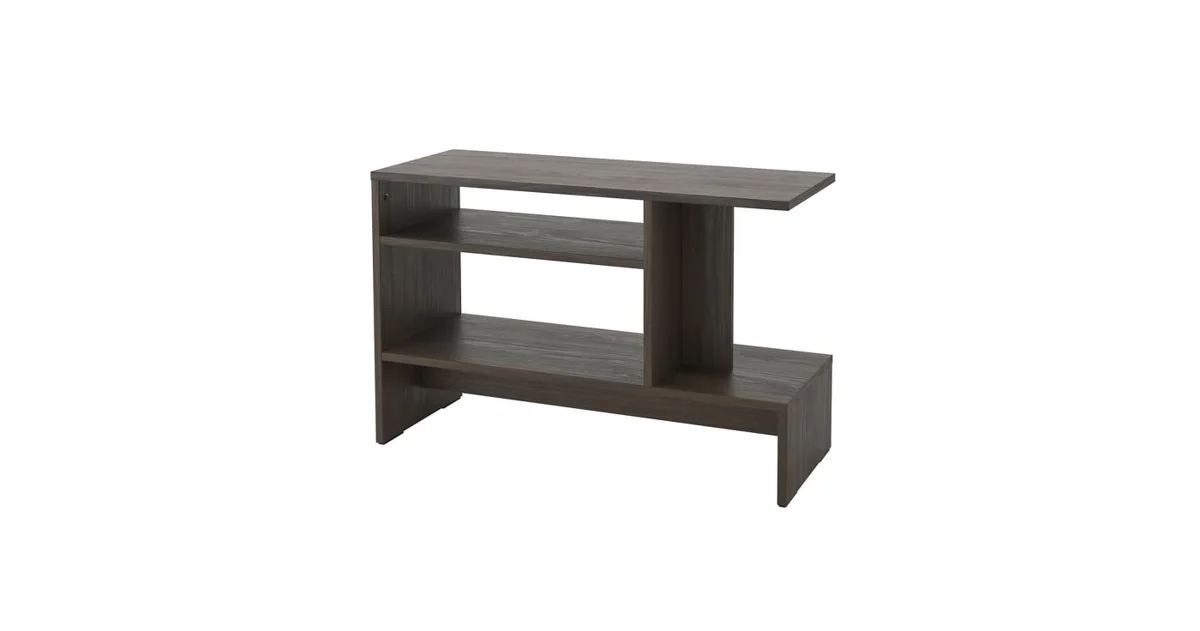
A behind-couch console table with shelves works when you can reach its storage from the room behind the sofa and still walk past comfortably. Choose the shelf openings around the things you will store, then check the footprint with baskets pulled out. A narrow tabletop alone doesn’t tell you whether the arrangement will work. The shelves, lamp and route around the sofa need to fit together.
Put the console shelves toward the side you can reach
The useful face of a sofa-back console is usually the face opening toward the passage or adjoining room. Shelves facing into the upholstery may look accessible in a product photograph but become awkward once the table sits against the couch. Check front, back and side views before ordering.
A floating sofa offers a clear opportunity: the console can serve people approaching from the dining area while its top holds a lamp for the seating area. Against a wall, the same arrangement can trap the lower shelves in a gap. If reaching a basket means moving the sofa, that basket won’t be convenient everyday storage.
Start with the items that need a home. Throws, books and charging accessories ask for different openings. A continuous low shelf suits a wide basket; a divided compartment can support upright books but may reject the basket you already own. Measure usable openings between the panels, rather than relying on the table’s overall width.
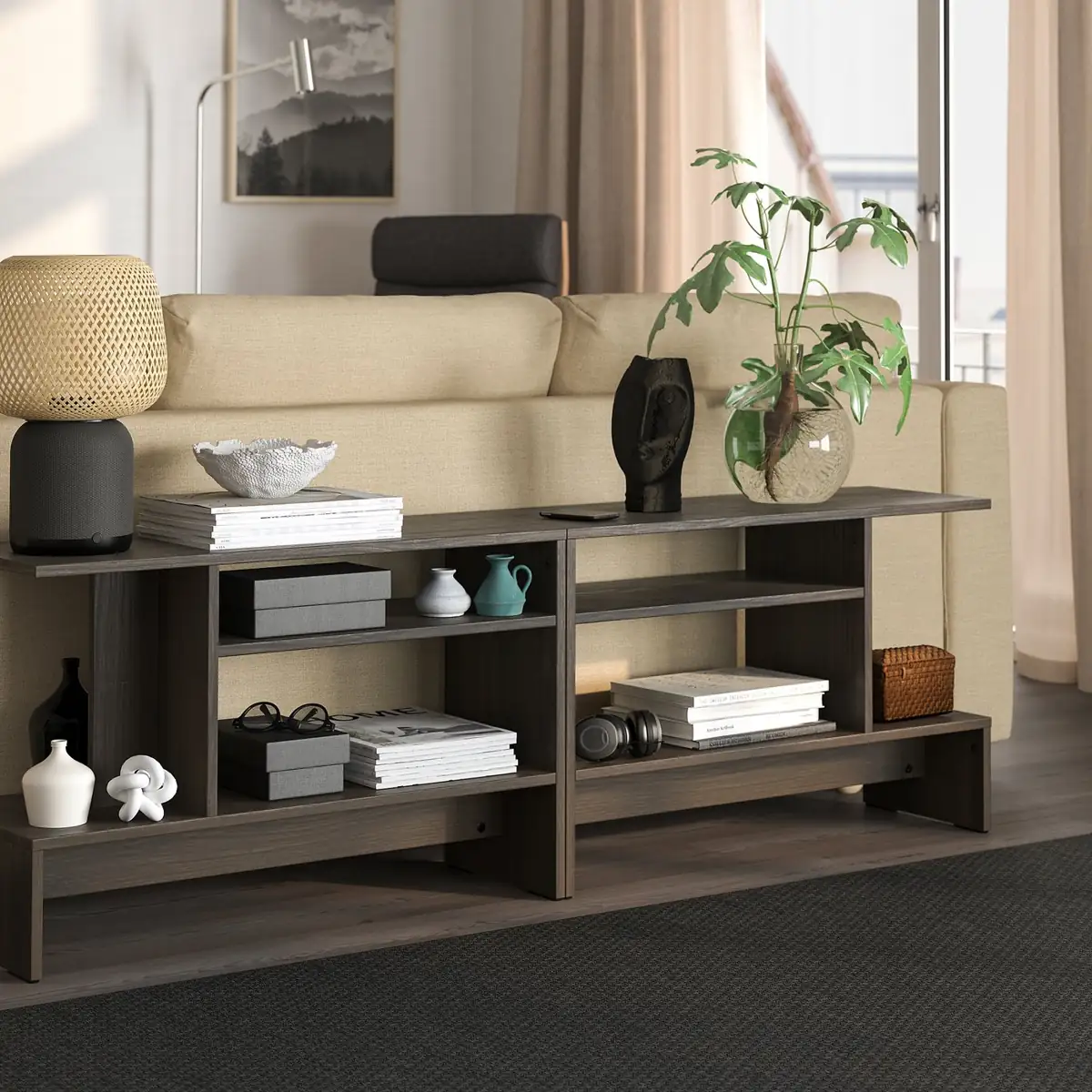
The example below mixes horizontal book stacks, small boxes and a woven container across different openings. The open back also leaves the sofa upholstery visible between the shelves.
For other storage decisions around the room, the small-space storage guide covers planning around access and the belongings you keep.
Allow room to use console baskets beside the walking route
Accessible shelves still need working space in front of them. A basket may fit inside a compartment yet be difficult to remove when a dining chair or wall sits immediately opposite. Consider where you will stand, where the basket will go and whether someone can pass while it is out.
Check the basket at its widest point, including handles and a flared rim. Compare its outside height with the shelf opening, and leave enough space for your hand to grip it. A lid adds another movement: it may need to clear the shelf above or come out into the room before opening.
Use a box matching the proposed console’s footprint to try the route around the couch. Walk from the kitchen to the seating area carrying something you normally carry there. Then place an existing basket at the shelf position and try lifting it. Pay attention to turns around the sofa ends, where a projecting tabletop can catch the route.
If the passage feels cramped, give frequently used things a different home. A shallower console with fewer stored items can be more useful than a larger unit whose baskets stay wedged in place. For an occasional blanket, a light basket you can lift away may work; daily books should be easy to reach where they sit. Compare the console depth and passage checks if a substantial frame is making the route feel tighter.
Choose console shelf openings for the books you actually keep
Once basket access is settled, assign the remaining openings to books. Check the tallest hardback and the deepest album in your collection. Fixed dividers make some compartments shorter or narrower than others, so compare each intended shelf with its contents.
Keep current reading near an accessible end. A short horizontal stack can fit beneath a low shelf, but removing the bottom volume means lifting the others. Upright books are easier to select individually when the opening is tall enough. Use a bookend where the console has no side panel to support them.
Avoid turning every available opening into a packed bookcase. Leave room to slide a book out without pulling a neighboring pile forward. Check the manufacturer’s shelf load guidance before filling the unit with heavy volumes; a photograph of stacked books doesn’t establish its capacity.
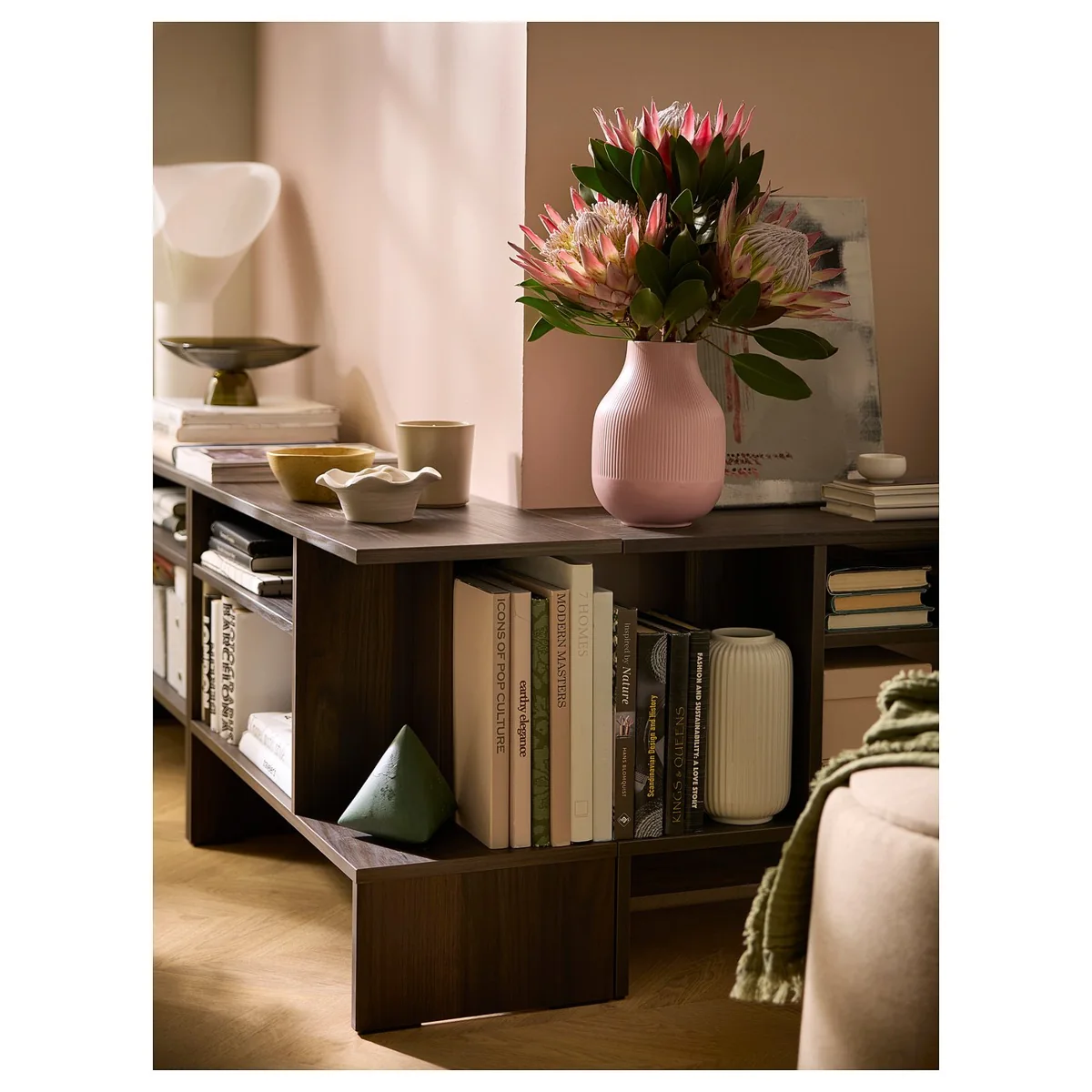
At an exposed console end, upright books also change what the adjoining room sees. The close view below shows book spines filling a tall opening while lower shelves hold horizontal stacks. That arrangement reads differently from a row of matching closed baskets. If this is also a play room, use the shared book-and-toy storage plan to give children’s belongings a separate usable home.
Place the console lamp before filling the tabletop
With the lower storage assigned, reserve a position for the lamp and its power connection. Check the base, the shade’s widest edge and the switch location. Sit on the sofa to see whether the shade intrudes beside your head or the light shines directly into your eyes.
A lamp meant for reading needs to help the seat where someone actually reads. Try its position with the sofa cushions in their usual places. Reaching backward over a high sofa back to operate a small switch may be less convenient than putting the lamp near the sofa end.
Trace the cord all the way to the outlet. An open shelf gives you somewhere to see and manage a cable, but doesn’t make a route across the floor suitable. Avoid a layout that depends on a loose cord crossing the passage. If the lamp works better at the sofa end, assess a table beside the sofa arm instead of stretching the console layout around it. Follow the lamp’s instructions and keep its base stable on the top.
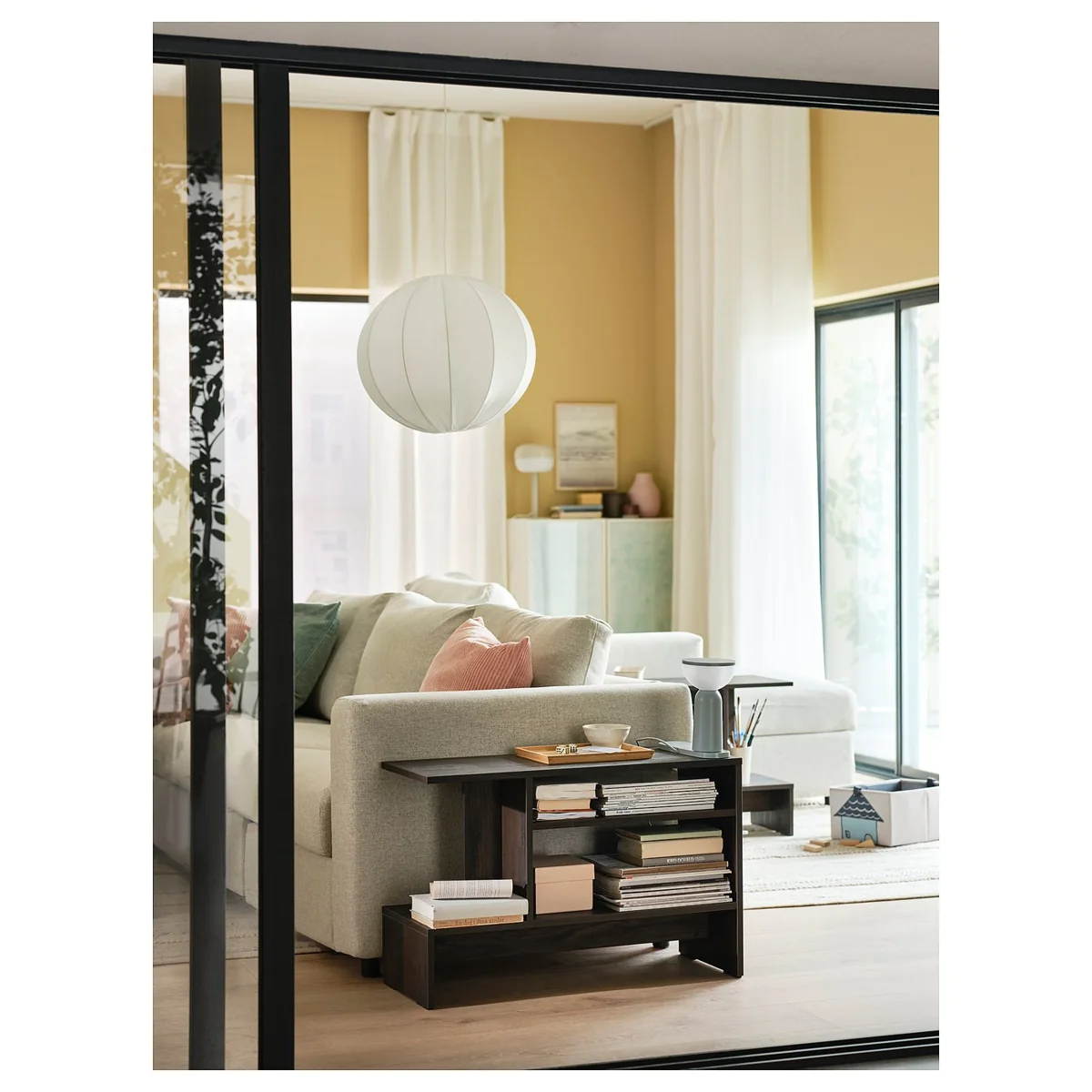
The side arrangement below brings a small lamp close to the arm of the sofa. Books occupy the shelves beneath it, leaving a defined area on top for a tray.
Let the sofa-back console mark the room boundary
After the practical positions work, judge the console from the adjoining room. A low shelf line can give a floating sofa a more deliberate edge while keeping a view across the living area. Tall lamps, large plants and dense displays change that view, even when the furniture itself stays low.
Keep taller objects where they won’t interrupt the conversations or views you value. Try looking across the room from a dining chair as well as standing in the doorway. A console can separate activities without needing to become a continuous barrier of books and ornaments. Choose restrained wood accessories only after preserving that view across the room.
Check the visible rear panels and unfinished edges before buying; a table intended to stand against a wall may expose an unattractive back in this position. Read the material description too. A wood-patterned surface and a solid wood construction are separate things, with different care instructions.
Finish by opening a basket, taking out a book and switching on the lamp. Then walk around the couch again. Those ordinary actions tell you more about the shelf layout than a fully styled tabletop does.