WOODEN FURNITURE & HOME
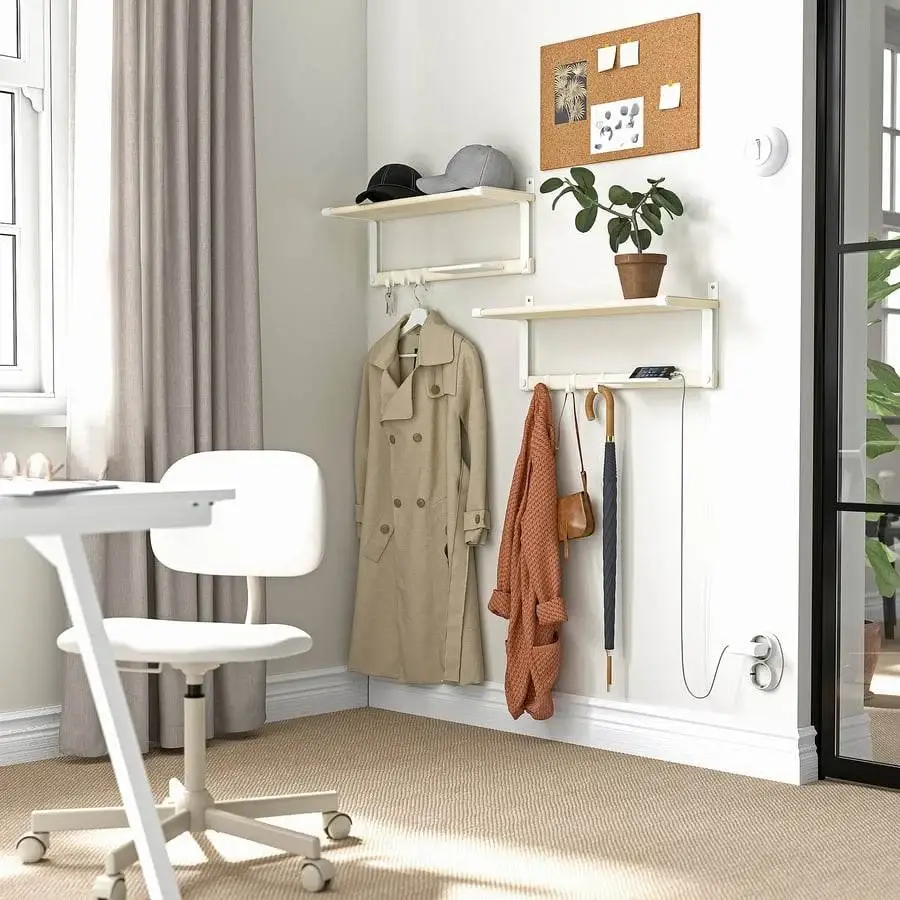
An entryway wall shelf with hooks works best when the shelf holds small things you can reach and the hooks give coats and bags room to hang. Start with what comes through your door each day, then check the space with those items in place. An empty rack can fit a wall beautifully and still leave a shoulder bag brushing everyone who walks past.
The useful choice depends on shelf depth, hook spacing and the height of the storage you actually use. A compact key station isn’t a family coat rack, even when their product photos look similar.
Give the shelf and hooks separate jobs
Before choosing a rack, empty the bag or pockets you usually carry home. Keys, a wallet and sunglasses need a landing place; a coat and shoulder bag need hanging space. Decide which belongings stay at the door and which should move farther into the house.
Use the shelf for things that sit flat or fit inside a small tray. Reserve the hooks for items with a loop, strap or suitable hanging point. A bag hung across neighboring hooks may cover the very key hook you meant to use every morning.
| What arrives at the door | Useful place | Check before buying |
|---|---|---|
| Keys and sunglasses | Small tray within easy reach | Can you see and lift them without reaching over decor? |
| Everyday shoulder bag | A dedicated hook | Does the strap fit, and does the bag cover other hooks? |
| Coats and hats | Hooks below; hats on the shelf | Do coat shoulders overlap or brush the wall? |
| Dog leash | An end hook | Can you grab it without moving a coat? |
| A shallow holder on the shelf | Is there room to remove envelopes without knocking things off? |
A shelf with a separate lower tray can keep pocket items below a display surface. In the example below, the top shelf, lower tray and hooks offer distinct places rather than one crowded ledge.
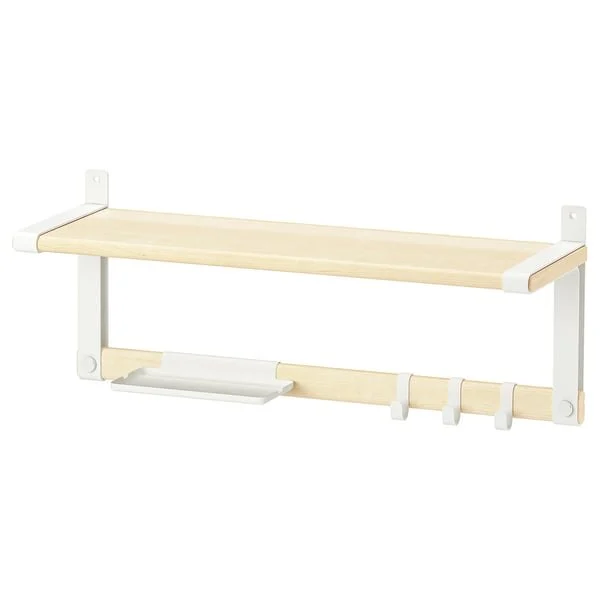
Give each regular user a clear place for their daily things. If a small rack can’t hold the household’s usual coats without layering them, let it serve keys and light accessories instead. More hooks on the same narrow rail won’t necessarily create more usable space. For coats and bags that need a separate home, compare the hanging and shelf zones in these closet shelving layouts.
Check shelf depth with bags hanging
Once you’ve listed the belongings, check the wall and the route beside it. Measure the available width between trim, switches and other fixtures. Compare that with the rack’s overall width, then check how much of its shelf is usable inside brackets or raised ends.
Depth needs a separate check. The shelf projects from the wall, but a filled bag or bulky coat may project farther. Hold the actual bag where it would hang while another person walks through carrying groceries. Open the door through its normal swing and check the handle as well as the door panel.
Use this check at the narrowest point of the passage, including furniture opposite the rack. Don’t assume a shelf is suitable just because its back fits between two doorframes. A crowded doorway calls for a smaller drop zone or another wall.
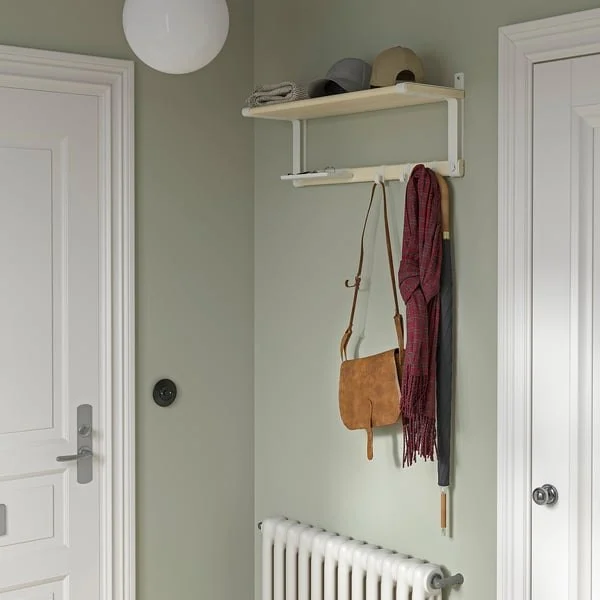
The photo shows why the area below matters: long items occupy space well beneath the shelf. Treat doors, radiators and switches as things to check in your own layout, rather than copying the pictured position. Wood Center’s small-space storage guide covers the broader choice between wall storage, furniture and open floor space.
Choose hook height and shelf height together
After checking the passage, choose a position that makes the daily storage reachable. A single mounting height controls both the hooks and the top shelf. Raising a rack to clear long coats can turn a convenient key shelf into a ledge you can barely see.
Mark the proposed shelf and hook positions on the wall with removable tape that suits the finish. Stand there wearing the bag you usually carry, then mimic hanging it and picking up your keys. Ask other household members to try the same reach before settling on a position.
If children will use the rack, check their reach separately. A high shelf can hold occasional items while a lower, suitable storage point handles their daily belongings. Don’t plan routine storage that requires standing on a bench to retrieve a hat or wallet.
A bench below also changes the layout. Check where coats and straps end while someone sits down, and allow access to the seat without pushing hanging items aside. If that arrangement feels cramped, move the bag storage beside the bench rather than directly above it. Plan footwear separately using the fit and retrieval checks for closet shoe shelves.
Read the shelf and hook load ratings
Good placement still needs a rack suited to its intended contents. Read the manufacturer’s information for the exact model, including shelf capacity, individual hook limits and required wall attachment. A total rating doesn’t tell you what each hook can carry unless the manufacturer says so.
For example, IKEA lists its SKOMAKARE shelf at 25 5/8 inches wide and 8 1/4 inches deep, with a maximum load of 33 pounds. Its product information also requires secure anchoring with suitable screws and plugs; wall-mounting screws are sold separately. Those figures describe that product, not a general allowance for wooden entryway racks.
Before buying, check these details in the product page and instructions:
- Whether the stated capacity covers the whole unit, each shelf or each hook.
- Whether the supplied hardware suits your wall, or suitable fixings must be bought separately.
- Whether your wall and proposed position meet the manufacturer’s installation conditions.
- Whether the hook shape accepts the straps and hanging loops you use.
Weigh a loaded work bag if its weight will decide the purchase. Include shelf contents when checking the unit’s total load, and ask the manufacturer about any unclear limit. If the wall requirements are uncertain, get suitable installation advice before committing to that rack.
Keep the key area clear when styling the shelf
With fit and capacity settled, use decoration around the storage rather than filling the landing space. A small tray gives loose items a boundary; a plant or framed picture can sit beside it if both fit comfortably. Check that you can lift the tray without moving the decoration first.
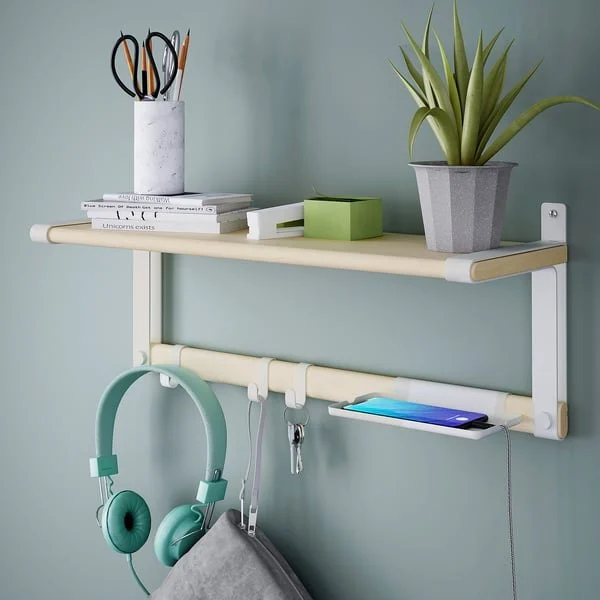
A pale shelf with light brackets can blend into a light wall; darker hooks can repeat nearby door hardware. Use the finish you like, then inspect the practical details: a wipeable surface, accessible corners and a tray that doesn’t consume the whole shelf.
Leave some space empty. If keys and mail need more surface than a wall rack provides, compare a console for a narrow entryway while checking the passage again. Remove old mail and spare bags when the rack starts blocking access to daily items. The final check is simple: come in with your usual belongings, put them away, and leave again. Keys should be easy to find, straps easy to lift, and the route past the shelf easy to use.