WOODEN FURNITURE & HOME
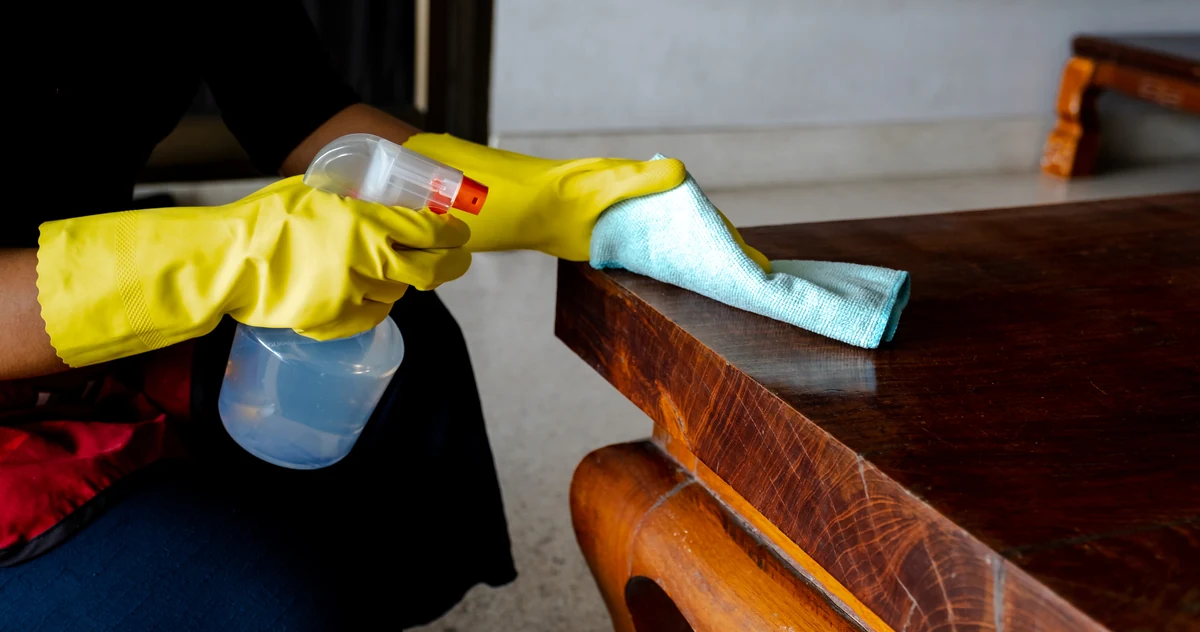
To clean wood furniture, remove loose dust first, use a lightly dampened cloth only when the maker’s care guide allows it, and wipe the surface dry afterward with a clean cloth. The finish determines what comes next: a sticky dining table and an old cabinet with flaking varnish need different decisions before either meets a cleaner.
Check the furniture finish before choosing a cloth
Start with the furniture label, receipt, product page, or care booklet. Look for the coating as well as the wood: “oak” identifies a material, while an oiled or lacquered surface has its own care needs. If the maker is known but the finish is unclear, ask about that model.
The cloth matters, too: OKA’s wooden furniture care guide rules out microfiber. Herman Miller’s wood and veneer guide calls for a soft, lint-free cloth. A general tip to use microfiber shouldn’t override the maker’s care guide for the piece you’re about to wipe, even if the same cloth works well elsewhere in your home.
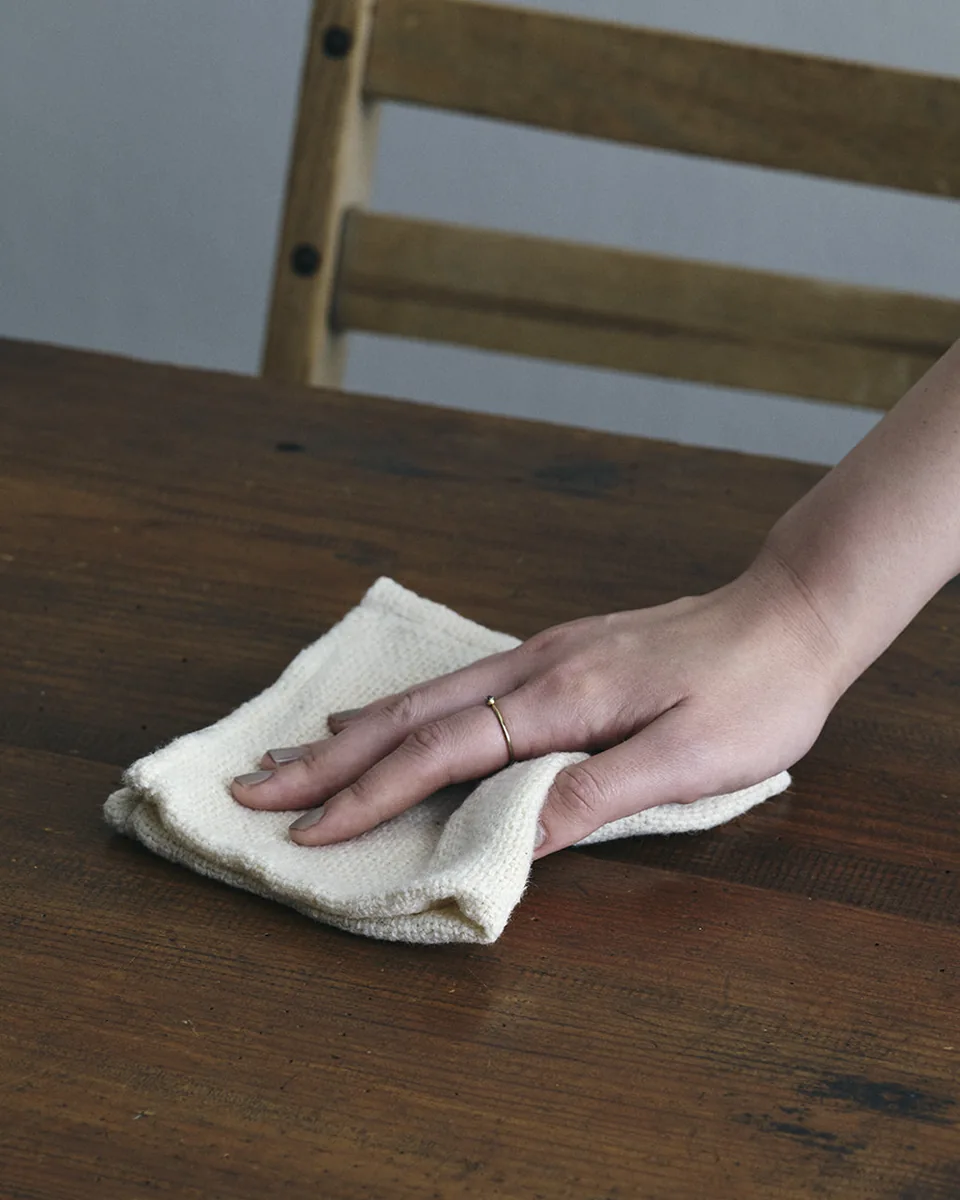
Set out clean, soft cloths suitable for the piece, including a separate dry one, and add water and a cleaner only after checking that the care guide permits them. Check the cloth for grit before it touches the surface; a rag used elsewhere in the house may carry particles you don’t want to rub across a tabletop.
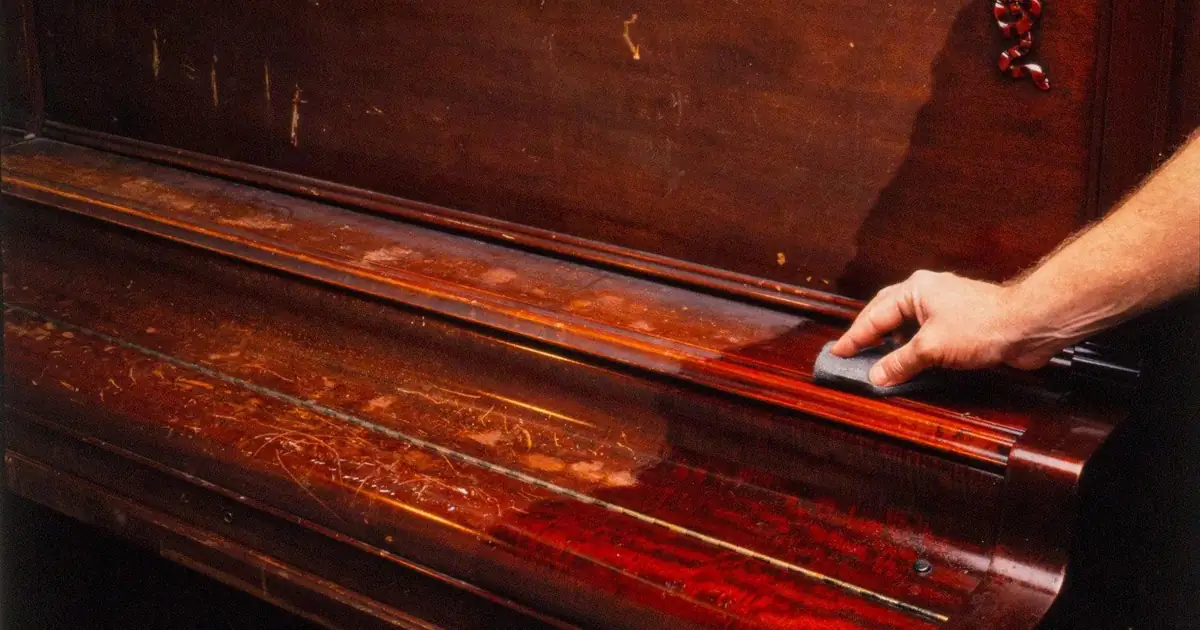
For an unidentified secondhand piece, especially one with a fragile or peeling coating, get advice before wet cleaning. The furniture care and makeovers guide explains how to separate surface care from repairs and refinishing.
Remove tabletop dust before tackling sticky spots
With the cloth selected, lift ornaments and other small objects rather than dragging them across the wood. Check beneath their bases as you clear the surface. Leave heavy furniture in place if cleaning it doesn’t require moving it.
For furniture whose care guide permits dry dusting, wipe gently with a clean, dry cloth. The Cotswold Company’s everyday cleaning guide starts with a soft, clean, lint-free dry cloth containing no grit. Use a clean part of the cloth as it picks up dust.
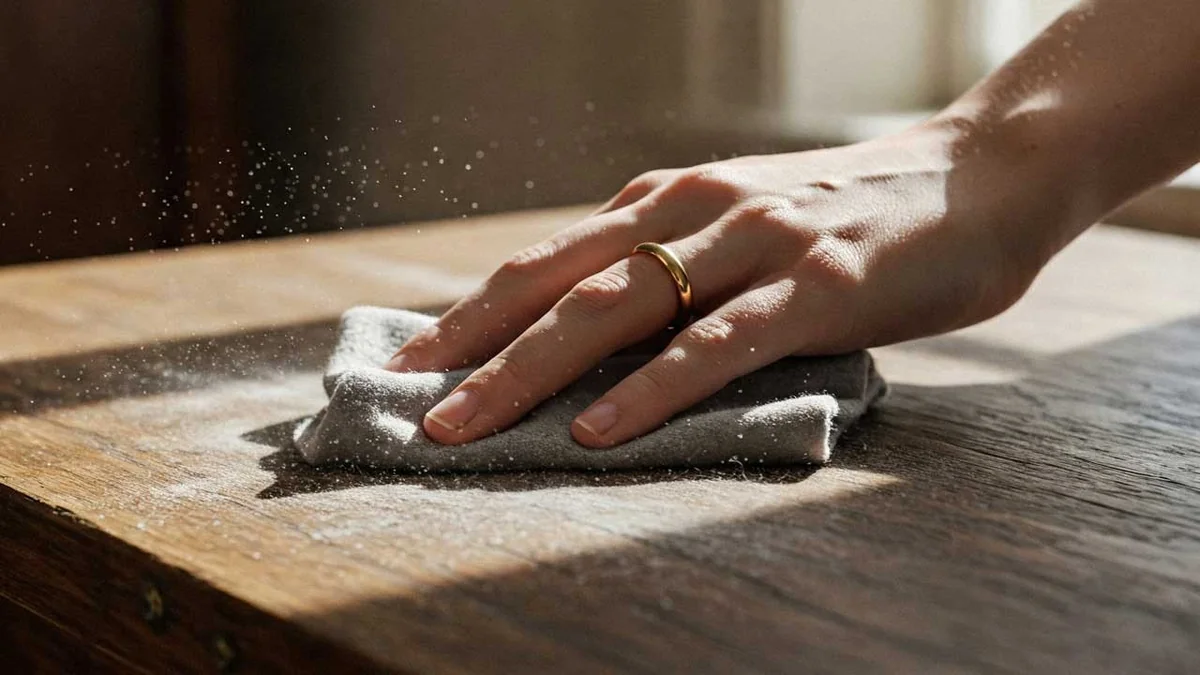
Check the surface again after dusting. Loose dust alone doesn’t call for detergent, polish, or a wet wash. If fingerprints or sticky deposits remain, move on only to a cleaning method approved for the finish.
Clean sticky wood furniture only as the finish allows
For most of its sealed wood products, T. Weatherhead & Co.’s care guide gives this sequence. Use it when the directions for your furniture agree:
- Remove loose dust. Begin with a clean, dry, lint-free cloth.
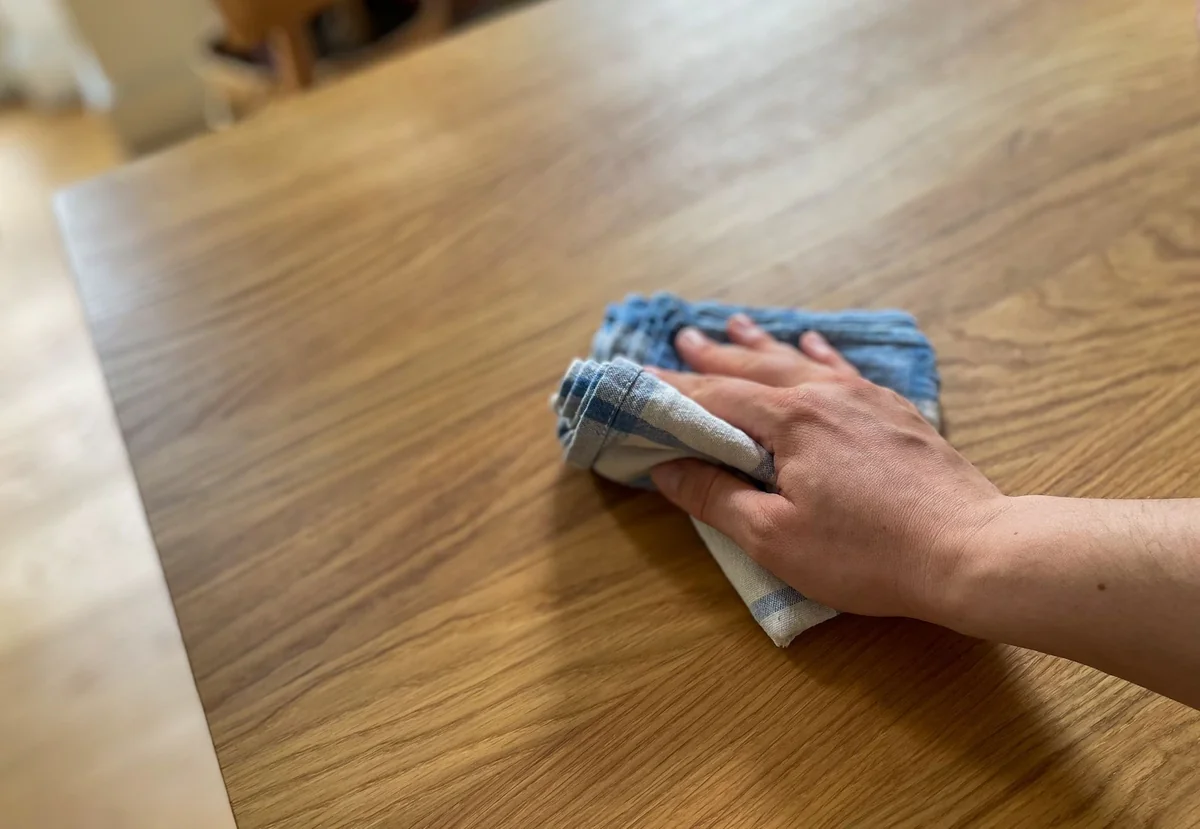
- Dampen the cloth lightly. If further cleaning is needed, use water with a small amount of mild dish soap where permitted. Follow the cleaner’s dilution directions. Keep the cloth damp rather than wet.
- Wipe gently along the grain. Don’t pour or spray the solution directly onto the wood.
- Follow immediately with a dry cloth. Remove remaining moisture with a clean cloth.
- Let the surface dry fully. Wait before replacing objects or closing the piece.
Test an unfamiliar, compatible cleaning product in a small hidden area first. If the finish changes appearance or becomes tacky during the test, stop and ask the maker before treating the visible surface.
Blot fresh spills; leave persistent marks for assessment
Spills need a faster response than routine dust. Blot up fresh liquid promptly with a clean cloth, rather than spreading it around in circles. Cotswold’s guide emphasizes this approach for colored liquids such as coffee, tea, and red wine. Follow with the cleaning method permitted for the piece and dry it thoroughly.
A mark that remains after compatible cleaning may need assessment rather than more pressure. Don’t keep increasing the cleaner’s strength to chase a white ring, dark stain, or dull patch. Cotswold recommends professional help for stained, scratched, chipped, or otherwise damaged furniture.
Keep vinegar, oil, and polish out of a universal cleaning recipe
Persistent marks are where household recipes become tempting, but an ingredient’s familiarity doesn’t establish compatibility with a furniture coating. OKA excludes vinegar, lemon juice, acidic cleaners, and scouring powders from its wood furniture cleaning instructions. Its guide also warns that some polishes can degrade protective finishes.
Oil and wax belong to a separate care decision. Herman Miller excludes wax-based and oily polishes from its oiled veneer care guide, even though that furniture has an oiled finish. Follow the product’s own directions instead of rubbing in oil after every cleaning.
For everyday prevention, use suitable coasters under drinks and protective pads beneath rough objects. Lift items when clearing the table, wipe spills promptly, and return to the care booklet before changing cleaning products. A sound finish that is clean and dry is a sensible stopping point, even when it isn’t newly glossy.