WOODEN FURNITURE & HOME
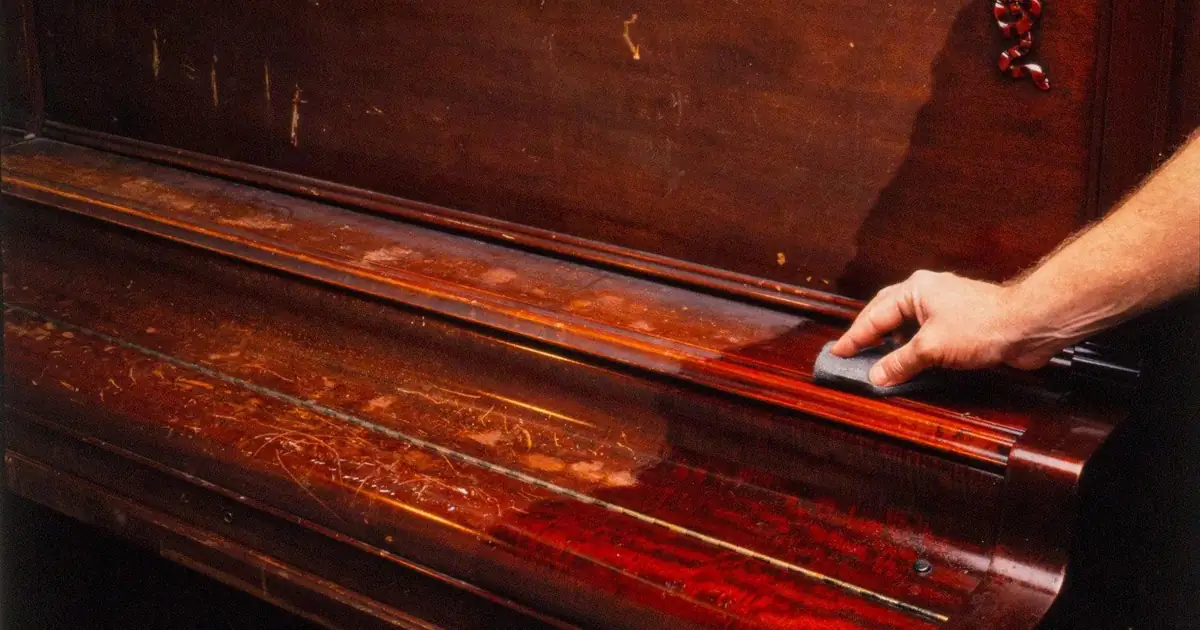
To remove a pale water ring from finished wood furniture, blot away any fresh moisture, let the surface dry, and check the furniture maker’s care instructions before trying a compatible ring-removal product. A white mark calls for a different decision from a black stain or a damaged coating. The useful first step is choosing the right treatment for the finish you have.
Check the water ring before rubbing the finish
Look at the mark in good light, then check the surrounding coating. This guide covers pale rings and cloudy patches on otherwise sound, finished indoor wood furniture. If the spot is black or dark brown, the coating has peeled, or the wood is swollen, set the ring remover aside and get the damage assessed.
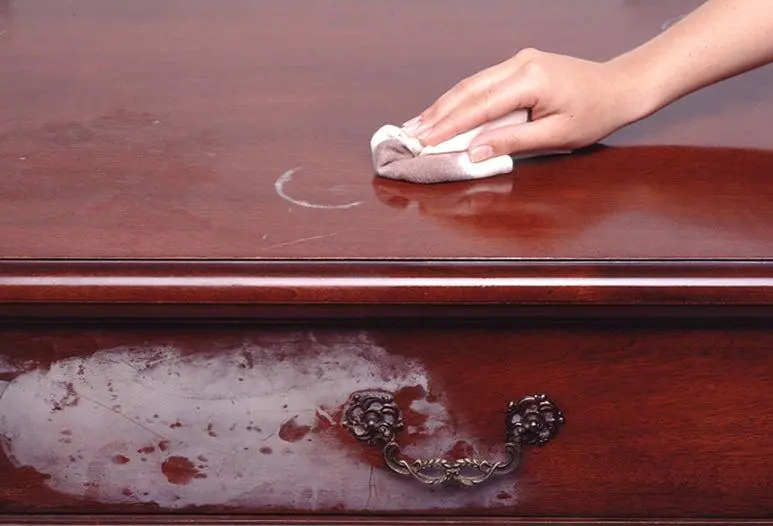
An old cabinet can carry more than one kind of damage. In the example below, a pale partial ring sits on the top, while a broad cloudy patch covers part of the drawer front. The appearance helps identify the problem to discuss; a photograph alone can’t identify the coating or establish which treatment will suit another piece.
Check the furniture label, receipt, or care booklet for the coating. A wood name such as walnut doesn’t tell you whether the surface has lacquer, an oil finish, or another treatment. If the coating is unknown, tacky, cracked, or flaking, ask the maker or a furniture restorer before applying a repair product.
For an antique, a valuable piece, or furniture with sentimental value, professional advice is a sensible first move. Our furniture care and makeover guide helps place the job among cleaning, repair, and refinishing decisions.
Dry the spill and separate cleaning from ring removal
Once you’ve checked for damaged coating, deal with any liquid still on the surface. Blot it with a clean, soft cloth suitable for the furniture, using a fresh area as the cloth picks up moisture. Leave the surface dry before assessing the remaining mark. There’s no fixed waiting period here: the furniture’s condition and care directions matter more than a universal timer.
If the mark turns out to be a deposit sitting on the surface, follow the maker’s approved cleaning method. Our guide to cleaning wood furniture covers dust, sticky spots, and drying after compatible cleaning. A pale ring that remains doesn’t justify repeatedly washing the same area or making the cleaner stronger.
Set out the care instructions, clean soft cloths, and the full directions for any proposed repair product. Choose the product only after checking its permitted surfaces. Keep both labels at hand. Keep food oils, toothpaste, abrasive powders, and added heat out of this treatment sequence; familiarity with an ingredient doesn’t establish that it suits your furniture’s coating.
A ring-remover cloth needs its own surface check
For a persistent white mark on a sound finish, a dedicated ring-remover cloth is one option to investigate. Guardsman describes its Water Ring & Mark Remover as a reusable cloth for finished and sealed timber furniture. That stated use is a starting point for checking compatibility with your piece, rather than permission to rub every wood surface.
The package below identifies the product as a pretreated cloth. Its printed claims don’t establish the pressure, number of passes, or result appropriate for your furniture. Read the directions supplied with the actual pack, including its exclusions and test instructions, before opening it for use.
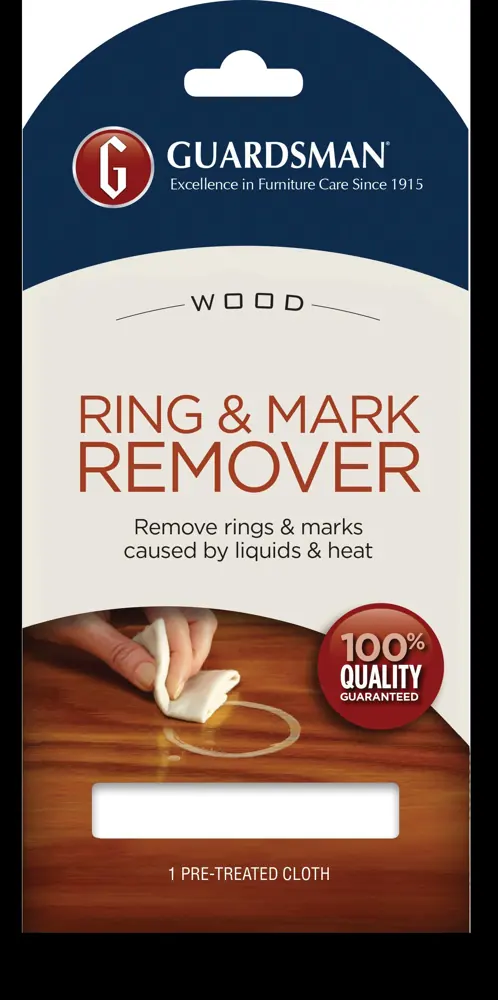
When the furniture and product instructions agree, test in an inconspicuous area with the same finish as the marked surface. Follow the product’s application and cleanup directions for that test, then check the color, sheen, and feel before treating the ring. Stop if the test leaves a dull patch, changes the color, or makes the coating tacky.
Use only the rubbing method the pack specifies. If its directions are missing or unclear, ask the manufacturer for them rather than guessing how hard or how long to rub. A treatment that changes the surrounding sheen has created another repair problem, even if the white mark looks less obvious.
A tinted finish restorer is a bigger decision
If a cloth treatment isn’t suitable or the ring persists, reassess before switching products. Howard Restor-A-Finish is a finish-restoring liquid that contains stain, solvents, and oils. Howard lists white heat rings and watermarks among its uses, but also says some hard polyurethane and simulated wood finishes may resist penetration. It excludes floors and exterior surfaces.
The color chart matters because the liquid can change the look of the finish. Choose a compatible shade and test it out of sight first. Howard advises choosing a slightly lighter shade if you’re uncertain. A wood species name on the furniture isn’t a substitute for checking the existing finish color.
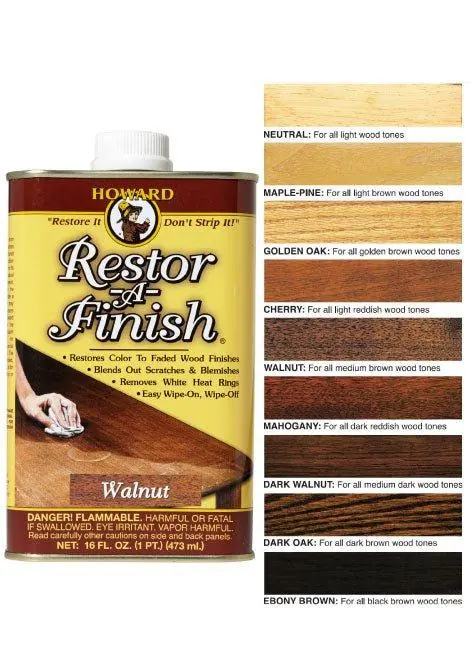
For a suitable surface, Howard’s cloth method calls for applying the liquid with a small cloth pad, working on a small area, and wiping it dry immediately. Avoid pouring it onto the furniture. Follow the grain and check progress. Follow the label’s ventilation, ignition, handling, and used-cloth disposal instructions; don’t mix treatment chemicals.
Howard also describes an abrasive steel-wool method for stubborn marks. That is an escalation to discuss with a restorer, especially on glossy or delicate furniture. Stop here if the cloth test fails. Before considering a new topcoat, read the restorer’s coating restrictions; our Polycrylic and polyurethane comparison explains why named finish products need separate decisions.
Keep another drink ring from becoming a repair job
After treatment, return the furniture to use according to the product and furniture care directions. Check the surface in the same light you used before treatment. If the mark remains, or the surrounding finish now looks uneven, get advice before trying another chemical or an abrasive repair.
Use suitable coasters under drinks and blot fresh spills promptly. Check beneath a damp coaster before leaving it on the table. Keep the furniture’s care instructions with the repair product so the next cleanup starts with the finish information rather than another household recipe.
For other furniture projects around the house, browse the Wood Center journal.