WOODEN FURNITURE & HOME
A modern wood coffee table needs to fit the sofa and the route through the room before its wood color matters. Start with a top roughly half to two-thirds of the sofa length, then check the height, reach and floor space with the footprint marked out.
Don’t choose by length alone.
Size a wood coffee table against the sofa
Measure the sofa length and the seat height first. Ethan Allen’s occasional-table buying guide suggests a table half to two-thirds of the sofa length, with its top about 1–2 inches below the seat. Treat these as starting proportions, then test the actual piece against the way you sit and move.
For a sectional, use the longest seating side from its arm to the inside corner as the initial reference. Including the entire chaise in a simple sofa-length calculation can produce a table that fills the opening but leaves awkward access.
The examples below calculate that same length range. They are planning examples, rather than measurements of furniture shown in the photos.
| Seating example | Initial table-length range | What to test in the room |
|---|---|---|
| 72-inch sofa | 36–48 inches | Whether both end seats can reach a useful part of the top |
| 84-inch sofa | 42–56 inches | Whether the table depth leaves space on the far side |
| 96-inch sofa | 48–64 inches | Whether a longer top obstructs the route into the seating area |
| Sectional with a 90-inch arm-to-corner side | 45–60 inches | Whether the chaise leaves enough opening for that footprint |
Two tables with the same length can have very different depths, projecting legs and usable surfaces, so it’s worth checking the widest overall dimensions in the product listing, including the base, before deciding that a particular table fits.
For the wider room plan, our wood furniture guide connects furniture choice with placement, construction and everyday use.
Coffee table placement: separate reach from the walking route
With a likely size in mind, mark the table outline on the floor. CORT’s modern coffee-table guide uses about 18 inches between the table and surrounding seats as a comfortable starting point. Try that gap at your sofa, then sit down, stand up and reach toward the proposed edge.
A reach gap beside the sofa serves a different purpose from a route through the room. Don’t assume that the same gap works for people carrying a basket, passing another person or using a mobility aid.
Keep your usual route clear. If it’s pinched, try a shallower top.
Test moving furniture too.
Open the recliner, extend the sleeper sofa if it has one, and check any nearby cabinet doors. A table that fits with everything closed won’t necessarily work when you’re using the room.
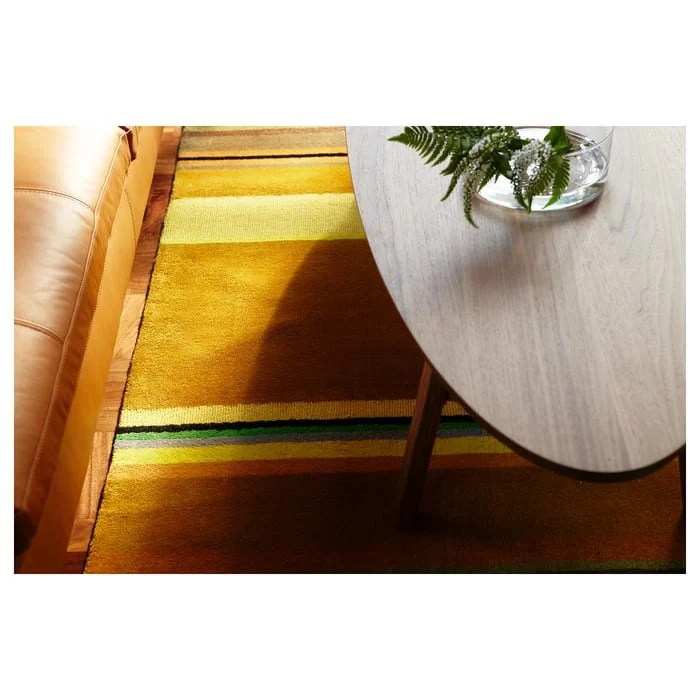
Leave the floor outline in place before ordering.
Do you keep sidestepping the same corner? That’s a reason to change the shape or move the outline.
Choose a coffee table shape for the seating opening
The floor test often makes the shape decision clearer.
An oval follows a long sofa while taking away the square corners at either end. A rectangle provides a long, regular surface, but check its corners wherever you enter the seating area.
Round tables are worth trying where people approach from several directions.
A square can suit a broad sectional opening.
Shape isn’t a guarantee of fit. A large circle can occupy more of a narrow gap than a slim rectangle.
Use the dimensions of the open space rather than the room’s overall shape. Beside a chaise, measure the opening that remains between the chaise and the opposite furniture. If one shared table feels remote from an end seat, consider a separate side table there instead of enlarging the central piece.
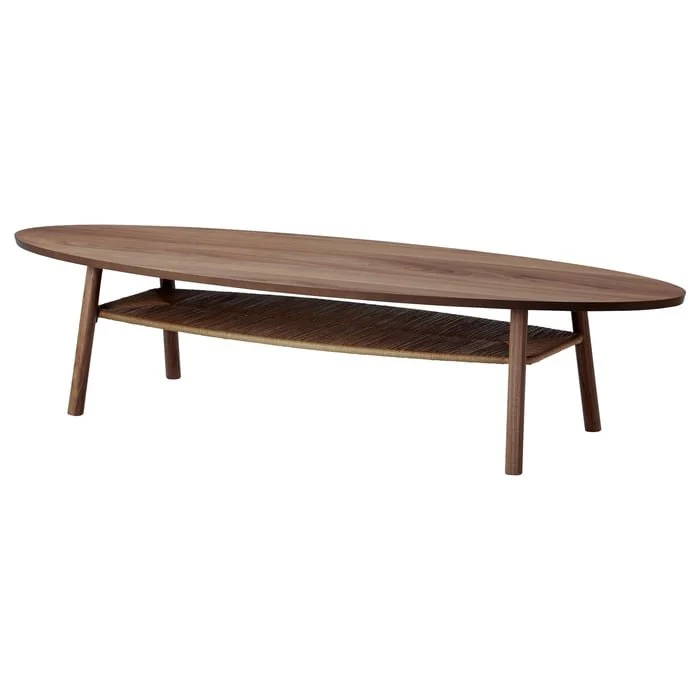
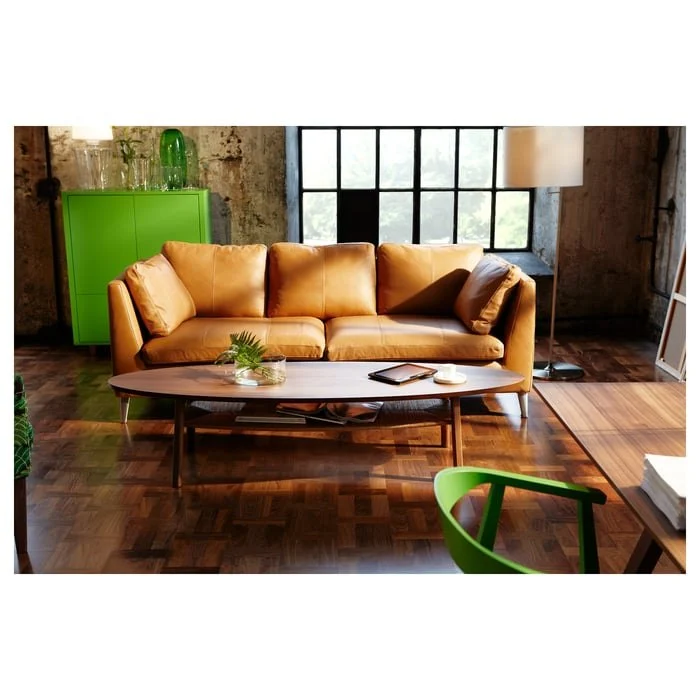
The long, curved table shown here illustrates how a top can follow the width of a sofa while leaving its ends rounded. The photograph is a visual example, not proof that its clearances would suit another room.
Nesting tables offer another option when the surface needs change. Check their full spread-out footprint and where the smaller table will stand during use.
The nested dimensions don’t tell the whole story.
Match the wood tone after checking the silhouette
Once the footprint works, compare the table with the largest wood surface already in view: often the floor, a media cabinet or shelving. For a quiet scheme, try a similar warm or cool undertone. For contrast, choose a clearly lighter or darker finish and repeat that tone in a smaller detail elsewhere.
A modern look can come from a simple outline without matching every wood finish. Compare the top’s thickness and the base beneath it. A closed base may feel more prominent than slender legs, even when both occupy the same floor area.
Check finish samples or close-up photographs in addition to the room image. A color name such as natural or walnut does not fully describe its appearance, and room lighting can change how the finish looks. Read the material description separately: a wood-colored finish does not establish the underlying construction. For a second surface beside a reading chair, compare a modern wooden side table around its lamp, book and floor footprint.
Decide what belongs under the coffee table
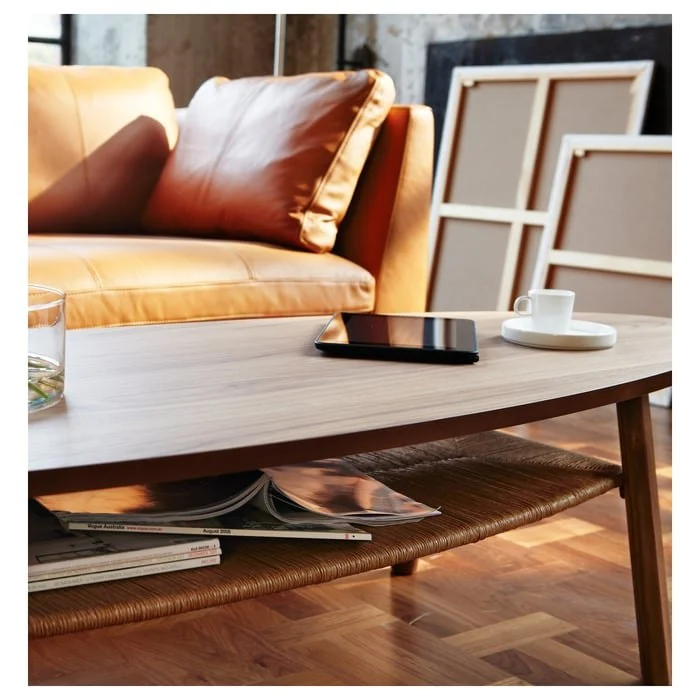
The base also determines how storage will look. An open shelf gives books and a tray a place below the top, but those objects remain visible from the sofa. Choose it for items you are willing to see, rather than as a way to hide mixed clutter.
For concealed storage, check the inside dimensions and the direction in which doors or drawers open. Compare that opening space with the sofa gap already marked on the floor. With a lift top, check the manufacturer’s raised dimensions and operating instructions as well as the closed height.
Don’t forget cleaning underneath. A low shelf may leave a gap that’s awkward for your usual vacuum or mop.
Check that gap against the equipment you use. If more books and baskets need a home, a console with shelves behind the couch offers a separate storage position; check its access from the room behind the sofa.
Check the listing before ordering a wood coffee table
The final comparison should bring the room measurements and the product details together. Keep these checks beside the floor outline:
- Confirm overall length, depth and height, including legs or other projecting parts.
- Read the tabletop, edge and base materials separately; check whether the description specifies solid wood, veneer or a printed finish.
- Check the finish-care instructions for drinks, spills and routine cleaning.
- Measure access to any storage while the table is in its intended position.
- Confirm delivery access, assembly requirements and the return terms before ordering.
If the table passes those checks, leave room on the surface for its actual job. A book stack and vase should not use the only place available for a drink. The right size is the one that provides useful reach while letting the room keep working around it. Explore more wooden furniture, care and home project guides at Wood Center.