WOODEN FURNITURE & HOME
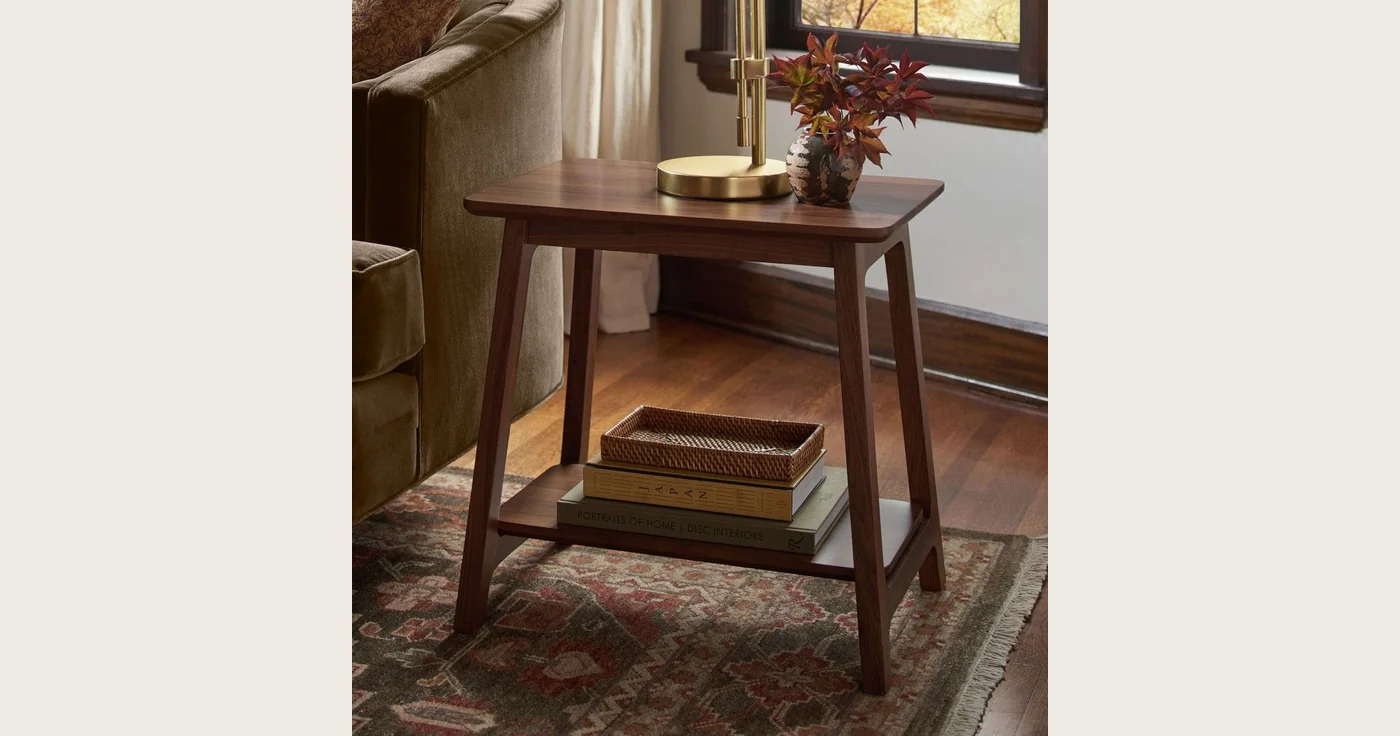
A wooden sofa side table should put a drink within reach without making you lean over the arm. Start near the sofa’s arm height, then check the usable surface from your usual seat. The right shape also needs to leave room beside your feet and along the route past the sofa.
Measure the sofa before browsing tables.
Match the side table height to the sofa arm
For a conventional end table beside an upholstered arm, use the top of that arm as the first reference. Ethan Allen’s occasional-table guide recommends a tabletop within 1–2 inches above or below the sofa or sectional arm. Treat that range as a shortlist, then check the reach in your own seating position.
Measure vertically from the floor to the top of the arm where the table will stand. Record the seat and back heights separately if the listing asks for them. A low coffee table that works in front of the cushions may leave you reaching down awkwardly over a tall arm.
The following are calculated examples using that guidance, not measurements of the photographed furniture.
| Sofa arm height | Initial table-height range | Check before choosing |
|---|---|---|
| 22 inches | 20–24 inches | Can your hand clear the arm while setting down a cup? |
| 25 inches | 23–27 inches | Does the nearest usable part of the top feel comfortable? |
| 28 inches | 26–30 inches | Does the higher table crowd the seat or the view across the room? |
An unusually broad, sloping or padded arm needs more thought than the height alone suggests. Use the wood furniture overview for the wider room and delivery checks. Sit as you normally do, with the cushions and throw you use. If your elbow rests far inside the arm’s outer edge, a table at the correct height can still be too far away.
At an armless end, there is no arm to use as the reference. The reading-chair side table guide considers the chair, lamp and open book together. Mock up the proposed surface beside the seat and test it directly rather than applying the arm-height range to the cushion.
Check sofa-side reach before committing to a footprint
Once the height looks plausible, work out where the objects will sit. The nearest edge isn’t always the useful edge: a large lamp base, raised rim or decorative bowl may occupy the part you can reach most easily.
Use a firm temporary surface at the proposed height and position. Place an empty cup on it, sit back, then pick the cup up and put it down. Try the movement from the seat’s normal position, without deliberately perching at the edge to make the table work.
Keep the cup empty during this check.
If you have to twist around the arm or lift your shoulder, adjust the surface position. A narrower gap may help, but allow space for the upholstery to move freely. Reclining seats need a separate check through their full movement, following the sofa maker’s instructions.
Test the reach from the seat that will actually use the table. One side table at the end of a long sofa won’t necessarily serve the middle seat. If several people need a shared landing place, the coffee table planning guide addresses the surface in front of the seating.
Choose a tabletop shape that fits beside the sofa
With the reach established, mark the proposed tabletop and base on the floor. Compare their widest dimensions with the space left beside the sofa, including the route you use to walk past it.
A rounded edge can remove a projecting corner, but the whole circle still needs to fit. A narrow rectangular top may work better in a slim slot, provided its front corner doesn’t extend into the approach to the seat. Trace the actual outline rather than assuming that round always means smaller.
Look beneath the top too.
The dimension drawing below separates the tabletop diameter from the base diameter. Its measurements describe this particular table; they aren’t recommended dimensions for every sofa. A table that looks compact from above can still put its base where your foot needs to land.
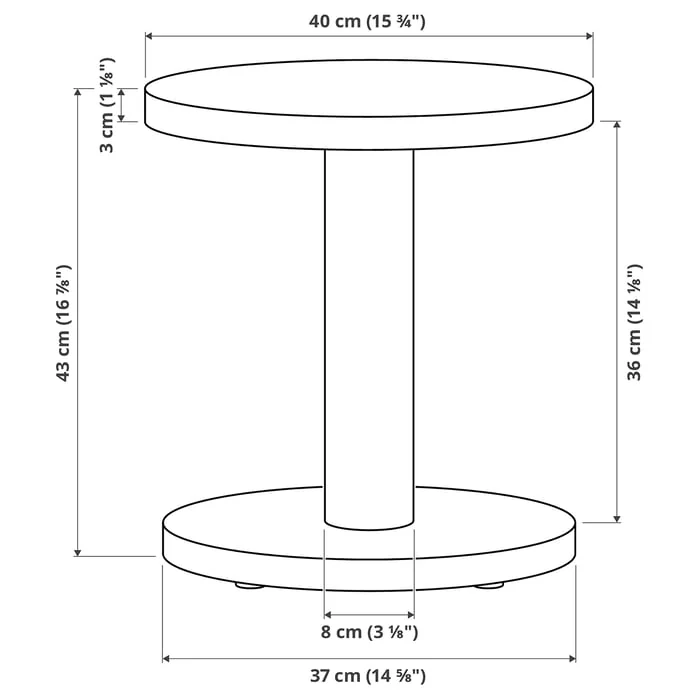
Check the depth as well as the width. A table pushed far behind the sofa arm can be hard to use even when it fits neatly against the wall. Bring the useful surface toward the seated hand, then retest the walking route.
Reserve tabletop space for a drink before adding a lamp
After the footprint fits, lay out the objects that must share the surface. Use the actual lamp-base dimensions, a coaster and whatever you keep beside the sofa. A product photograph with a small cup doesn’t tell you whether your lamp and mug will fit together.
Leave a clear landing place within reach.
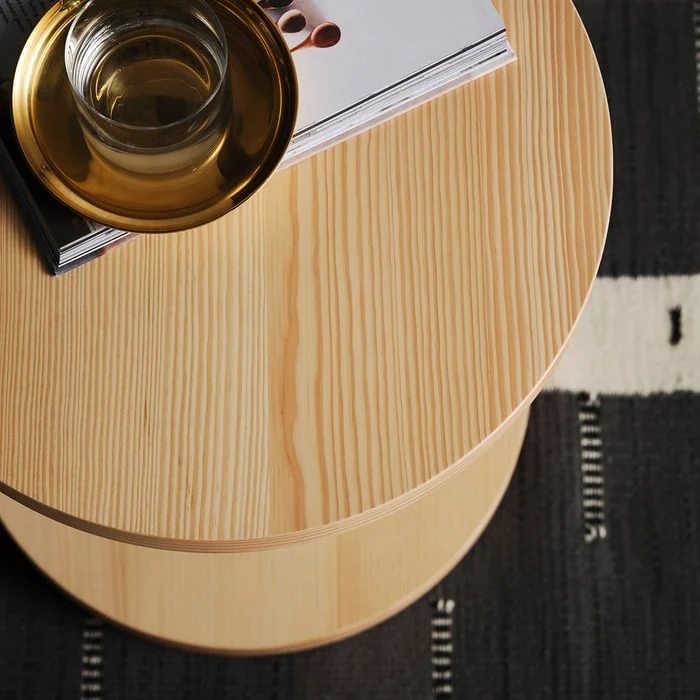
A lamp also brings a cord into the plan. Plan a clear path to the outlet, away from foot traffic and moving sofa parts. If the lamp uses most of the surface, consider lighting from elsewhere rather than enlarging the table until it obstructs the seat.
For storage, check access while seated. A lower shelf may hold books well but won’t replace a reachable place for a drink. A drawer needs room to open in the intended position. If storage is the main need, compare a shelved console behind the couch, keeping its access route separate from the seated reach test.
Inspect the wood surface and base before ordering
The final comparison is about construction as well as appearance. Read whether the top, edge and base are solid wood, veneer or another material. A wood finish name doesn’t establish how the piece is made.
Check close-up photographs of the underside and joints. The example below shows a metal fixing plate beneath a circular top, a detail hidden in the usual room view. That photograph helps explain the assembly, but doesn’t establish a load rating or prove stability.
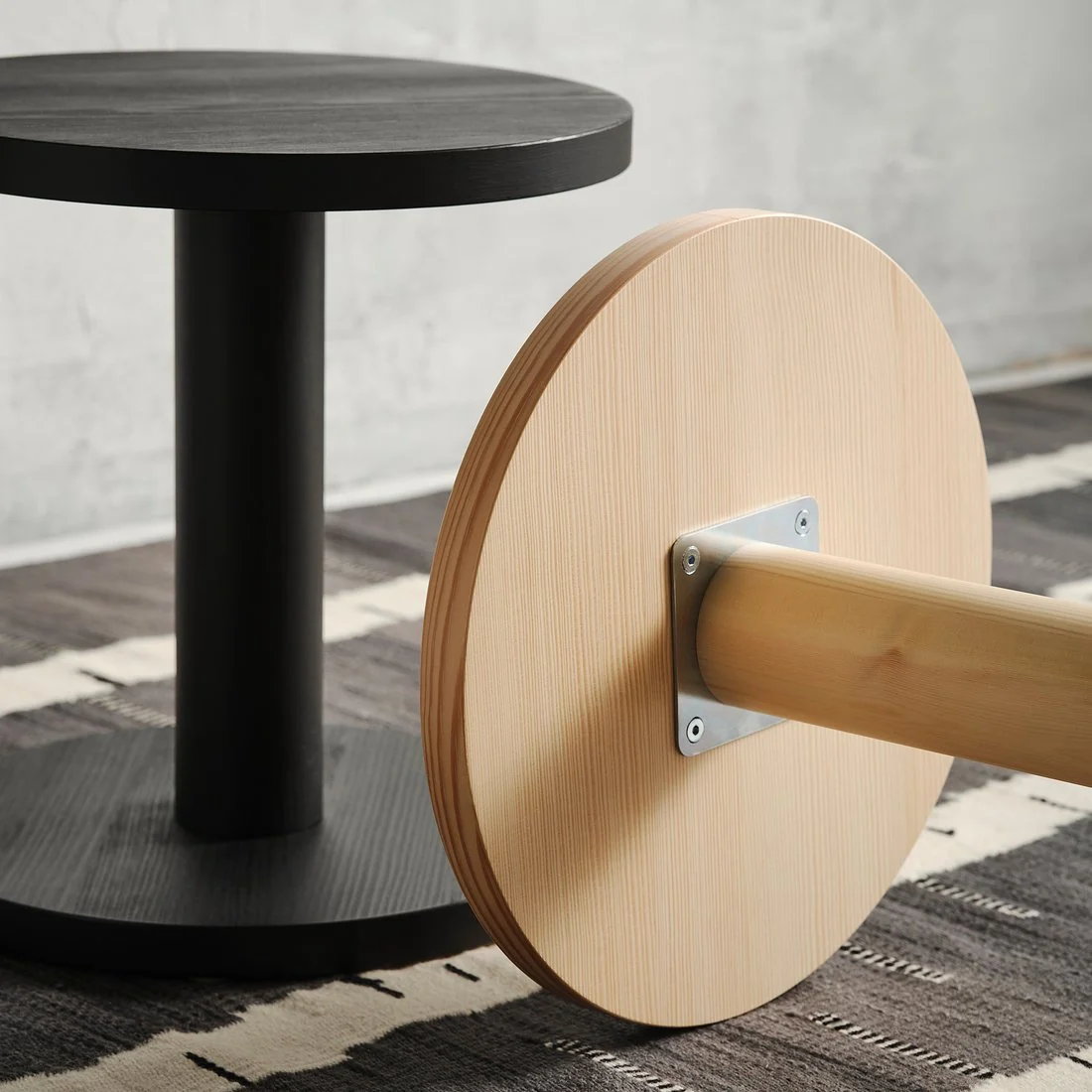
Read the finish-care guidance for cups, spills and cleaning. Keep coasters within reach, and follow the maker’s instructions rather than assuming that a clear finish makes the surface waterproof. For a plant sharing this corner, choose an indoor plant stand with a drainage plan instead of using the drink space for a pot.
Before ordering, record the arm height, chosen tabletop height, overall footprint and usable landing space together. Our wood furniture overview covers the broader checks for construction and placement. For this piece, the deciding test is simple: can you sit back, set down your cup and get up without moving the table?