WOODEN FURNITURE & HOME
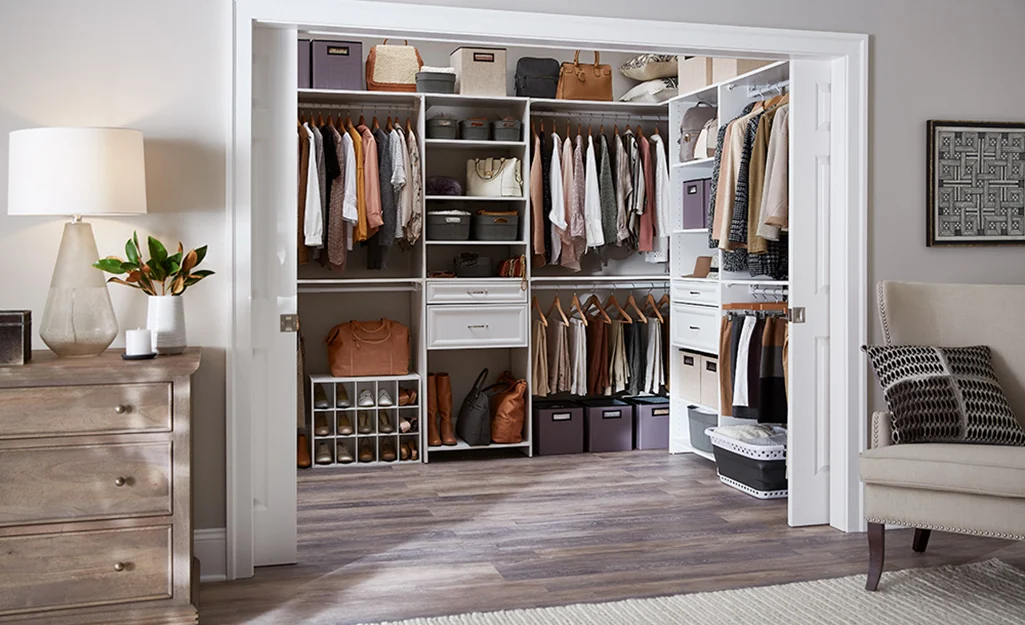
Useful closet shelving ideas start with a division of space: open shelves for folded clothes and bags, clear hanging bays for garments, and a lower area for shoes. Put the things you wear most where you can see and reach them comfortably. Then choose an adjustable system that fits those zones, rather than filling every gap with another shelf.
A closet can look full yet waste space because a shelf blocks a sleeve, a basket won’t slide out, or a second row of clothing disappears behind the first. The aim is a layout you can put back together on an ordinary morning.
Give shelves a share of the closet, not the whole closet
Start with the clothes you intend to keep in this closet. Separate hanging garments, folded clothes, bags and shoes, then look at how much room each group takes up. Keep your longest hanging pieces on their usual hangers while planning. A dress that brushes the shelf below needs a different bay from a row of shirts.
A central shelf tower with hanging space beside it is a useful arrangement to consider. It groups the small items without scattering shelves across every hanging bay. In a narrow reach-in closet, an end tower may work better: it leaves a wider opening for clothes and keeps the middle easier to reach.
Closet doors also affect the bedroom around them. Our small-space storage guide connects furniture access with the route through the room.
| Zone | What belongs there | Check before choosing shelves |
|---|---|---|
| Comfortable daily reach | Regularly worn folded clothes and everyday bags | Can you remove an item without lifting the stack above it? |
| Hanging bay | Shirts, jackets, dresses and other hanging garments | Do hems, sleeves and hangers clear the adjacent shelves? |
| Lower section | Shoes and a removable basket | Can you bend, see and retrieve items through the open door? |
| Upper shelf | Light items used less often | Can you retrieve the container safely and identify its contents? |
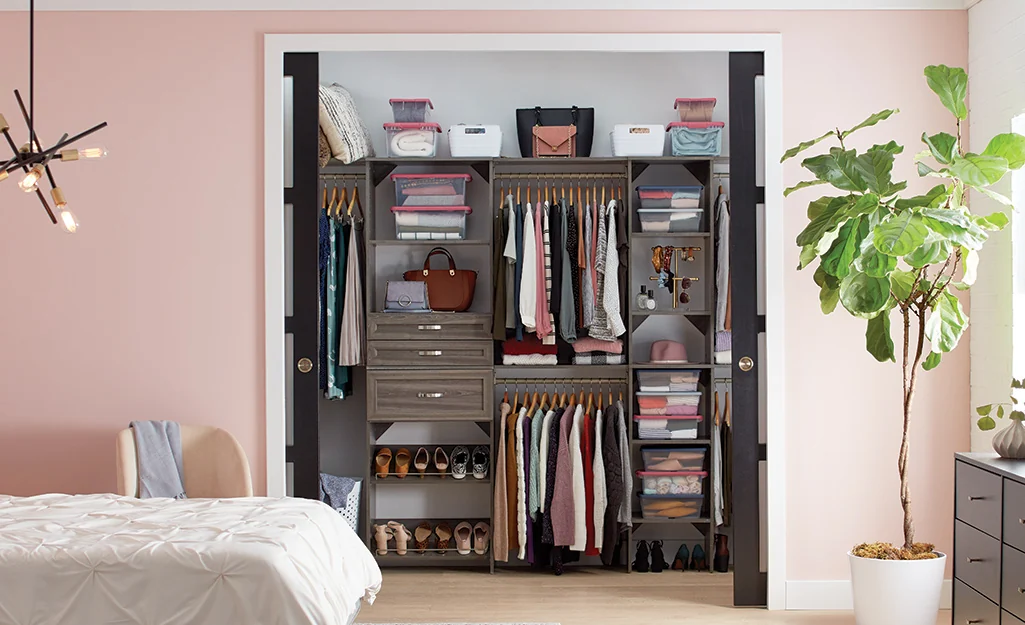
The mixed layout above shows how shelving and hanging space can share a reach-in closet. Treat it as a zoning example; your clothes and door opening should decide the proportions.
Make folded clothes easy to lift out
Plan a shelf around the way you actually fold a sweater or pair of jeans. Measure the finished bundle, then compare it with the system’s usable shelf depth and width. A folded sleeve hanging over the front is a sign to change the fold or shelf choice before buying matching baskets. In a shared bedroom, keep books and play pieces in their own book and toy storage zones rather than letting them displace everyday clothing.
Depth needs context. EasyClosets lists a common wall-mounted depth of 14 inches, a specification for its own systems. Use it as a reference point while comparing actual products. A deeper shelf may fit a large bin while making loose clothes at the back harder to see. The useful question is whether your folded clothes fit and remain reachable.
Keep stacks low enough that you can lift the item you want without holding a leaning pile together. If sweaters spread sideways, a compatible divider can give each pile a boundary. Check that the divider fits the shelf thickness and doesn’t consume the space needed for the clothes.
For a deep existing shelf, consider a removable basket for a category such as workout tops. Pulling out the category can be easier than searching behind a front stack. Don’t add a second row of loose clothes merely because the shelf is deep enough to hold it.
Give bags shelves that fit their shape
An everyday handbag deserves a place you can reach without shifting a pile of clothing. Set it on its base and check the space its handles and straps occupy. Some handles stand above the bag; others fall beside it and need room so they don’t become trapped under the next item.
Adjustable openings help when a structured tote and a small clutch share the same tower. Give the taller bag a taller opening instead of making every shelf gap match. Small bags can share a divider or a shallow container, provided you can see which one you’re taking out.
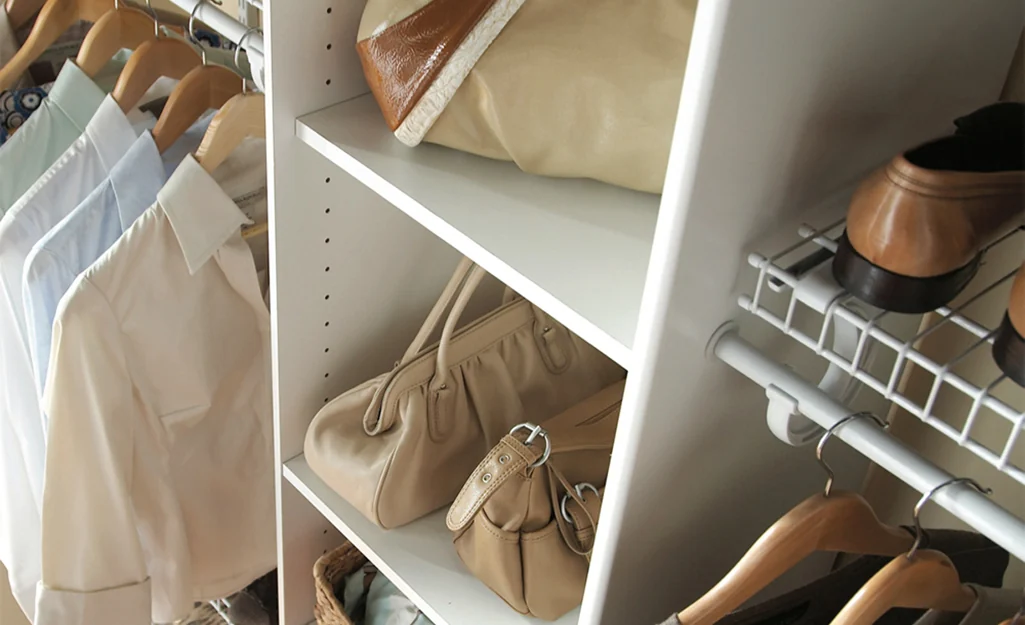
The shelf holes visible beside these bags illustrate the value of changeable spacing. Before choosing a system, check how its shelves move and whether the supplied supports are intended for that shelf. Decorative bags in a photograph don’t establish a shelf’s load rating. A bag used on every trip out may be better placed at an entryway shelf with hooks, provided its loaded depth leaves the passage usable.
Leave room for hanging clothes and shoes
Shelves beside hanging clothes should stop where garments need to move. Test the layout with a hanger turned as it would be when you take a shirt out. Check the sleeve nearest the shelf edge as well as the hem below the rod. A narrow shelf that catches clothing will be frustrating even if everything technically fits.
Separate long garments from short ones before deciding whether double hanging belongs in the plan. Two levels can suit shorter clothes, but a long coat or dress still needs an uninterrupted drop. Don’t buy a symmetrical kit if it would force those pieces to fold over a lower rod.
Reserve a defined lower section for shoes so they don’t gradually occupy the standing space. Keep the plan simple here: check the footwear you own against the available opening and access through the doors. A large shoe collection may justify its own rack or bay; it shouldn’t dictate the depth of every shelf used for clothes and bags. Check the actual footwear with the shoe shelf depth and access guide.
Choose adjustable closet shelving you can keep using
Compare ready-made systems by their internal openings, shelf adjustment method and compatible accessories. Overall width alone won’t tell you whether your basket fits between side panels. Look for clear product drawings and installation instructions before committing to the finish.
A solid shelf gives folded clothes and small accessories a continuous surface. Wire shelving leaves gaps, so check how smaller objects will sit on it and whether the manufacturer offers a compatible liner. For a wood look, distinguish a wood-effect finish from solid wood or veneer in the product description; appearance doesn’t tell you the construction.
Check the stated shelf load, required supports and installation conditions for the exact product. Follow its anchoring instructions, including for tall freestanding units. There isn’t a universal weight allowance that applies to everything described as a closet shelf.
Test closet access before filling the upper shelves
Door access can undo a good paper layout. Slide or swing the doors through their full travel, then check that baskets and drawers can come out. In a reach-in closet, keep regularly used shelf openings behind the part of the doorway you can expose easily.
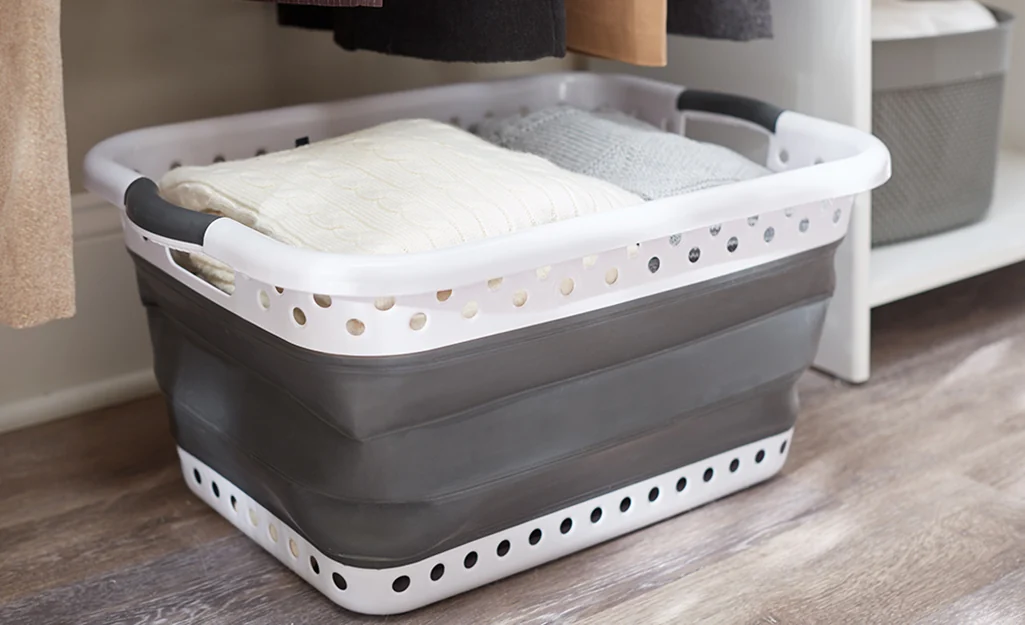
A removable basket can give loose items a home, but it also needs a retrieval route. Allow for your hands around its handles and check that it won’t catch on hanging clothes. The same test applies to bins above the rod: a container that fits tightly may be awkward to take down.
Before ordering extras, sketch where your current clothes, bags and containers will go. Mark anything that requires moving something else first. Those conflicts are the places to change the layout. Check nearby furniture too: a nightstand with open drawers needs its own working space beside the bed.