WOODEN FURNITURE & HOME
A modern wooden side table works in a reading corner when it holds the things you reach for and leaves your feet somewhere to go. Choose around the chair, reading light and open book together, then decide where the table will stand between reading sessions. A compact top alone doesn’t guarantee a good fit in a small room.
The useful details are often below the tabletop or missing from a styled photograph: a spreading base, the lamp cord, and the space a book needs when you’re halfway through it.
Give the reading chair a small working surface
Start with what happens in the chair. Reading a paperback with a cup nearby asks less of a table than studying a large book, taking notes and keeping a lamp within reach. Write down the things that must stay on top during an ordinary session. Leave decorative objects off that list until the useful items fit.
A table beside a study’s lounge chair also needs a role distinct from the desk. If the desk already holds paperwork and a computer, the chair-side surface can remain a place for the current book and a drink. Letting it become a second inbox soon removes the space that made the chair inviting.
Construction and the wider room plan belong together; the wood furniture planning guide explains how to assess both before choosing a piece.
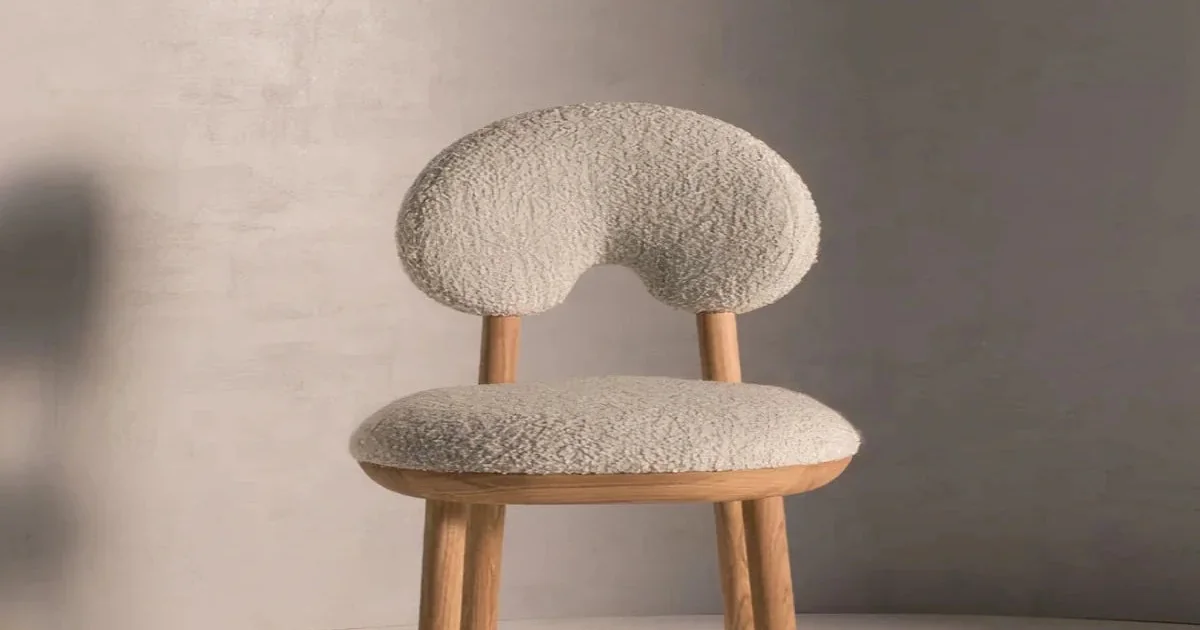
The armless chair below shows a simple arrangement: the table stands beside the seat, with an open approach in front. The photograph establishes the relationship between the pieces; try the position with your own chair before choosing a table height.
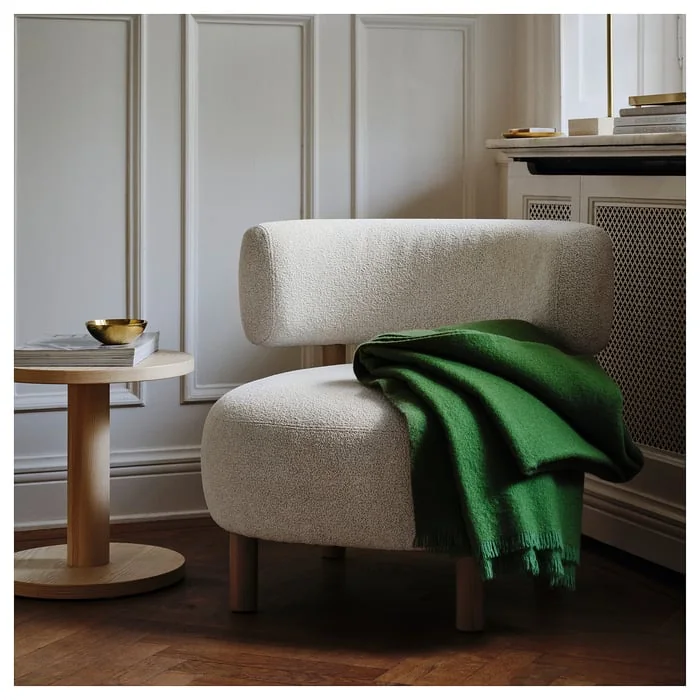
Sit back in the position you use for reading, including an ottoman if you have one. Consider which hand usually holds the book and which hand reaches for a drink. The most convenient side may differ from the side that looks balanced against the window.
Settle the reading lamp before choosing the tabletop
Once the chair position is clear, decide whether the table must carry the reading light. A lamp base uses some of the same surface needed for a book, and its shade can reach farther than the base. Compare both with the space beside the chair, especially beneath a shelf or beside a curtain.
Check the light from the seated position. Can the lamp direct light onto the page, and can you reach its switch? Adjust the lamp so the exposed light source isn’t shining into your eyes. These checks matter more than matching the lamp’s overall height to a rule drawn from a different chair.
A floor lamp can free the tabletop, but its base needs a place too. Sketch the table base and lamp base together rather than treating them as separate purchases. In a tight corner, placing the light behind the chair may leave a more useful surface beside your hand, provided the lamp can illuminate the page from there.
Keep the cable route in the plan. A table that moves across a doorway while its lamp stays plugged in loses much of its flexibility. Choose a permanent location for a corded lamp, or separate the lighting from the movable table. For light serving the adjacent sofa, consider the separate placement and cord checks for a sofa-back console lamp.
Leave room on the side table for an open book and a cup
With the lamp accounted for, compare the remaining surface with the objects you actually use. A closed book in a product photograph tells you little about the space needed to lay that book open. A mug handle also extends beyond the circle marked by a coaster.
Draw the proposed tabletop outline on paper and arrange your book, coaster and lamp footprint inside it. Open the book to a typical spread. See whether you can put the cup down without setting it on the pages or pushing another object toward the edge.
The close view below shows a cup and saucer overlapping reading material. For daily use, give the drink its own landing place so you can pick up the book without first rearranging the table.
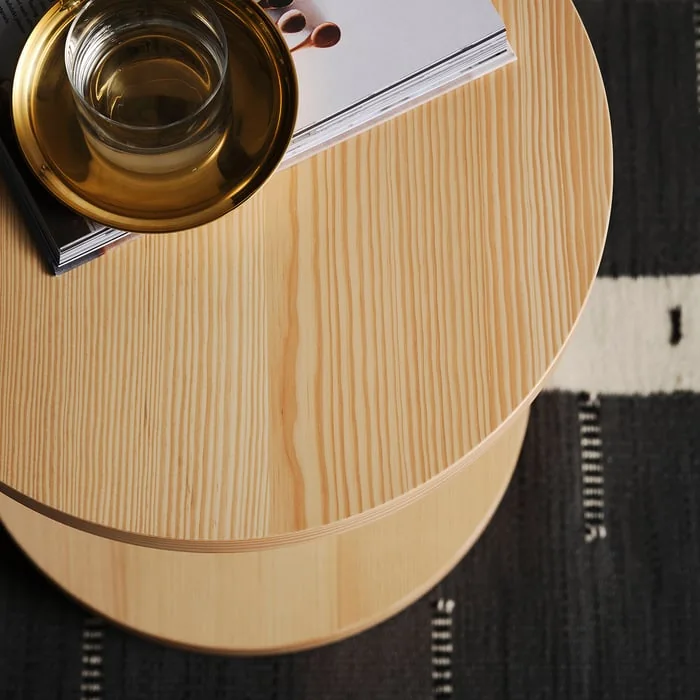
A lower shelf can keep the next book nearby, but the current book still needs somewhere to go when you pause. Check whether reaching the shelf requires you to bend around the chair. For this use, a clear top may be more valuable than extra storage that’s awkward to access. If several seats need a landing place, compare a shared coffee-table surface rather than asking this chair-side top to serve the whole room.
Check the table base where your feet will rest
A surface that holds everything can still crowd the chair below. Compare the base outline with the tabletop outline, then include both in the room plan. Look particularly at the place where your feet land when you stand up or turn toward an ottoman.
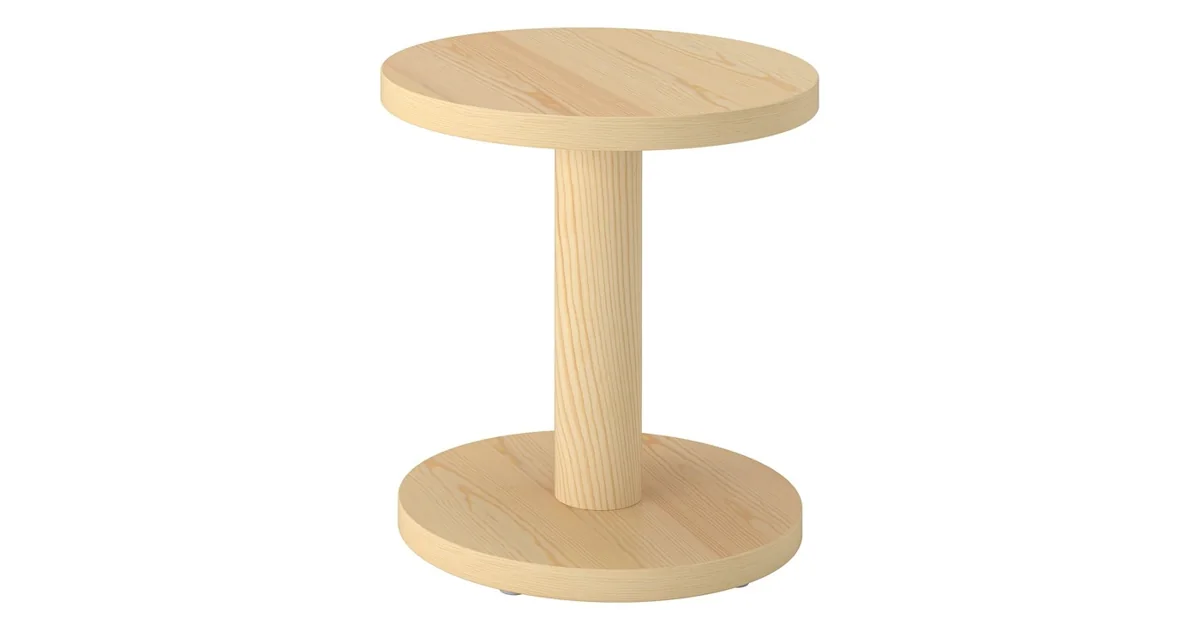
The pedestal table shown here has a broad circular base beneath its central column. The open area around the column doesn’t make that floor-level disc disappear. A simple silhouette can look light while occupying a substantial patch of floor.
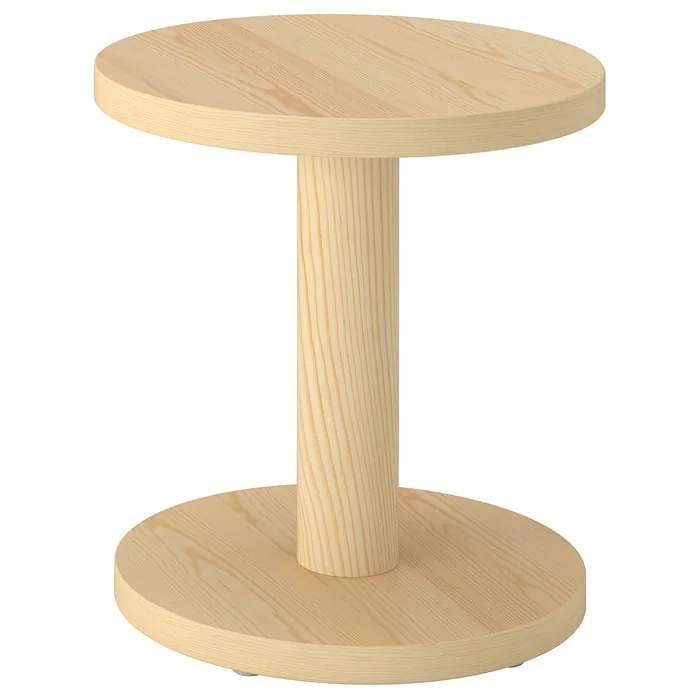
Legs and stretchers deserve the same attention. Read the dimension drawing and ask for the base measurements if the listing gives only the top size. Include the lounge chair’s full movement where it swivels or reclines, using its manufacturer’s clearance instructions.
For a table intended primarily for a sofa, use the separate sofa-side table guide, which addresses upholstered arms and the reach over them. A reading chair with an ottoman creates a different set of floor-space conflicts.
Choose a parking place for a movable side table
After checking the reading position, choose where the table goes when the room changes use. A small study may need the chair clear for a visitor, or the table may move beside another seat. Mark that second location before buying. Include the route between locations and any furniture it must pass.
Check the listed weight and the maker’s handling guidance. A small table can still be cumbersome to lift, particularly if its top offers little grip. Empty the surface before moving it, and use a floor-protection method suited to both the table and flooring.
Nesting tables are worth considering when an extra surface is useful only occasionally. Check the combined footprint when stored and the separate footprints when in use. Two tops tucked together still need a permanent home; a nest that blocks a cabinet door simply moves the problem elsewhere.
Finish by comparing the proposed table with the room’s existing wood. A quiet grain pattern can sit comfortably near a busy bookcase, while a darker finish can give a pale chair a clearer outline. Keep any wood accent balance secondary to the book, cup and lighting already assigned to the table.
Keep the reading-corner decision grounded in its two real positions: beside the chair with a book open, and parked out of the way afterward.