WOODEN FURNITURE & HOME
Choosing between Polycrylic and polyurethane for indoor furniture starts with the color you want to keep. Minwax Polycrylic Protective Finish suits a clear finish over light wood; an oil-based polyurethane such as Minwax Fast-Drying Polyurethane suits a warmer look. Polyurethane also comes in water-based formulas, so the useful comparison is between named products, rather than two cans identified only as “poly.”
Polycrylic and polyurethane labels describe different choices
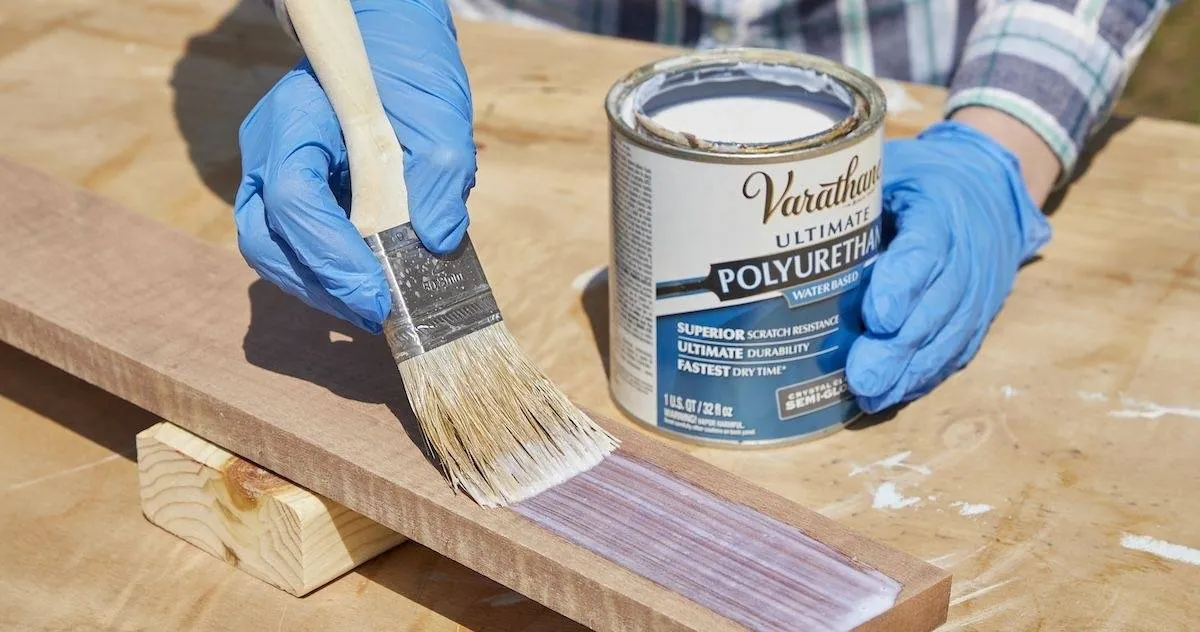
Polycrylic is Minwax’s product name for a water-based clear finish. This guide compares the regular product with two other Minwax finishes: Fast-Drying Polyurethane, which is oil-based, and Water-Based Oil-Modified Polyurethane. The latter is a water-based formula with a warm look. The water-based Varathane can in the opening image is another example of the broader finish family.
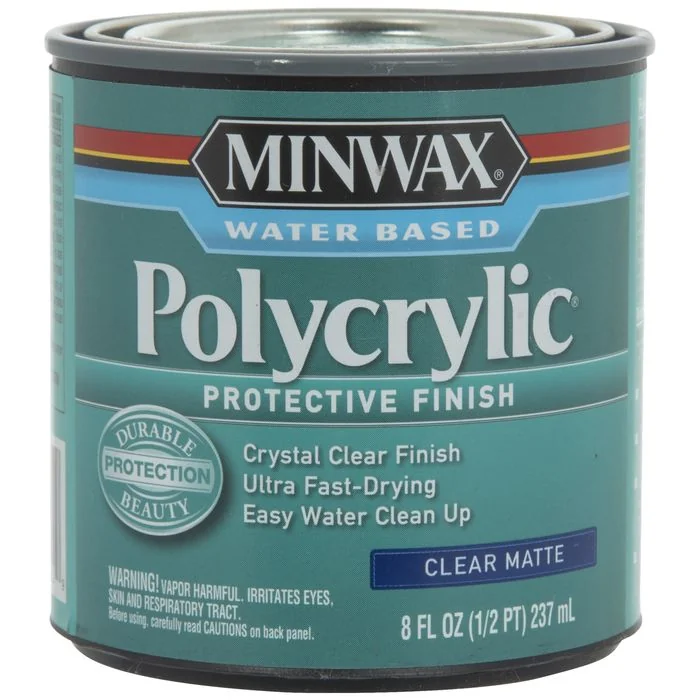
Start with the whole label. The pictured can says “Clear Matte,” which tells you the sheen as well as the color description. Sheen means how shiny the coat looks; judge wear from the product’s stated uses. For an older piece, first identify the surface using the guide to planning a furniture makeover.
Clear Polycrylic or a warm polyurethane finish?
Once you’ve read the label, decide what color you want the wood to keep. Minwax describes regular Polycrylic as non-yellowing and non-ambering. The brand’s oil-based finish adds a warm look. On a pale cabinet door, that choice may matter more than the word “clear” on the front of the can.
Warmth can also come from a water-based coat.
The oil-modified can shown below says “Premium Oil-Water Hybrid” and “Warm Semi-Gloss.” Minwax’s page describes the same product as water-based and warm. If you want to keep a light wood pale, look for an explicit non-ambering claim. If you want a warmer tone, choose it as part of the room’s wood palette.
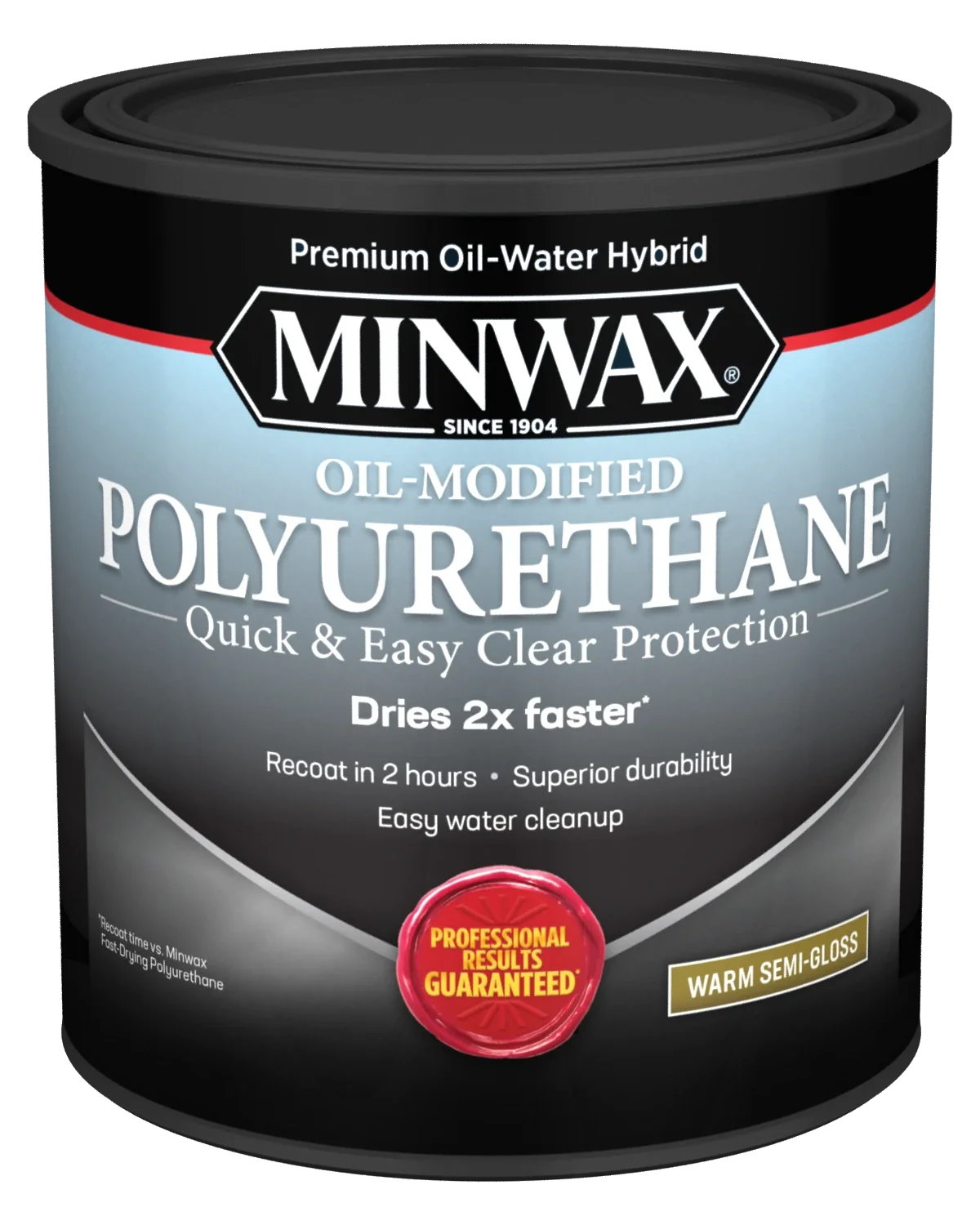
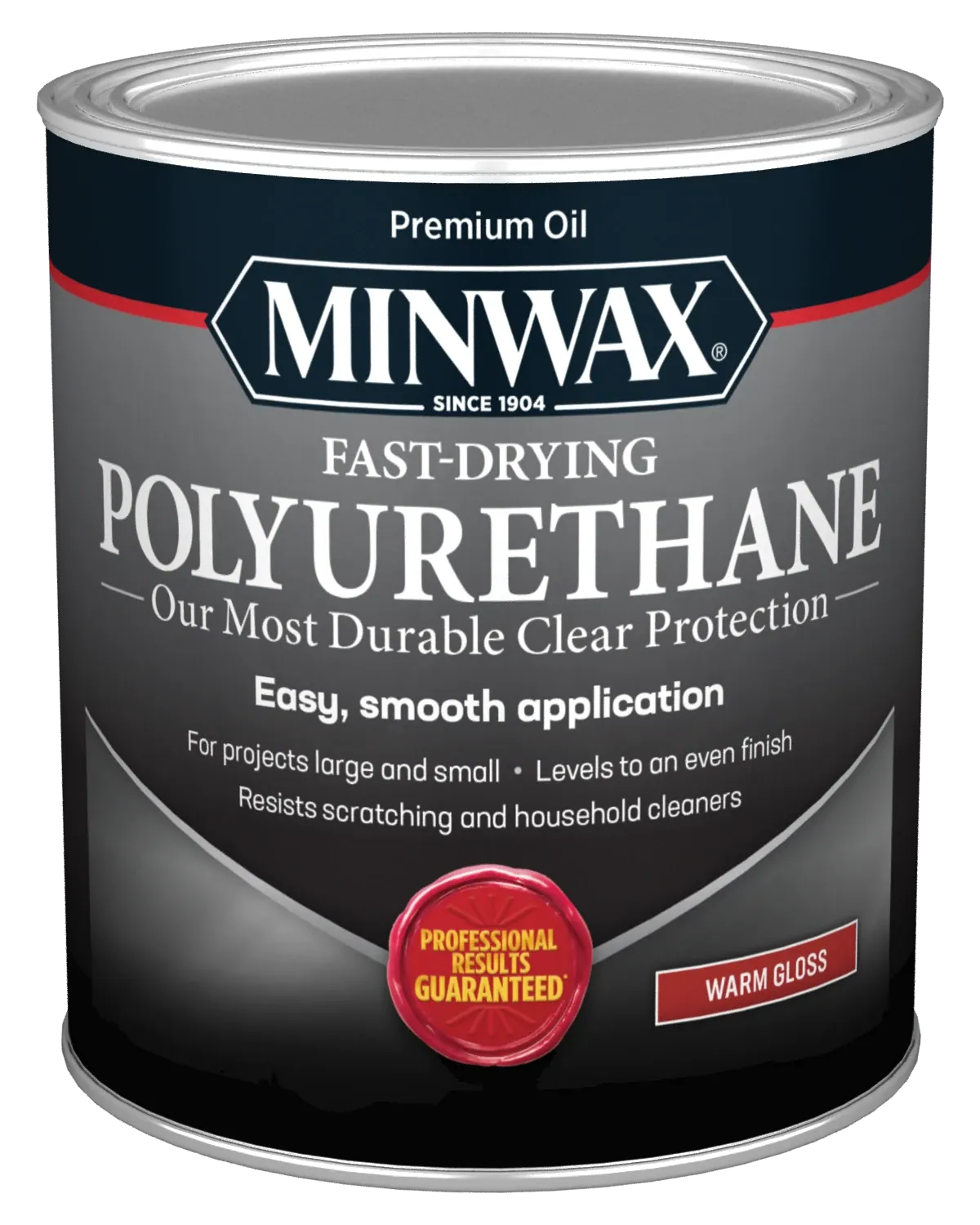
The other warm option pictured here says “Premium Oil” and “Warm Gloss.” The two warm cans differ in formula and sheen. Treat these as product choices, then check the result on your own wood before committing to the whole piece.
Furniture wear needs a product-specific answer
Color is only part of the choice for a table that sees daily use. Minwax lists furniture among the uses for both its regular Polycrylic and oil-based finish. Both pages mention protection against scratches and spills. That’s a useful starting point, though a direct wear test would be needed to rank them on the same wood under the same load.
Floor use gives a firmer boundary. Minwax says regular Polycrylic would need more frequent recoating in high-traffic areas and advises against using it on floors. The oil-based and oil-modified finishes discussed here both list floors among their uses. For a floor project, that stated use should carry more weight than how the can looks.
Match wear to the piece.
For a busy dining table, read the exact product’s uses and return-to-service directions. For a picture frame or cabinet side that gets little contact, keeping the color may carry more weight. A hard-working top and a shelf edge ask different things of a clear coat.
Polycrylic cleanup and polyurethane drying need separate checks
The same label check helps you plan the job. The regular water-based topcoat calls for soap-and-water cleanup, while the oil-modified product page specifies warm water. Read the cleanup directions on the exact can you choose. Keep those directions with the brush and the rest of your supplies.
Recoat time and return to use are separate milestones.
One tells you when another coat can go on; the other tells you when the piece can be used again. Read both parts of the label, including the conditions attached to the times. Use the directions for the named product in hand, with its own coat count and drying schedule.
Even a brand’s web page can need a closer read.
The current Minwax oil-based product page gives different recoat intervals in its overview and application directions. If the page and your package conflict, ask the maker which directions apply to your can before adding the next coat. Leave enough time for that check when planning a weekend project.
Which finish belongs on your furniture?
For pale indoor wood, start with the regular non-ambering topcoat if keeping the color is the aim. For a warm finish, weigh the oil-based and oil-water hybrid options. For floors, choose a can that lists floor use. Those three choices keep the purpose of the piece at the center of the decision.
Before buying, check the full name, surface use, color, sheen, and directions. The photos identify separate products and application examples, rather than a controlled test. Let the can’s stated use and the look you want guide the choice for your piece.