WOODEN FURNITURE & HOME
Bookshelf toy storage works when books stay visible, loose toys have a clear home, and the containers are easy to return. Start with the things used during an ordinary day, then assign each group a shelf or bin. A wooden bookcase can hold both books and toys, but filling every opening with an identical basket can make finding either harder.
Give books and toys different shelf spaces
Sort the contents before choosing containers. Pull together books, loose play pieces, boxed games and larger toys. Keep sets that are used together in the same group, even when their pieces look different. A toy kitchen’s food and dishes might share a container; unrelated small objects do not need to share one simply because they fit.
Reserve an open section for books and separate spaces for toys. On a divided bookcase, that might mean books in one cubby and a removable bin in the next. On a long shelf, a bookend can define the book section while a container gives loose pieces a stopping point. Avoid letting a row of books become the side wall of an overflowing toy pile.
Plan around the collection you have. A few large picture books and a train set need a different arrangement from boxed games and small paperbacks. Measure the tallest book and the awkward toy before committing the whole unit to matching cubes.
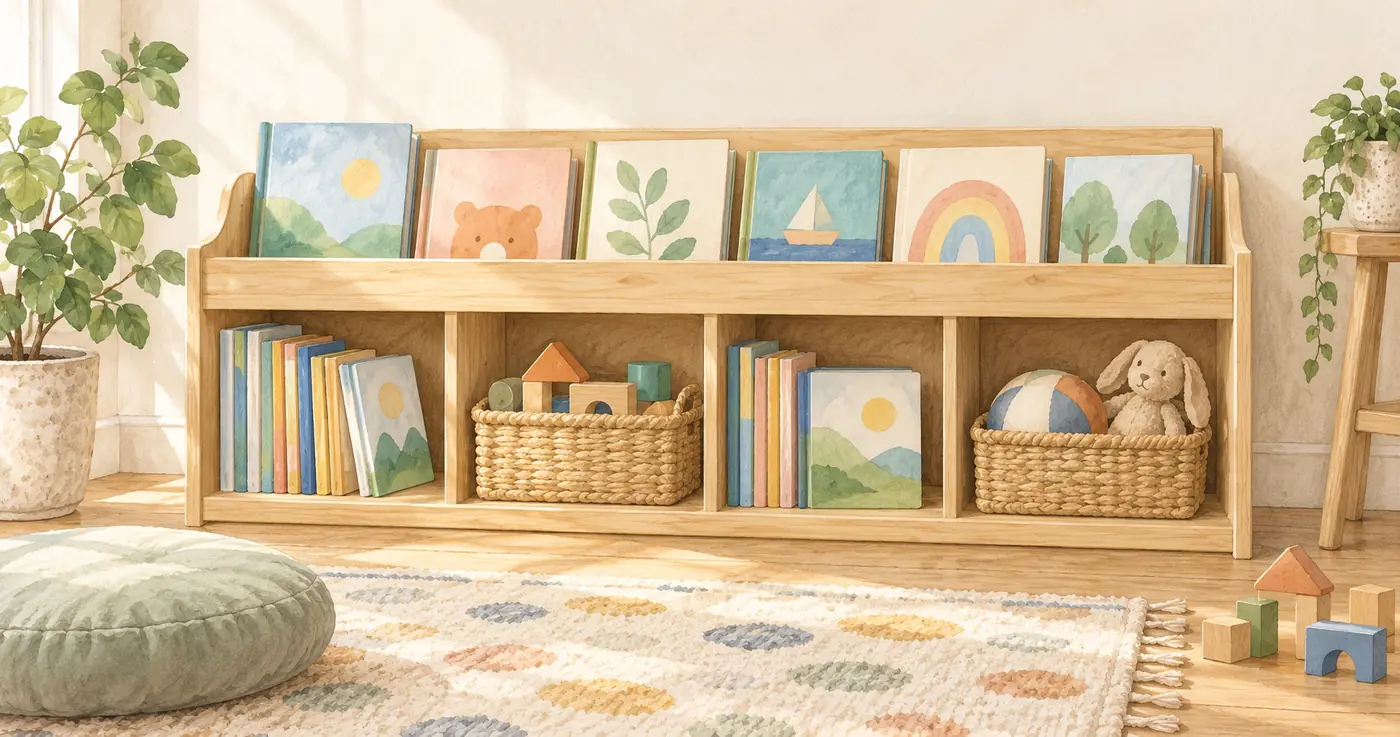
A combined display can keep covers above a separate lower storage area. The arrangement below shows how books and toys can occupy distinct parts of the same piece.
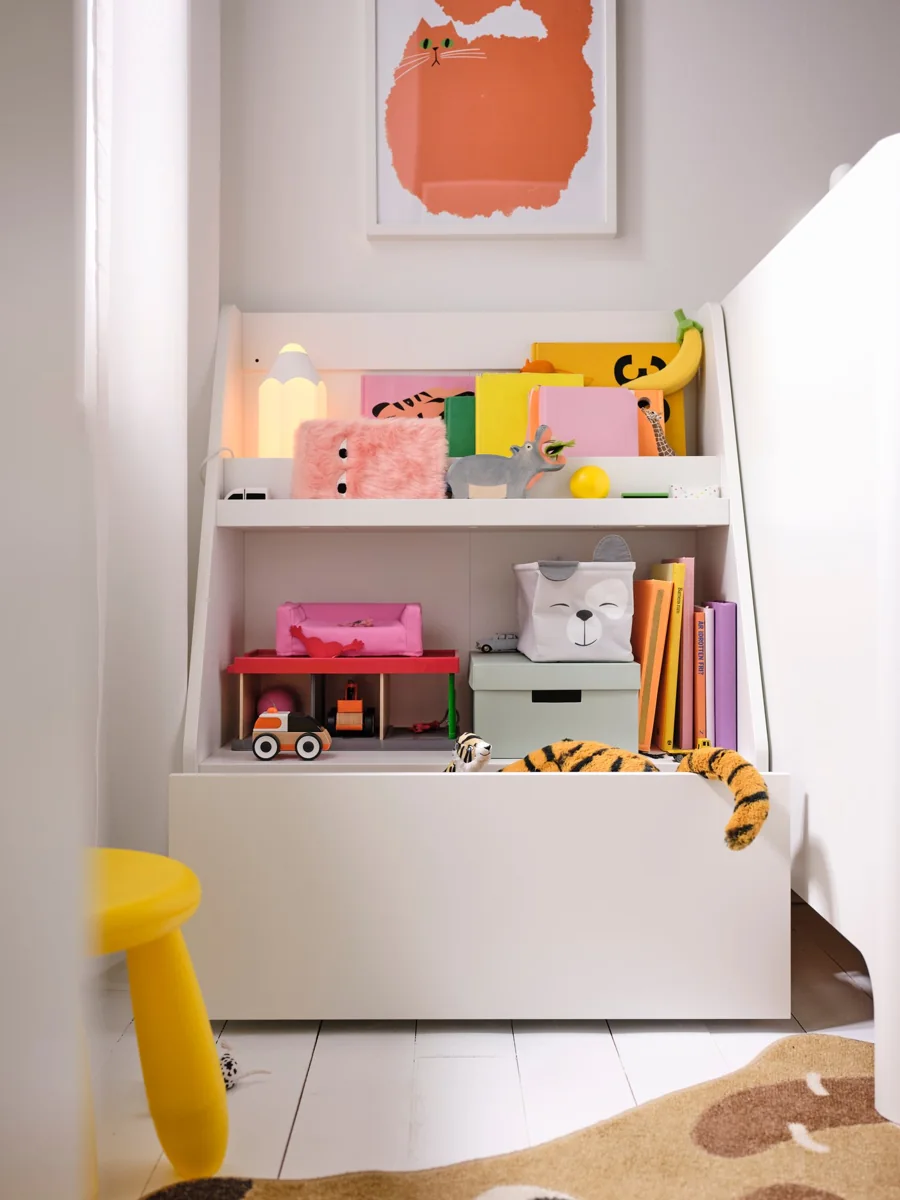
For a shared living room, place the unit where play actually happens. Include the floor space used by an open bin in the room plan. Our small-space storage guide covers the wider question of fitting storage into everyday movement.
Decide which books need their covers visible
With a book section reserved, choose how the books will sit. Spine-out storage uses shelf width differently from a display that shows covers. Neither arrangement needs to hold the entire collection in the same way.
An upright row suits a conventional bookcase. Leave enough room to remove and replace a book without forcing its neighbors sideways. Keep oversized books in a compartment tall enough for them, rather than bending covers to make the row look uniform. A packed row that requires an adult to pull out each title is poorly matched to independent browsing.
A cover-facing display makes a small selection easy to see. It can be useful for books chosen by their pictures, while the rest of the collection stays in an ordinary row elsewhere. The tradeoff is visible capacity: books behind the front layer may still be hidden.
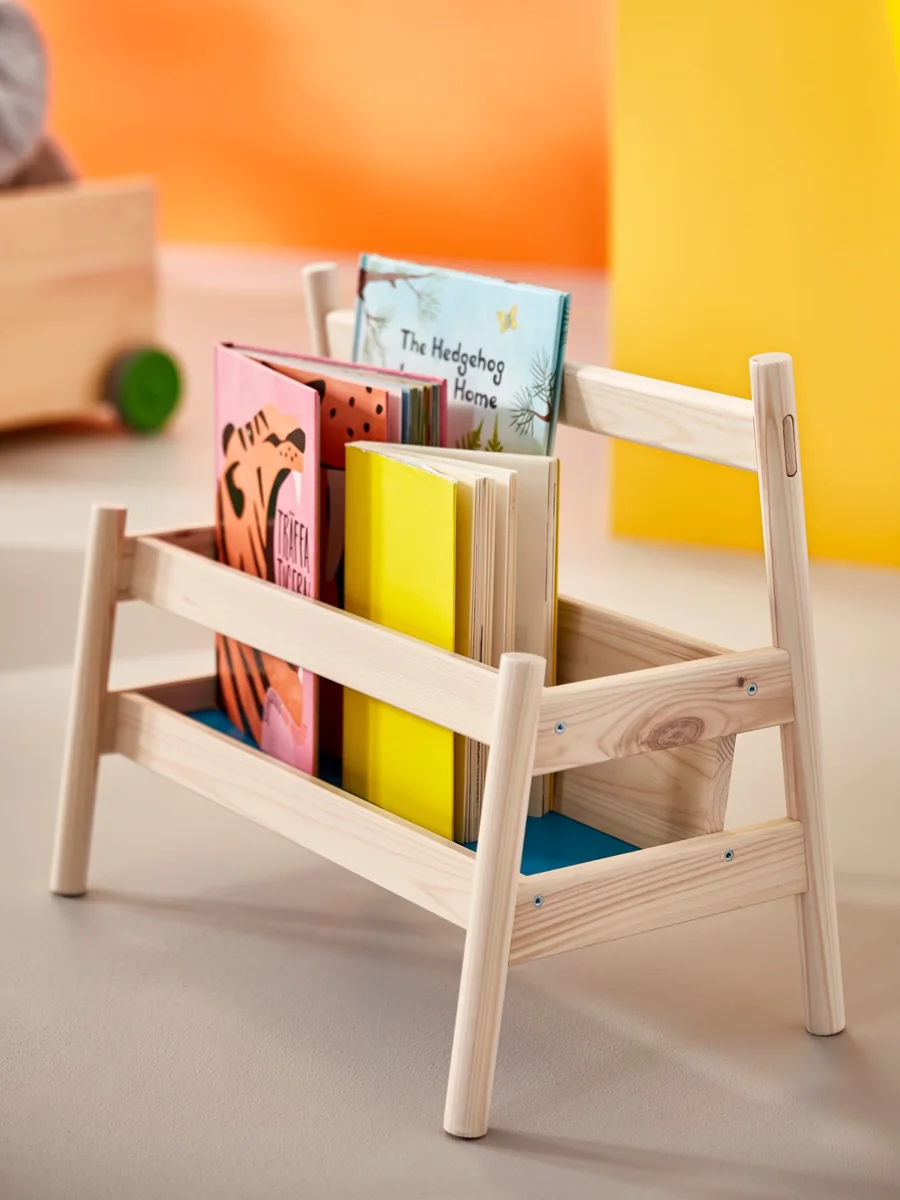
Try a mixed arrangement before buying another bookcase. Keep current favorites facing outward where the furniture permits, with other books upright nearby. Change the selection when interests change. Keep any picture ledges for framed artwork a separate display decision, using the ledge maker’s limits rather than treating it as a toy shelf. There is no need to assign a particular layout to an age range; judge whether the actual child can see, select and return the books with appropriate supervision.
Fit toy bins to the opening and the contents
Once the book space is settled, measure the remaining openings. Check clear width, height and depth inside the bookcase, rather than relying on its overall dimensions. Shelf supports, a front lip or a recessed back can reduce the usable space.
A bin has two different measurements to check. Its outside dimensions determine whether it fits the shelf. Its inside dimensions determine whether the toys fit. Handles, rims and tapered sides can make those measurements quite different.
Leave practical handling room around the container. A box that slides into an opening with almost no clearance may be awkward to grasp, especially when full. Check whether it must slide straight out or tilt, and whether a nearby chair, bed or door blocks that movement.
| Contents | Container detail to check | Return task to try |
|---|---|---|
| Loose play pieces | Opening wide enough to see the contents | Put pieces back without precise stacking |
| A play set with accessories | Interior long enough for its awkward pieces | Return the set together |
| Soft toys | Capacity without compressing the contents tightly | Put a toy back without stuffing |
| Boxed games | Shelf space for the actual boxes | Remove one box without dismantling a pile |
Test a container with its intended contents before buying a full matching set. Check the furniture and container manufacturers’ limits; shelf capacity and bin capacity are separate specifications. A container fitting neatly inside a cubby does not establish a safe load. If adult reading is competing for these openings, assess sofa-back book storage as a separate home for those books.
Put everyday play within usable reach
A container that fits still has to work in use. Position everyday books and suitable toys where the child can reach them from the floor. Keep adult-controlled materials in suitable separate storage. Do not make climbing the furniture part of getting a favorite toy.
The CPSC’s Anchor It! campaign advises anchoring furniture with shelves to the wall to address tip-over risk. Follow the furniture manufacturer’s assembly and anchoring requirements, using hardware suitable for the wall construction. Keep children from climbing on shelves, bins or drawers. A low profile and heavy contents are not substitutes for the required anchoring.
For daily access, consider the whole movement: grasping the handle, pulling the bin out, using its contents and returning it. An adult should assess this with the actual container and appropriate supervision. If a loaded bin is difficult to control, reduce its contents or choose a more manageable container.
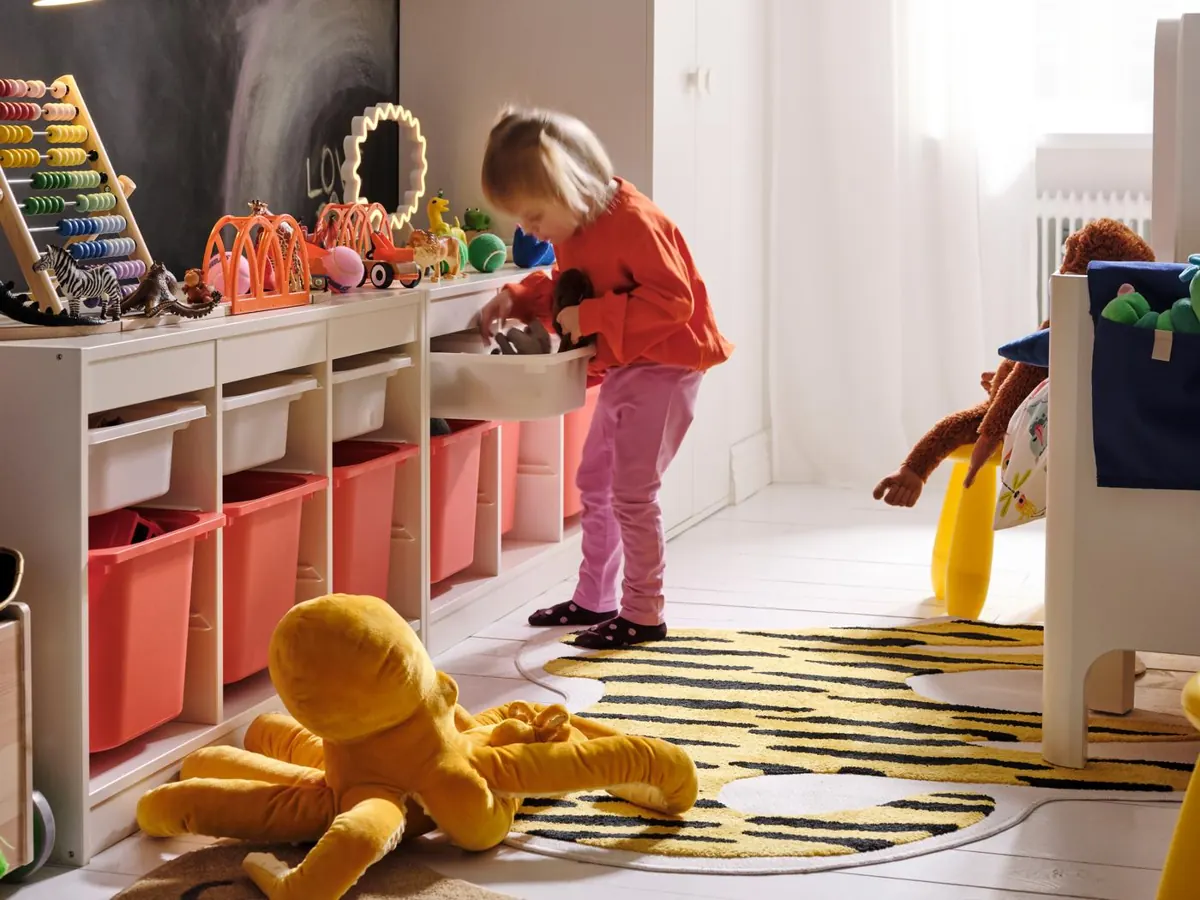
Keep the return position obvious. A bin should have a consistent shelf space, and toys should not need to be balanced on top of it to close the gap. Labels can use a word, a simple picture or both, depending on what the household finds useful. For belongings stored outside the play area, plan separate closet shelving around their own access needs.
Make the shelf easy to reset after play
After the arrangement is in use, watch where objects accumulate. Books left beside the unit may signal that the book row is too tight. Pieces repeatedly left on top of a container may mean it is full or its category is unclear. Change the storage task before adding more labels.
Use broad groups that make sense during cleanup: vehicles, building pieces, pretend food or drawing supplies kept under adult control. Excessively fine sorting creates more decisions for every handful of toys. Separate items more precisely only when that distinction helps the people using them.
Keep a place for unfinished play away from the walking route. A project that needs to survive until tomorrow should not block the book section or prevent a bin from returning. If the room cannot accommodate both active play and every stored toy, reduce what is out at once and keep the remainder in appropriate separate storage.
Finish by checking the ordinary reset: books return without squeezing, bins return without wrestling, and the floor in front stays usable. When one of those tasks repeatedly fails, adjust that section of the bookshelf rather than reorganizing the entire room. Keep wood accents on adult display surfaces focused on their own surfaces so decoration does not consume the working toy-storage openings.