WOODEN FURNITURE & HOME
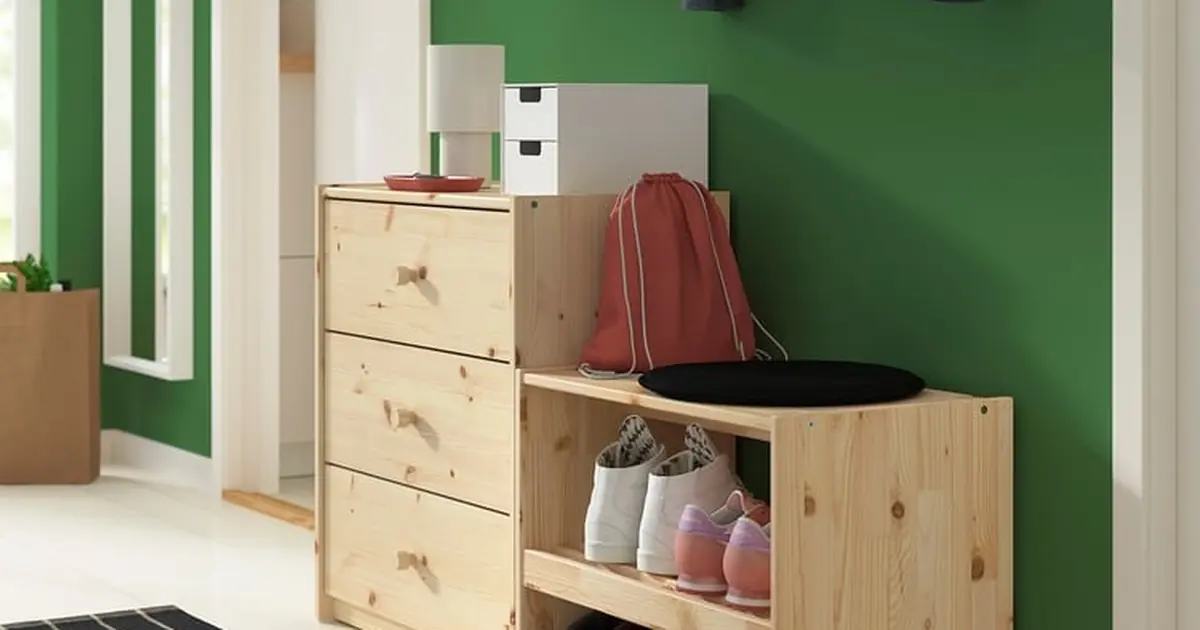
Wood entryway storage benches work well when the seat stays clear and the shoes beneath it are easy to reach. Choose open shelves for shoes you grab often, divided cubbies for separate pairs, or concealed storage for items you can put away before sitting down, then check the space needed to use the bench.
Leave room to use the bench beside the entry door
A bench that fits along the wall can still crowd the place where you change shoes. Mark its outline on the floor. Compare the listed overall depth with the space left in front for your feet and knees, including any cushion overhang, handles and the gap that the baseboard leaves behind the bench.
Open the entry door through its usual swing and check the route with a bag in hand. A bench end that clears the door may still sit in the turn toward the next room. Plan around the narrowest point of that route, including shoes left on the floor.
Storage adds another movement to the layout. A drawer needs room to pull out; a cabinet door needs room to swing; a basket needs room to come forward and be lifted. Check those movements where you would stand, rather than judging from the closed front alone.
Keep coats and bags in the plan, too. A tote on the seat uses the place reserved for sitting, while a bag hanging above the bench can hang into that space. An entryway wall shelf with hooks can give those items a separate home; choose its position with the bench underneath in mind.
Open shoe shelves keep the bench easy to reach
Open shelves suit an entryway where the same shoes come and go throughout the week. The pale wood example below has an uninterrupted shelf beneath the seat, with no front door to open. That arrangement leaves the front accessible while someone sits above it.
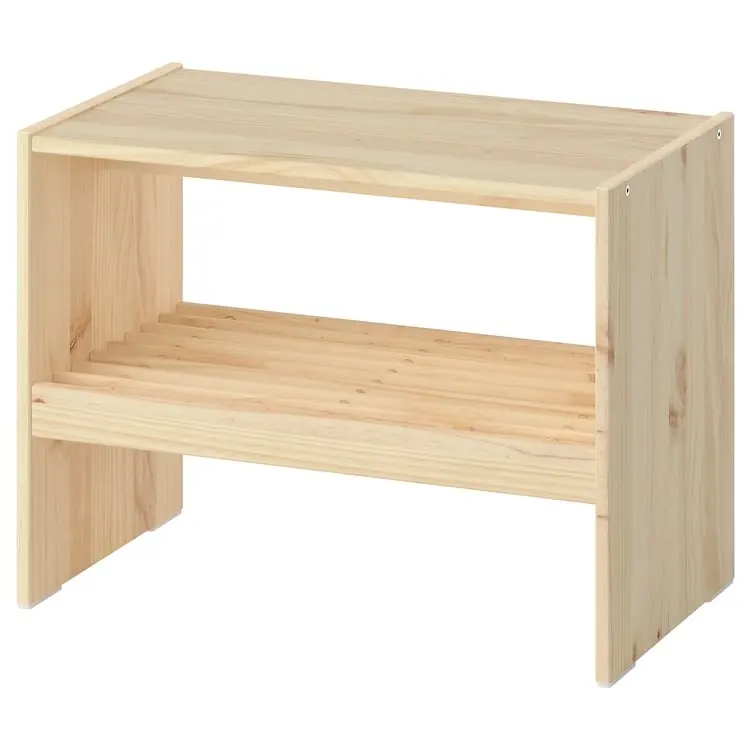
Compare the usable shelf depth with the longest shoes you intend to keep there. Side panels, a back rail or the wall behind the bench can reduce the space available. Shoes that project beyond the seat edge also extend into the area where your feet land.
Think about what the shelf leaves visible. Open storage makes a daily pair easy to spot, but the entryway will show the footwear you put there. Keep the daily shoes within reach. Shoes worn less often don’t all need a place beneath the seat.
A basket changes the way an open shelf works. Compare its outside dimensions with the opening, including the handle, then allow space to pull it out. Don’t forget the handle. Loose shoes can be reached directly; a basket has to move before its contents can be used.
Bench cubbies need to fit boots as well as shoes
Dividers trade the flexibility of a long shelf for separate spaces. The cushioned bench below combines short central openings with taller openings at the ends. The different heights show why a count of cubbies alone doesn’t tell you whether your shoes will fit.
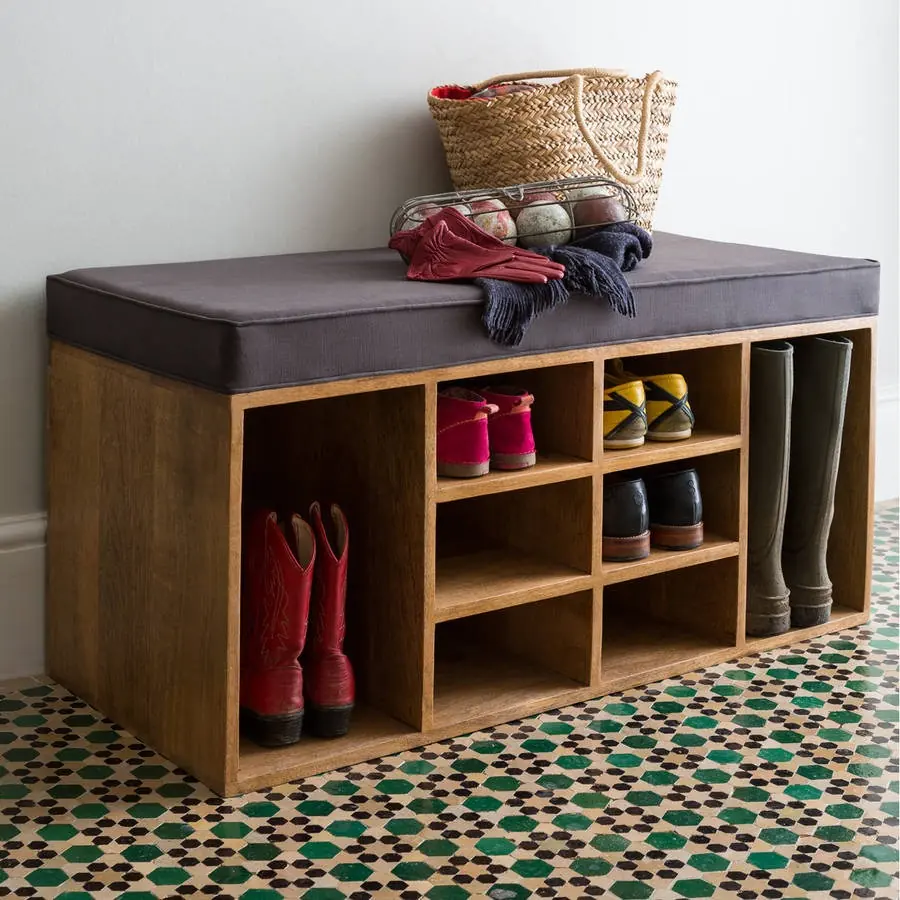
Compare each clear opening with your actual footwear, including the space needed to grasp it. Tall boots need height as well as depth, and a bulky pair may use an opening that looks generous when empty. For a closer look at footwear measurements, see shoe shelf depth and boot clearance.
Cubbies can also give each person a regular place for daily shoes. Choose that arrangement if separation helps the household put things back. A continuous shelf leaves more freedom to shift pairs sideways when their sizes change.
If bags are part of the brief, measure them separately. A school bag or work tote may need a taller opening than the shoe compartments provide. Keep a place for the bag. Give it a space that leaves the seat available for the person arriving home.
Concealed bench storage changes when you can sit
Concealed storage hides small items, but the opening method matters as much as the closed appearance. A lift-up seat gives access from above, so you have to clear the lid and stand up to open it. That suits items put away before sitting better than something you need while changing shoes.
The example below combines a raised lid with open shoe shelves underneath. The picture shows the opening arrangement; check the product’s internal measurements before deciding what will fit beneath the lid.
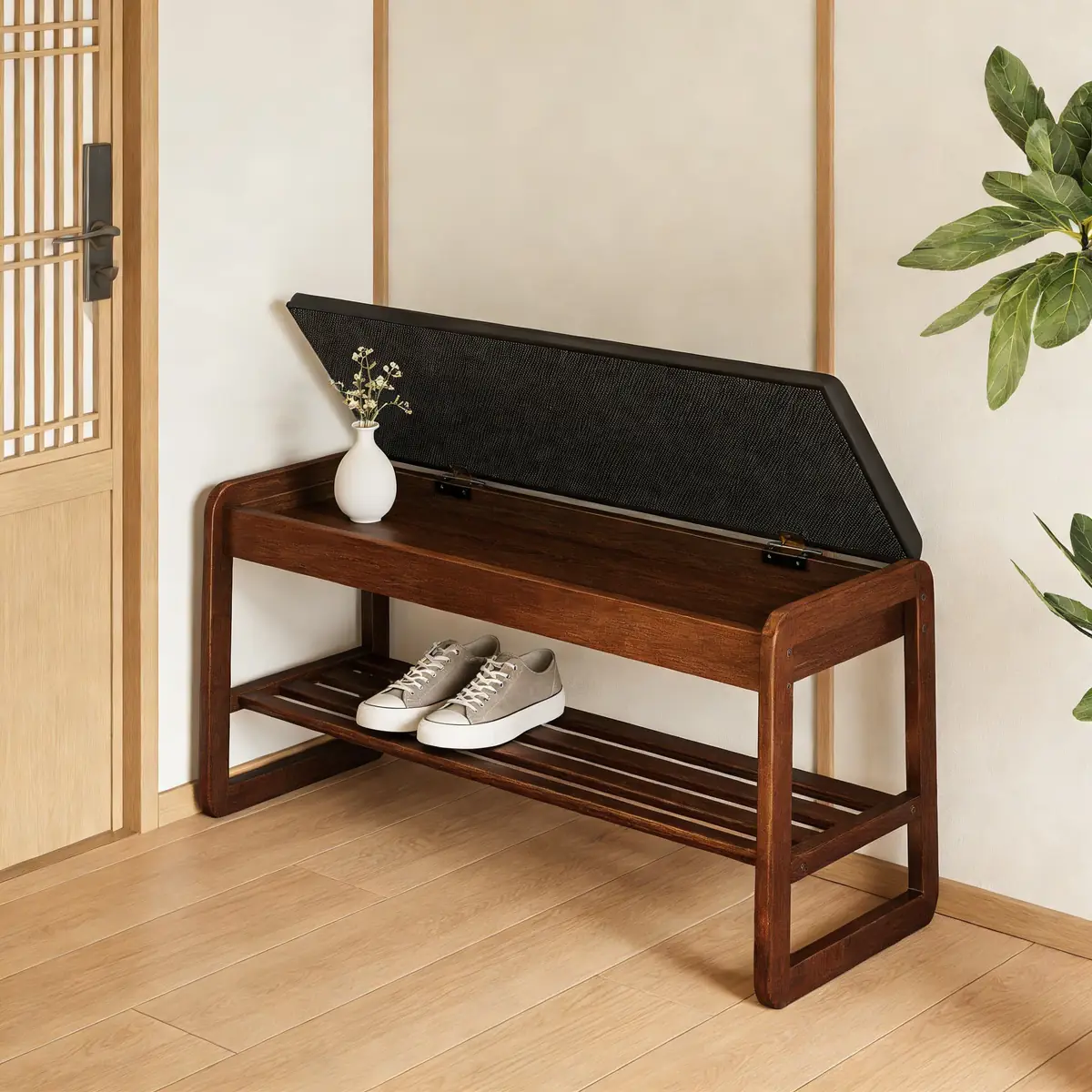
Front-opening storage avoids lifting the seat, though it brings the opening movement into the space before the bench. Where will you stand? Decide which item you need to retrieve and where you’ll be when you retrieve it. You don’t want to move the shoes you just took off before you can open their compartment.
For a hinged seat, read the product’s instructions for lid operation and any warnings about fingers or children. Follow the supplied assembly and anchoring requirements for the exact model. The photograph doesn’t establish the lid hardware’s behavior or the bench’s load rating.
Confirm that the wood storage bench is intended for seating
Once the layout and storage suit the entryway, check the seating information. Look for a manufacturer description that explicitly allows sitting, together with the model’s stated limits and instructions. A flat top or an added cushion doesn’t establish that a storage unit is a seat.
For example, IKEA describes the RAGGBERG bench as seating for putting on shoes. That is confirmation for that product, rather than a rule for every shelf with a similar outline. Check another bench against its own documentation.
Compare the finished seat height and depth with a chair you already find comfortable for changing shoes. Include the intended cushion in that comparison and check how it stays in place. Also check the width you can actually sit on after allowing for arms, raised ends or a permanent bag space.
The final choice comes down to a familiar arrival: set down your bag, sit, take off your shoes and put them away. Choose the bench whose seat and storage both remain usable through that sequence.