WOODEN FURNITURE & HOME
Choosing wood screws for plywood starts with the joint: where the head will sit, which piece the threads will grip, and where the tip will finish. Use a fastener specified for that connection and material, then choose its length from the actual assembly. A plywood thickness alone doesn’t give you a complete screw size. Here’s how to narrow the choice for a shelf, small cabinet, or storage box.
Match the screw to the plywood joint first
Before comparing boxes, decide whether the screw passes straight through a panel, attaches hardware, or enters through an angled pocket hole. Those connections ask different things of the screw head and threaded section.
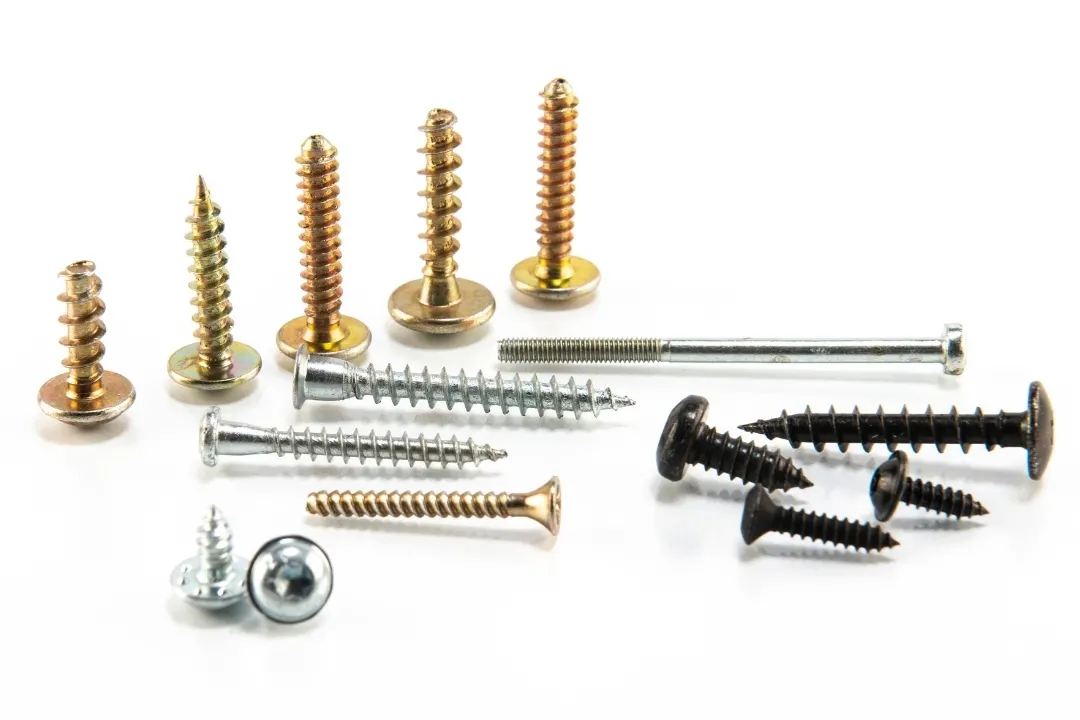
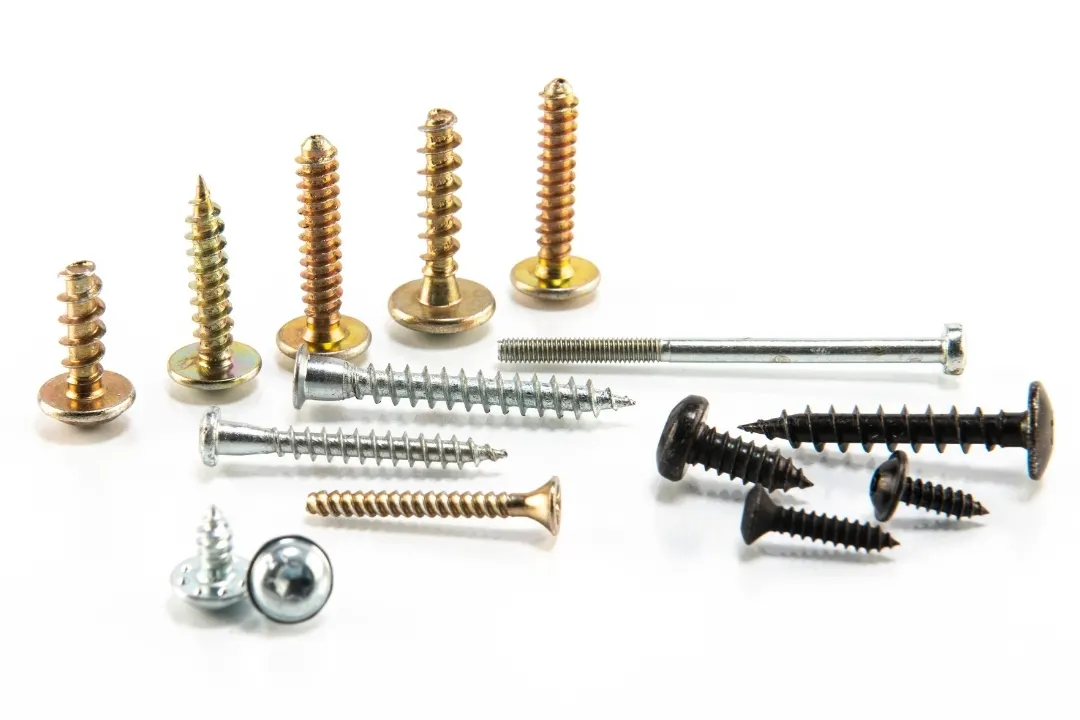
The assortment below includes different head shapes, tips, and thread patterns. It illustrates the limits of choosing from appearance: a screw that looks close to another one may belong to a different fastening system.
| Connection in a plywood project | Start your selection here | Check before buying |
|---|---|---|
| A straight wood-to-wood joint with a flush head | A countersunk wood screw suitable for the material | Head seat, required thread engagement, and room for the tip |
| A hinge, slide, or bracket | The hardware maker’s specified fastener | Hole shape, head clearance, and available panel depth |
| A pocket-hole joint | The screw specified for the pocket-hole system | Actual thickness of both pieces, receiving material, and exposure |
Treat a wall attachment as a separate connection from assembling the plywood furniture. The small-space storage guide covers layout and installation considerations, including why a shelf’s appearance doesn’t establish its load capacity.
Screw length for plywood depends on the receiving piece
Once the connection is clear, trace the screw’s path through the assembled parts. The first piece uses up part of the length; the remaining portion enters the receiving piece.
For a straight screw joining two flat panels face to face, the receiving panel’s thickness limits how far the tip can travel. A screw entering the edge of a perpendicular panel follows a different path: the panel’s thickness now limits the space around that path. Reusing a length from the first arrangement doesn’t establish whether it suits the second.
Sketching the joint from the side makes this distinction easier to see. Mark the head’s final seat and the far surface before considering a length. A recessed head changes where the tip ends, so allow for the intended seat rather than measuring from an imaginary head floating above the panel.
Required thread engagement comes from the chosen fastener and project design; the geometric space available only tells you what can fit. If those requirements conflict, revise the joint instead of forcing in a longer screw.
Screw diameter needs the same attention. A thicker fastener still has to fit the hardware, head recess, and receiving material. A generic plywood shopping list can’t settle those conditions for every cabinet or shelf. Resolve exposed edges before assembly too; plywood edge finishing compares filler, veneer banding and solid trim.
Countersunk heads need a matching seat
With the length checked, look at the underside of the head. A countersunk screw has a tapered underside that fits a corresponding recess, allowing the top to sit flush.
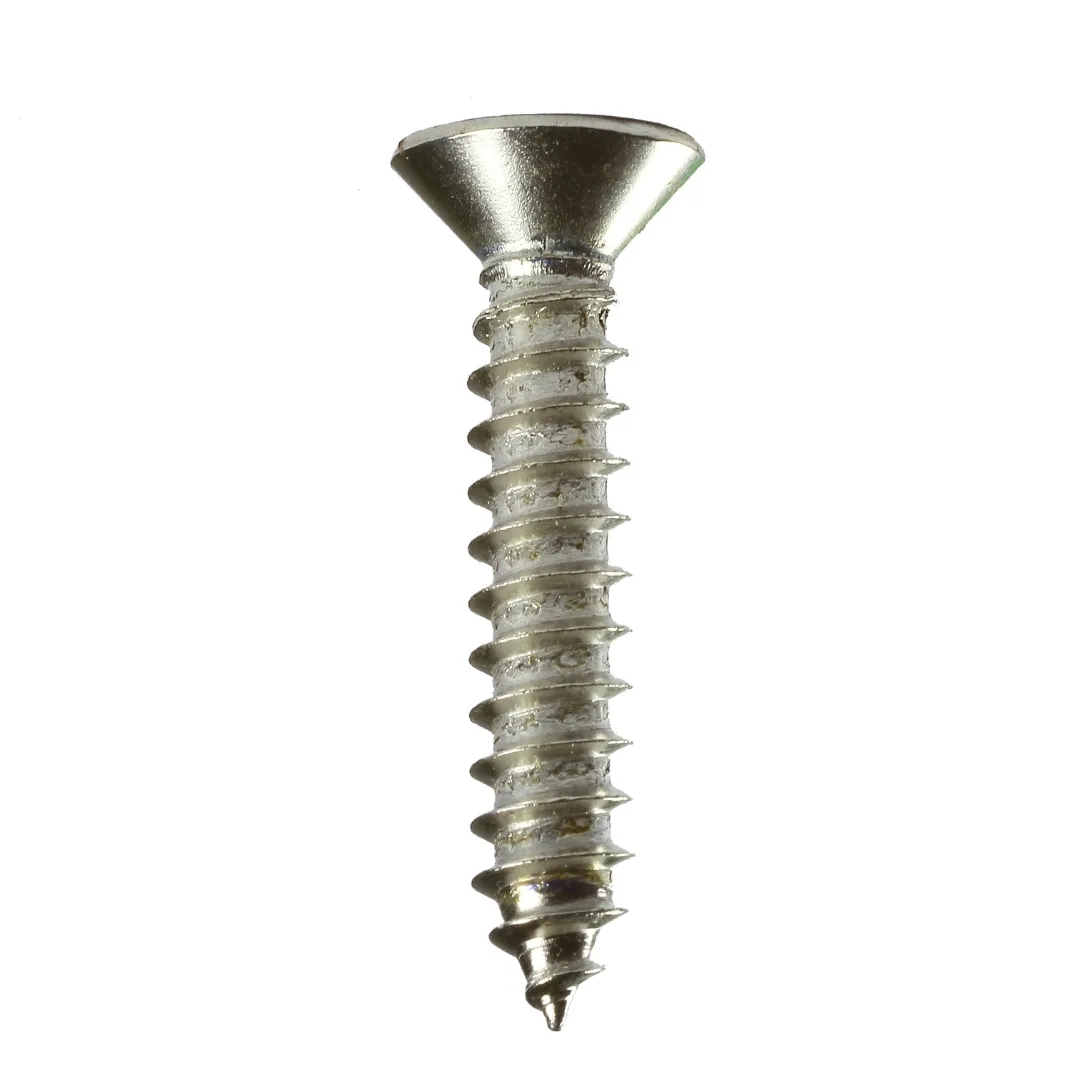
The drive recess is a separate feature. “Square drive” describes the opening that takes the driver bit; “countersunk head” describes how the head meets the work. Put both on the specification, then match the bit to the drive and the seat to the head.
For hinges and brackets, follow the hardware’s head requirements. A head intended to remain above the hardware needs room there, even if a flush surface would look tidier. The visible result has to follow the connection’s design. The wood tray project illustrates another hardware distinction: through-mounted handle screws need clearance rather than a wood-screw pilot.
Coarse-thread pocket-hole screws: where the advice applies
Pocket holes change the head seat and screw direction together. Kreg’s screw-selection guide recommends coarse-thread pocket-hole screws for plywood and other sheet goods. Its fine-thread recommendation concerns hardwoods within that system; a hardwood veneer name alone isn’t a reason to select the hardwood setting for plywood.
The cutaway below shows an angled screw and its head seat in a solid-wood demonstration block. It explains the connection’s shape, rather than showing a plywood strength test.
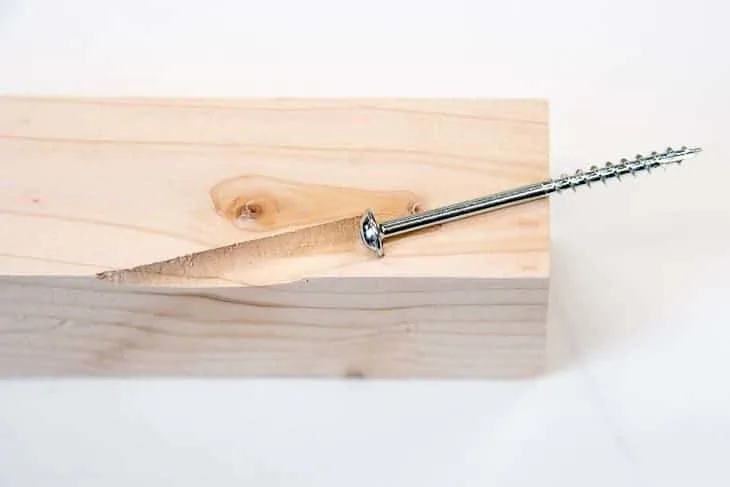
Use the pocket-hole manufacturer’s chart or selector with the actual material thicknesses. Kreg’s selector asks about both pieces, the receiving material, and indoor or outdoor use. A length taken from an ordinary straight-through joint doesn’t account for this angled route.
“Coarse thread for plywood” is useful within that documented system. It isn’t a complete specification for every screw sold as a wood screw, and it doesn’t replace the head, length, or coating requirements.
Pilot holes are part of the screw choice
The screw specification also determines what preparation the plywood needs. Check the exact fastener’s drilling guidance before buying bits; there isn’t one pilot diameter established simply by the word “plywood.”
A pilot hole in the receiving piece, clearance through the first piece, and a recess for the head serve different purposes. Each feature needs a dimension suited to its job. Our pilot-hole tutorial explains those differences and the drilling sequence.
A trial on matching offcuts can reveal a protruding tip, a poor head seat, or a gap between pieces. It doesn’t establish a furniture load rating. If the joint depends on a specified fastening pattern, keep that pattern and its material requirements with the plan. Treat a glue line as its own design choice; the wood glue versus epoxy guide starts with how closely the surfaces fit.
Check the screw coating against the furniture’s location
After choosing the connection and fit, check the manufacturer’s exposure rating. An indoor shelf and an outdoor storage unit may need different fastener finishes even when their plywood parts have the same dimensions.
For example, Kreg distinguishes indoor zinc-coated pocket-hole screws from options intended for wetter conditions. Use the current instructions for the particular coating and environment; a silver or dark appearance by itself doesn’t identify that rating.
Before ordering, the useful description is a joint type, head type, diameter, length, thread specification, exposure rating, and matching driver bit. Keep the actual plywood measurements beside it. For more furniture and storage planning, browse Wood Center.