WOODEN FURNITURE & HOME
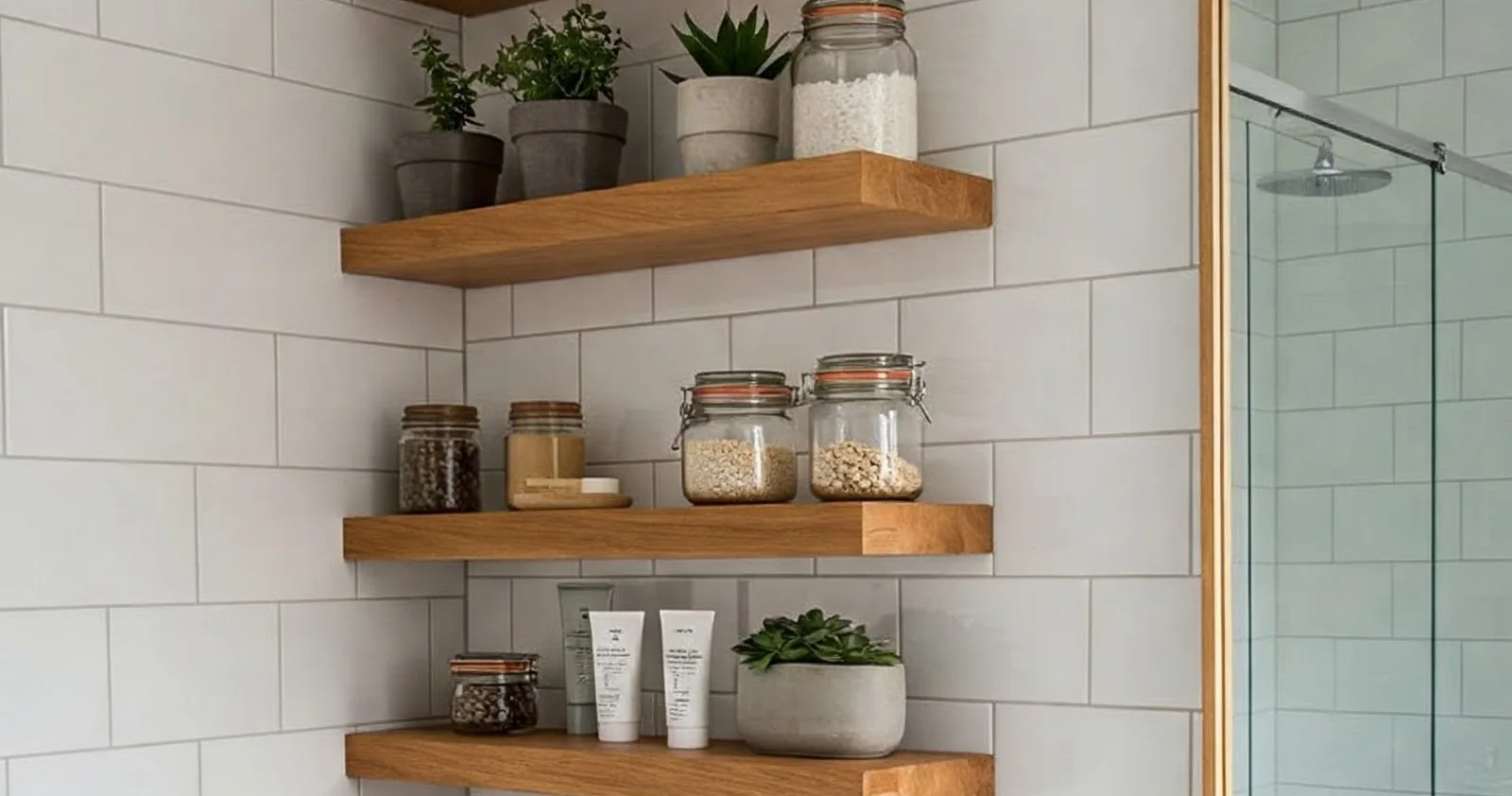
Wood bathroom shelves work best when they hold dry towels and everyday toiletries away from repeated splashes, with enough space to lift things out and wipe underneath. Choose a shelf made for the conditions in your bathroom, then fit it to the objects you use. A narrow gap beside the toilet and a wall beside the vanity call for different arrangements.
Find a bathroom wall that stays out of the splash
Start with where water actually lands when the room is in use. A wall beside the vanity may stay fairly dry, while a shelf directly over the faucet catches droplets whenever someone washes. The edge of a tub can look like spare storage space until the shower runs and wet hands start reaching for bottles.
For a wood shelf, I would favor a place where dry items can stay dry without constant attention. Keep products used under running water on storage intended for that exposure. A bathroom label alone doesn’t tell you whether a particular wooden unit belongs inside the shower enclosure; check the manufacturer’s stated use and care instructions.
Humidity matters even beyond the splash. SATRA’s bathroom furniture guidance explains that moisture can make wood change shape and can stress joints and finishes. Appearance alone won’t establish how a shelf will perform.
A dry wall still has to work as storage. The planning questions in our small-space storage guide apply here too: what needs a home, what must remain accessible, and which moving parts need room?
Choose wall shelves or a narrow bathroom unit
Once you’ve found a suitable location, decide whether the floor or the wall can give up the space. Wall shelves leave the floor below open; a freestanding unit gives you several levels without requiring each shelf to be mounted separately. Either choice needs its own installation checks, including any anchoring specified for the unit.
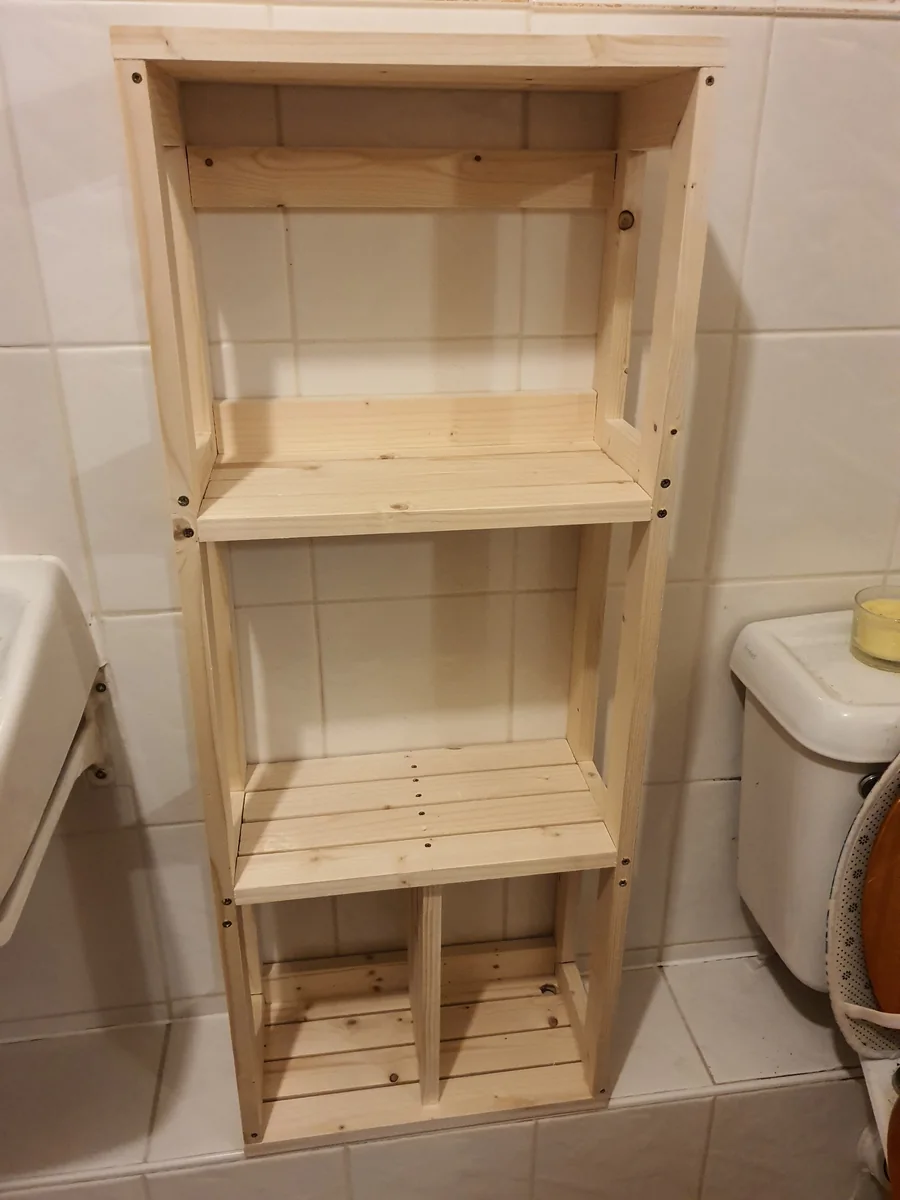
The narrow wooden unit shown here fits into a tiled gap between the bath and toilet. That gap is useful only if the unit leaves access to the toilet, bath edge and floor. Measure the real opening, including the baseboard and anything that projects from the fixtures, before comparing it with a product’s outside dimensions.
For wall shelves, compare usable shelf depth with the largest item you plan to store. A towel folded as you normally fold it is a more useful reference than the shelf’s product photograph. Include the space needed to lift the towel or open a container, rather than measuring only the closed objects.
Don’t choose fixings or a load limit from the look of the shelf. Use the shelf and fixing manufacturers’ instructions for the actual wall and intended contents. Our guide to plywood shelf thickness, span and support explains why the board alone doesn’t decide shelf capacity.
Give daily toiletries a reachable shelf
The shelf that is easiest to reach should earn its place through daily use. Put the products you reach for at the vanity where you can take them down without moving a plant, a towel stack and a decorative jar first. A small washable tray can group those products, provided you can lift the tray out comfortably.
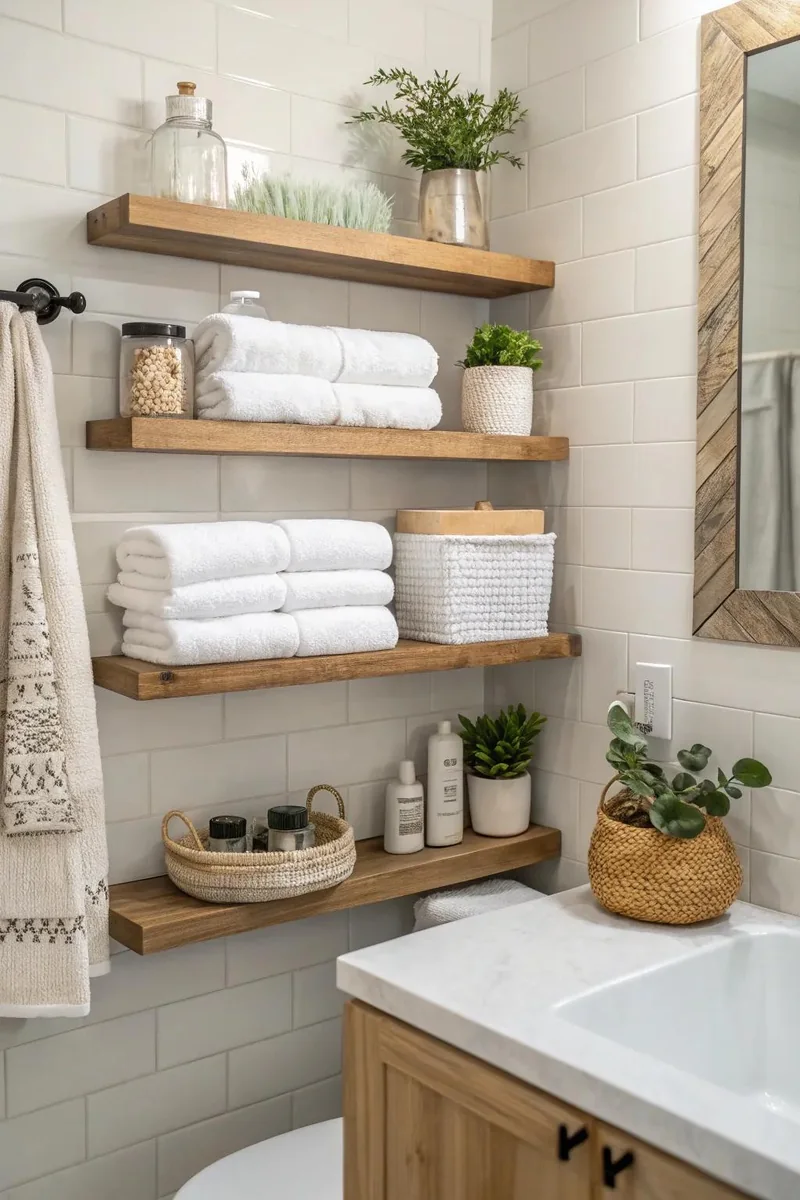
The vanity-side shelves below combine folded towels with bottles and small containers. The useful idea is the division of space: towels occupy broad areas, while smaller items can sit together. You don’t need to copy the number of shelves or fill every level to get that benefit.
Keep refills separate from the open bottle in use. Otherwise, a shelf intended to clear the sink can become a second crowded counter. If you share the room, a separate tray or small container for each person’s daily items makes the arrangement easier to put back.
Store spare towels without blocking the toilet tank
Spare towels need more shelf area than their tidy display photos suggest. Fold a bath towel and a hand towel before choosing the spacing, and check whether either stack hides the items behind it. Store clean, dry towels here; give used towels a separate place to hang and dry.
Above a toilet, the gap below the lowest shelf has another job. The tank lid must remain removable, and controls need to stay accessible. Check the movement on your own toilet before fixing a shelf position; a universal mounting height won’t account for the fixture or the people using the room.
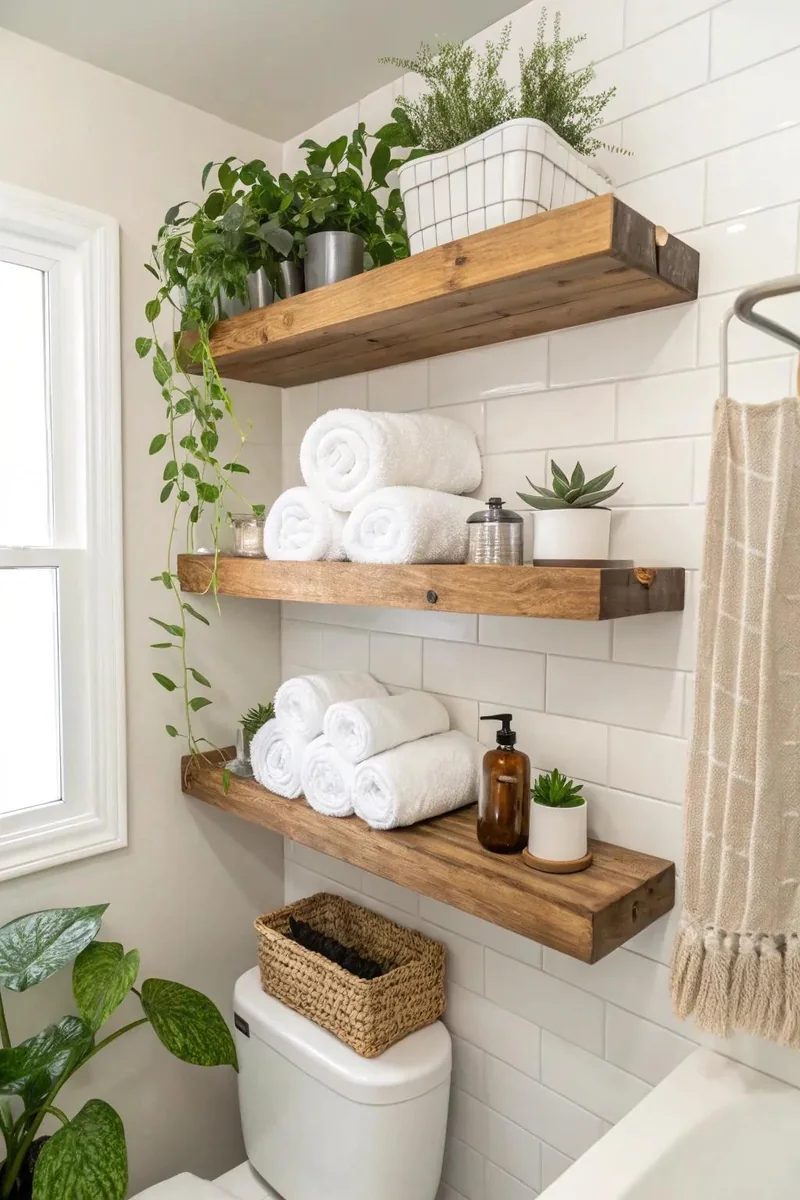
A small working supply is easier to reach than a tall display stack. If the rest of the towels already have a dry home elsewhere, there’s little reason to move every spare into the bathroom just because a new shelf has room.
Protect the wood without making cleaning harder
The contents and the shelf need care together. Follow the shelf manufacturer’s cleaning instructions, deal with splashes promptly, and look underneath trays and containers when you clean. A tray that catches drips still needs to be emptied and dried; it doesn’t make the wood beneath it waterproof.
Avoid treating a clear finish as permission to put any wooden shelf in any bathroom location. If you’re considering refinishing a shelf, our polycrylic and polyurethane comparison explains the finish choices, but the product’s own exposure limits and application instructions still matter. A coating choice doesn’t establish the suitability of the whole shelf.
Leave enough open space to pass a cloth along the shelf and reach the wall behind the contents. Fewer loose decorations help here. I would rather leave part of a bathroom shelf bare than unload a row of jars every time a bottle leaks.
For the visual finish, start with the vanity or mirror frame already in the room. Our guide to mixing wood tones can help you compare undertones without trying to match every board. Choose the shelf’s location and useful size first, then choose a wood tone you enjoy seeing beside the tile.
If you want to carry the same approach into other rooms, explore Wood Center for more wood furniture, storage and care guides.