WOODEN FURNITURE & HOME

Wood Christmas decorations can make a shelf or tabletop feel festive without filling every open spot. Choose a clear Christmas shape, such as a wooden tree or star, give it a quiet background, and leave room for the surface’s everyday job. The useful question is where the display can stay through December without being moved whenever someone sits down or opens a drawer.
Ready-made ornaments are enough for this approach. A small collection of wooden trees, a hanging star or a shallow bowl can form a Christmas arrangement; the placement matters more than adding another decoration.
Give wooden Christmas trees a backdrop they can stand out against
Wooden trees need a visible outline. Pale trees can disappear against a pale wood cabinet, especially when several similar shapes overlap. Dark greenery behind the group separates the pointed tops from the wall and makes a neutral display read as Christmas.
Choose the background before filling the foreground. A wreath above a console can carry the festive color while wooden ornaments stay simple below. On a bookcase, a clear section of wall or the back of the shelf can provide that same quiet space. Busy book spines immediately behind a small carved tree make its shape harder to read.
In this console arrangement, a line of wooden trees sits in front of greenery, with a lamp and mirror above. The different tree heights break up the line while the console’s front edge remains visible.
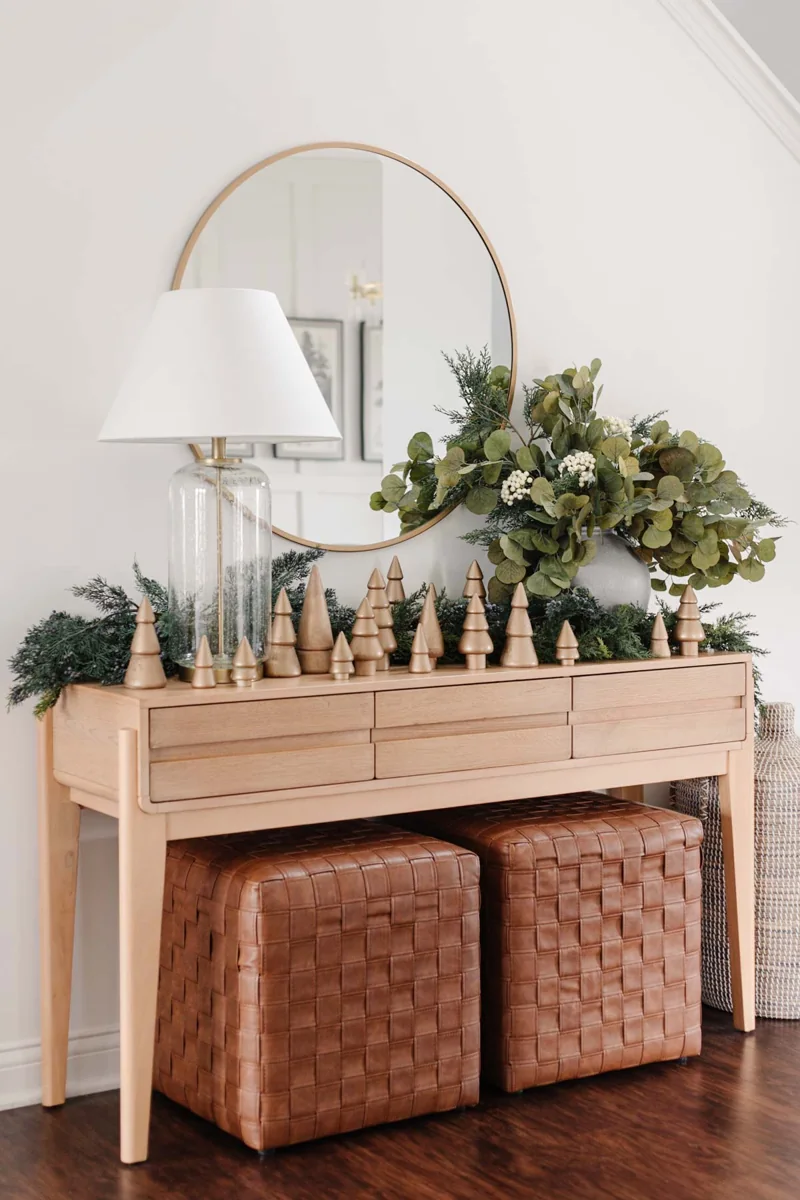
The arrangement doesn’t need to spread across the whole surface. For a shorter shelf, keep the trees together at one end and let the next stretch hold books or remain empty. A gap beside the group makes the pointed shapes easier to see than an even scatter of tiny ornaments. Use the same wood accent contrast checks when deciding whether the trees remain visible against the cabinet.
Make a Christmas shelf display readable from the doorway
Once the background works, arrange the wooden shapes for the view people actually have. A shelf seen from across the room needs a clear silhouette; tiny hanging ornaments laid flat may vanish from that distance.
Try a taller freestanding tree toward the back, with a lower tree beside it and a small star in front. Treat this as an arrangement to adjust, rather than a required formula or a shopping list. If the star hides the base of the tree or the shapes merge, remove it and look again from the doorway.
Keep every base fully supported by the shelf. Check the depth of the ornament as well as its height before buying: a tree that fits beneath the shelf above can still have a base that projects beyond the front edge. Tall, narrow pieces also need a position where passing sleeves and hands won’t brush against them.
On shelves used for books, reserve an accessible section for reading. Don’t thread a garland across books that need to come out each evening. For the wider choice of wood tones and textures, the decorating with wood guide helps connect the seasonal group with the room around it.
Let a Christmas tabletop keep its everyday job
A display that works on a shelf may be awkward on a dining table. Seated guests look across the arrangement, while serving dishes and drinks need space around it. Move a tall wooden tree to a sideboard if it interrupts faces across the table, and keep the dining display lower.
A shallow wooden bowl can hold loose Christmas ornaments without scattering them across the table. Use a bowl that is stable on the surface and keep the contents within its rim. On a coffee table, the same approach leaves a defined place for seasonal pieces and makes the group easier to lift away when the table is needed.
The console below combines a shallow wood bowl with a wreath above. The wreath supplies most of the Christmas detail, leaving the tabletop arrangement compact.
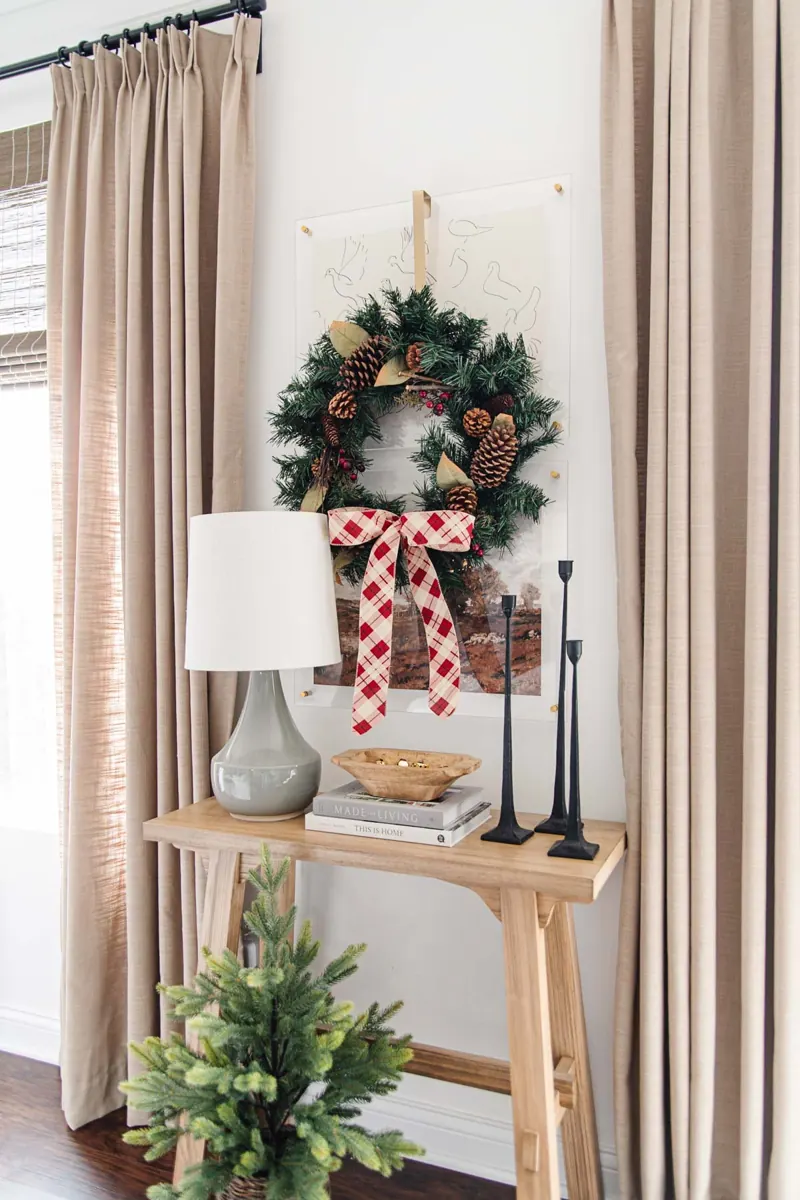
At an entry console, keep the key dish reachable and check that drawers can open. A garland hanging over the handle may look soft in a photograph but catch whenever the drawer is used. Shift the greenery behind the ornaments or shorten the display instead of asking everyone to work around it. Keep the entry console access checks in mind before adding a seasonal group to a narrow entrance.
Choose a small-room Christmas display before adding a full tree
The tabletop plan becomes especially useful when a room has little spare floor space. A wooden tree group on an existing cabinet can mark the season while leaving the route between the sofa and doorway open.
A full Christmas tree offers a different effect, but its stand and lower branches need their own footprint. Look at the room with chairs pulled out and cabinet doors open before deciding that a corner is spare. The base matters as much as the height. In the seating area, keep the coffee-table footprint and its walking route clear before adding seasonal decorations.
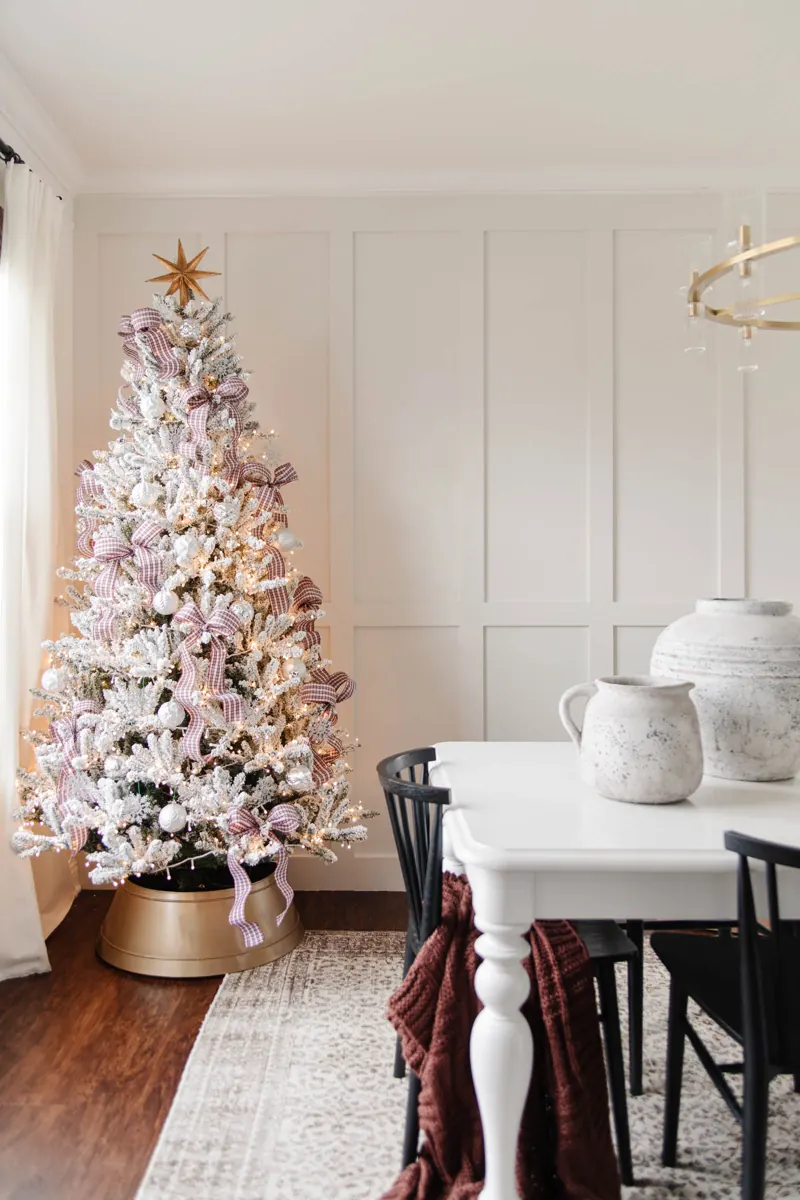
If the main tree already fills the room, repeat its colors in the wooden shelf display rather than starting another theme. A ribbon on a wooden star can echo the tree ornaments. Avoid putting a miniature version of every Christmas scene on every surface; the room can feel festive with a clear focal point and quieter accents nearby.
For a lit wooden house or tree, choose battery-powered LED lighting made for that decoration and follow its instructions. Use flameless battery LED candles in displays. Keep the battery compartment accessible, and route any light wire where it won’t catch in a drawer or become a trip hazard.
Pack wooden Christmas ornaments by shape and display location
The final arrangement also gives you a plan for January. Photograph each display before taking it apart, then pack the pieces from that surface together. A label such as “entry console” is more useful next December than a box marked only “Christmas.”
Separate pointed tree tops and projecting stars so they don’t press against heavier ornaments. Wrap delicate pieces individually, keep loose hooks and ribbons in a small labeled container, and follow the lighting maker’s instructions for battery removal and storage. Let any damp decoration dry before packing it away.
Keep the photograph with the group, but leave room to change the arrangement next year. Start again with the empty shelf or table and its everyday use; the decorations should fit the room as it is then. Before putting the packed group on a closet shelf, check closet shelf access so the container can come out next season.