WOODEN FURNITURE & HOME
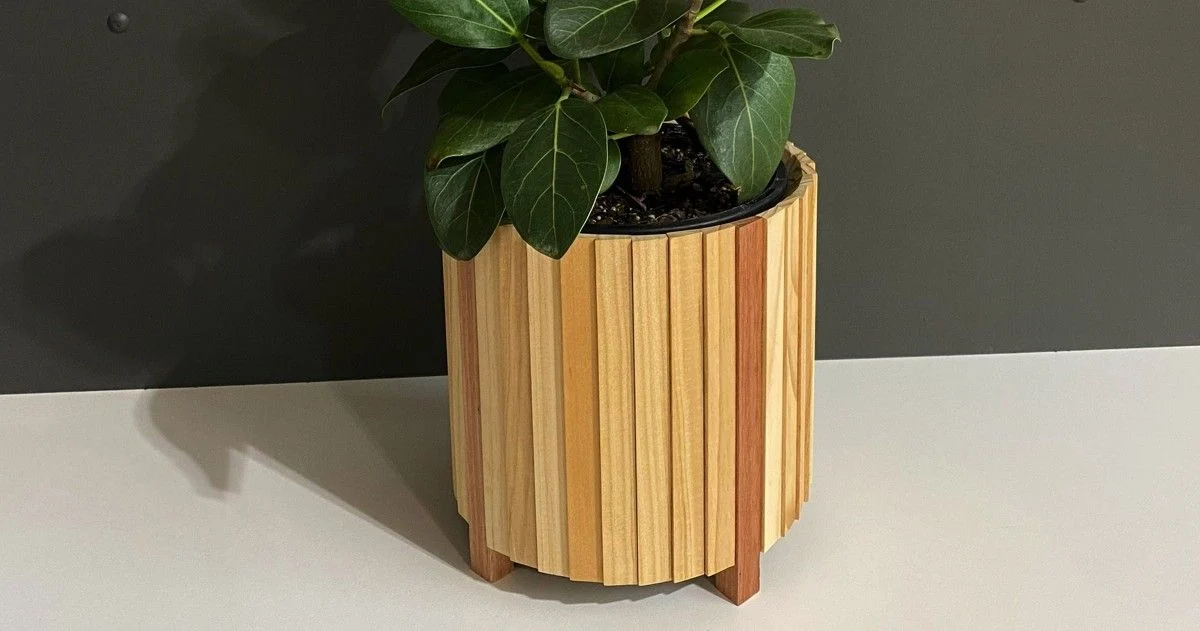
Indoor wood plant stands work best when the pot, saucer and foliage fit the stand together. Start with the container’s actual dimensions and loaded weight, then choose a height that suits the plant’s light and the room. A tall stand won’t rescue a dark corner, and a shelf that fits the pot may still be too small for its saucer.
Check the pot and saucer before choosing a wood stand
Measure the container you intend to display, including any outer decorative pot. A tapered planter also needs checking where it sits between a stand’s uprights.
For a flat shelf, check the pot’s contact area and the saucer’s outside diameter against the usable surface. Raised rims and support posts can reduce that space.
For a ring or cradle, ask the seller which pot shape and diameter it accepts, including where the pot rests. An adjustable frame needs a compatible pot shape as well as the right width.
Keep the pot’s base supported without balancing it across an edge. If a saucer rocks on slats or catches on a rim, choose a different stand or saucer rather than forcing the pair together.
The tiered bamboo-frame example below has separate round trays. It illustrates why shelf shape matters as much as the stand’s overall width; bamboo is a separate material, often sold alongside wood stands.
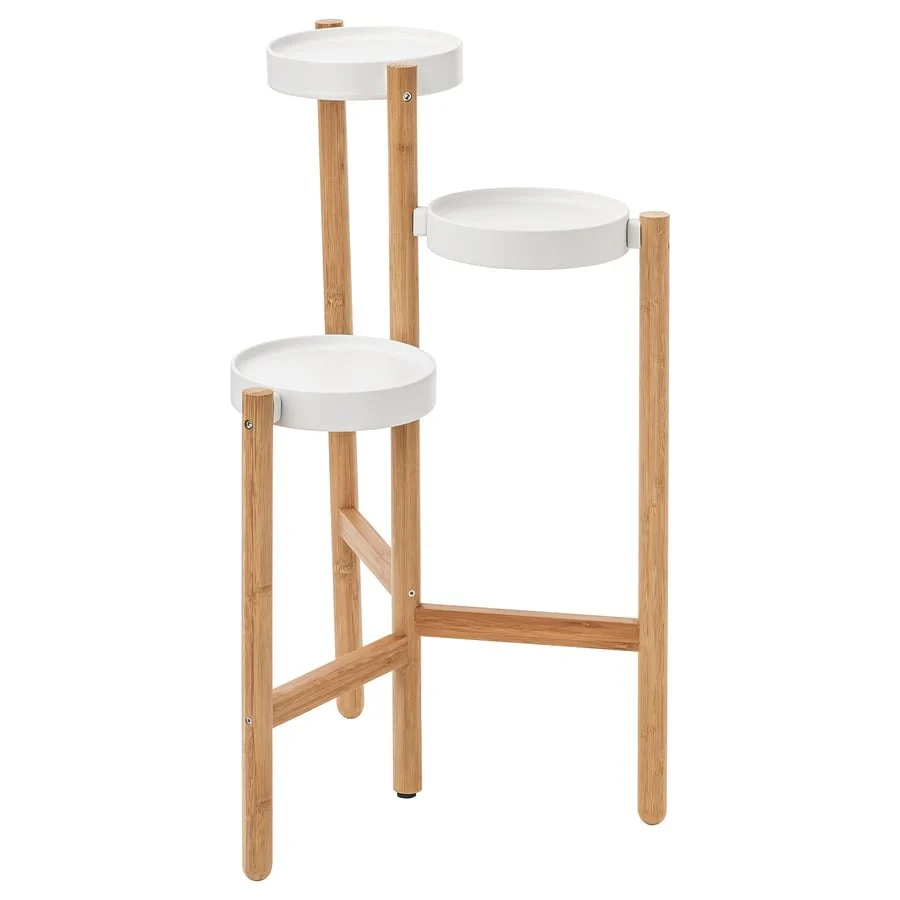
Check capacity, too. Include the plant, wet potting mix, pot, decorative container and saucer. Read whether the limit applies to each shelf or the entire stand. IKEA lists an 11 lb maximum per shelf for this SATSUMAS model; use the stated rating for the particular stand you’re considering.
If a listing gives no capacity or unclear support dimensions, ask before ordering a stand for a heavy planter. When the stand will share a sofa corner, compare its position with the reachable surface beside the sofa so the plant does not take over the place for a drink.
Choose plant-stand height around the leaves and window
Once the container fits, look at the finished display’s height. Add the stand’s supporting height, the pot and the foliage above it. A compact stand under an upright plant can create a tall display, while a taller stand can give a trailing plant room to hang.
Use the room itself as your reference rather than shopping for a universal ideal height:
| Where the plant will sit | What to check before buying |
|---|---|
| Beside a sofa | Will the foliage crowd a seated person’s shoulder or cover a lamp? |
| Below a window | Will the leaves receive the light the plant needs, with curtains open and closed? |
| On a tiered stand | Is there space above each pot for growth and a hand holding a watering can? |
| Near a walkway | Do the feet, pot and trailing stems stay clear of the route? |
The sofa-side arrangement below uses staggered trays to separate a potted plant, a vase and small objects. For a similar look, leave some space empty rather than filling every platform with spreading leaves.
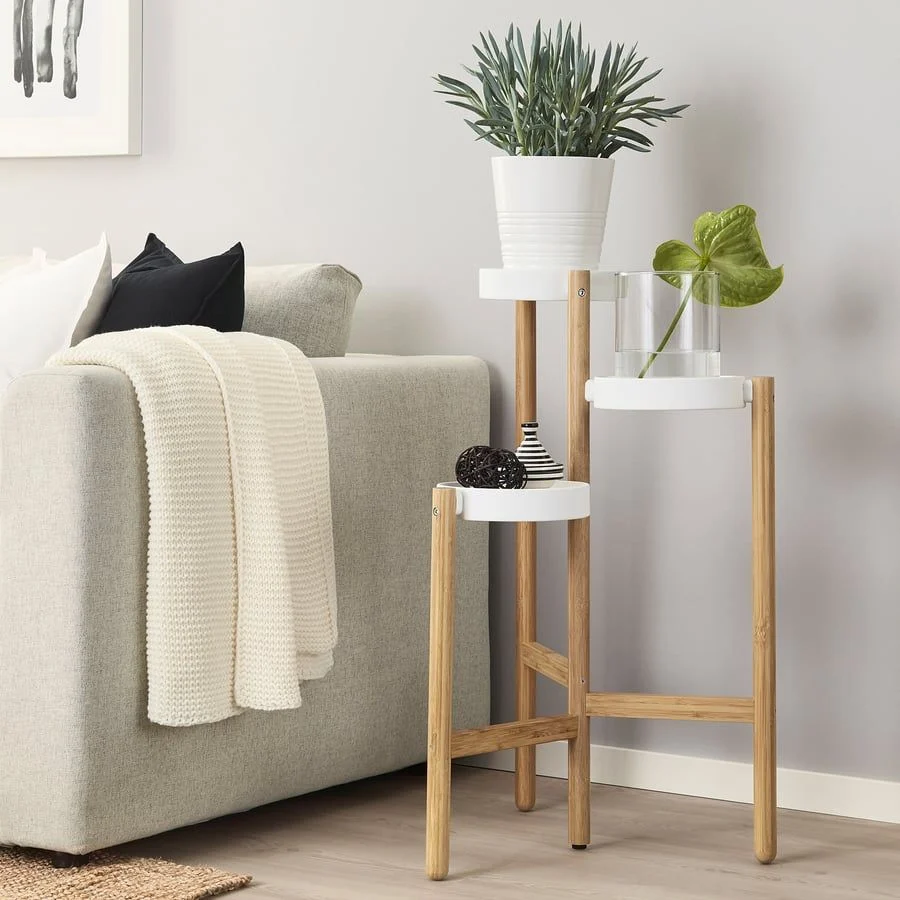
Choose the window location for the plant, then fit the furniture around it. University of Minnesota Extension recommends matching plants to the available light and explains that window orientation and obstructions change those conditions. Its indoor plant lighting guide can help you check the plant’s needs before committing to a corner.
Once the location works for the plant, our guide to decorating with wood can help connect the stand with other wooden accents in the room.
Choose a single-pot stand or a grouped display
A single-pot stand gives one plant its own footprint and makes it easier to move that container for watering. For the smaller objects around it, use the same restraint as these everyday wood accent arrangements. Choose it when a large plant is the room’s focal point, or when several plants need different window positions.
A multi-pot stand groups a collection, but the advertised pot count needs checking against your containers. Compare shelf spacing with the mature spread of the plants as well as their current nursery pots. For a stand with shelves at several heights, check the route your hand and watering can will take to each pot, because leaves above a shelf can make a small container surprisingly hard to reach.
Before filling a tiered stand, follow its assembly and loading instructions. Use the supplied restraint if the manufacturer requires anchoring. Keep heavy containers in the positions specified by the maker and within each shelf’s stated limit.
For an unanchored stand, choose a position where doors, curtains, children and pets won’t readily knock or pull it. If the assembled stand rocks on the intended floor, resolve that before adding plants. A wall behind it alone doesn’t secure it.
Plan drainage before the first watering
Whichever layout you choose, keep drainage water off the wood and floor. University of Maryland Extension advises letting excess water drain and emptying drainage saucers. For small movable pots, watering at the sink and returning them after draining keeps the mess away from furniture.
For a heavier pot that stays in place, use a watertight saucer that fits the support and can be reached for emptying. A decorative outer pot also needs checking after watering; water can collect inside even when the shelf looks dry.
The raised metal tray in this bamboo-frame detail may contain a small spill, but the photograph doesn’t establish a watertight joint or replace the product’s care instructions.
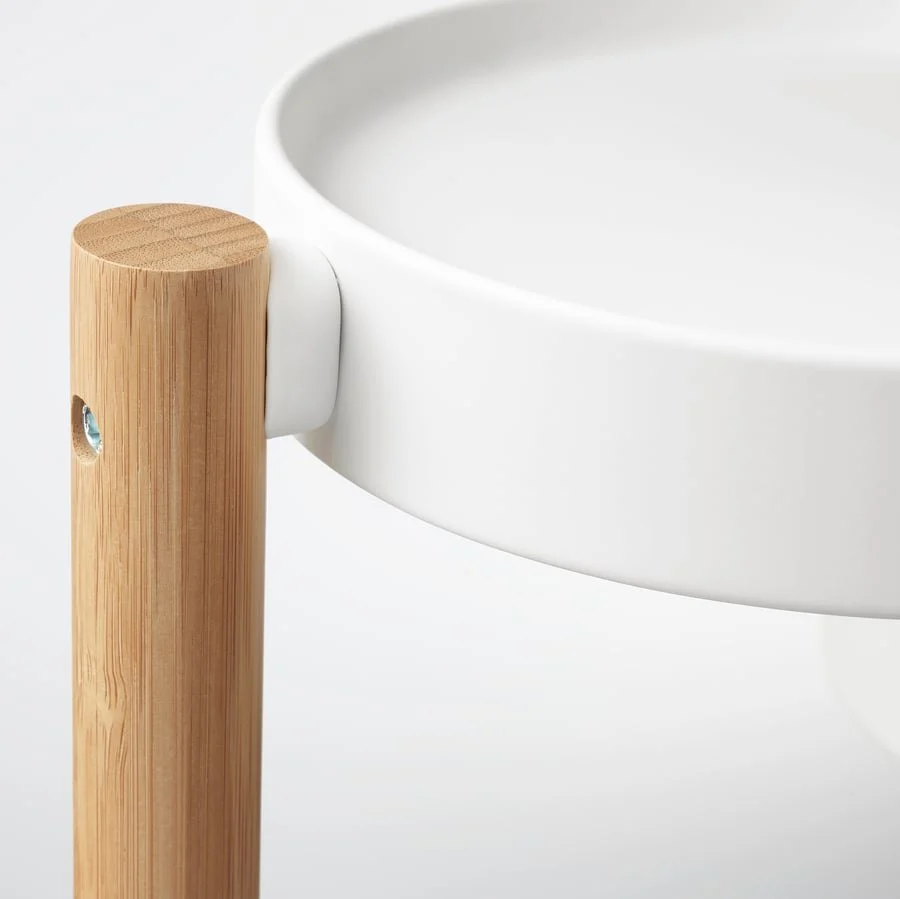
Check underneath the saucer as well as inside it, wipe spills promptly, and follow the stand’s cleaning instructions. Felt pads can protect a floor from rubbing, but they don’t catch water. Avoid buying an unfinished wood stand on the assumption that occasional splashes won’t matter.
Match the stand’s wood tone to the room
With fit and watering settled, choose the finish. A light wood tone can echo pale flooring or woven baskets; a dark stand can connect a plant grouping with a darker sideboard or picture frame. Matching every piece exactly isn’t necessary. Repeating a tone already present gives the display a clear connection to the room.
For a quiet arrangement, keep the pots similar in color and let the leaves supply the variety. For a mixed collection, repeat a pot shape or finish to connect the objects on the stand. If a nearby picture supplies the repeated wood tone, compare frame finishes beside the artwork before choosing a match for the stand.
Before ordering, keep the pot and saucer measurements, loaded weight, usable shelf dimensions and intended window position together. Those details make a more useful shopping list than stand height alone. If the room also needs a reading surface, plan the chair-side table and lamp separately from the plant display.